
Episode 64: How To Own Your Orgasms And Pleasure
Friends, this week’s episode is a juicyyy one! We sat down with sex coach and educator Portia Brown to chat all things orgasms and how to take control of your own pleasure. Because there’s an embarrassing amount we don’t know about our own sexual physiology, and we’re SO ready to take self-care to the next level by creating a pleasure practice that helps us tune into our body and mind.

Friends, this week’s episode is a juicyyy one! We sat down with sex coach and educator Portia Brown to chat all things orgasms and how to take control of your own pleasure. Because there’s an embarrassing amount we don’t know about our own sexual physiology, and we’re SO ready to take self-care to the next level by creating a pleasure practice that helps us tune into our body and mind.
This is such an inspiring conversation that is guaranteed to help you take control of your orgasms and incorporate pleasure (in its many forms, as we learned) into your daily routine.
Because you deserve alllllll the O’s, and they don’t have to be elusive.
Portia is the founder of Froetic Sexology, a website, social media platform and coaching practice that helps women find their power through pleasure. Her expansive sex coaching methods help women tap into mindfulness and ritual to help them reconnect with themselves. She’s been featured in Cosmopolitan Magazine, Glamour UK, and podcasts such as “Doing It” with Hannah Witton, and “Am I Making You Uncomfortable” from Huffington Post.
Join us as we chat about:
How to create your own pleasure practise
The different ways to achieve your big O
Tips for orgasming with a partner
Breaking through your own mental/physical barriers
How breathwork can enhance pleasure
How orgasms *actually* feel
Fun ways to initiate sex
Gaining confidence in the bedroom
We hope this episode inspires you to maximize your pleasure and prioritize YOU.
Follow Portia:
If you have a topic you’d like us to cover or a guest you want us to interview, comment or DM us on Instagram:
Related Episodes:


Episode 62: How To Have More Energy
Let’s face it… life is exhausting, but that doesn’t stop the sun from rising every morning so it’s time we figured out how to hack the system and stay energized!
This week’s quickie is all about fighting fatigue and finding more energy so we can get sh*t done. So get caffeinated because we’re covering everything from the basics we’ve been known to ignore (has anyone ever slept for 8 hours?) to new tricks backed by the pros (hot tip: have more sex).

Let’s face it… life is exhausting, but that doesn’t stop the sun from rising every morning so it’s time we figured out how to hack the system and stay energized!
This week’s quickie is all about fighting fatigue and finding more energy so we can get sh*t done. So get caffeinated because we’re covering everything from the basics we’ve been known to ignore (has anyone ever slept for 8 hours?) to new tricks backed by the pros (hot tip: have more sex).
Join us as we chat about:
Why hydration is key
Using sunlight to our advantage
The surprising effect of spending time in nature
Micro-exercises and how they can help us
The impact of surrounding yourself with good energy
How sex effects our mental wellbeing
The perks of microdosing caffeine
We hope this episode helps boost your energy so you can do allll of the things!
If you have a topic you’d like us to cover or a guest you want us to interview, comment or DM us on Instagram:
Related Episodes:

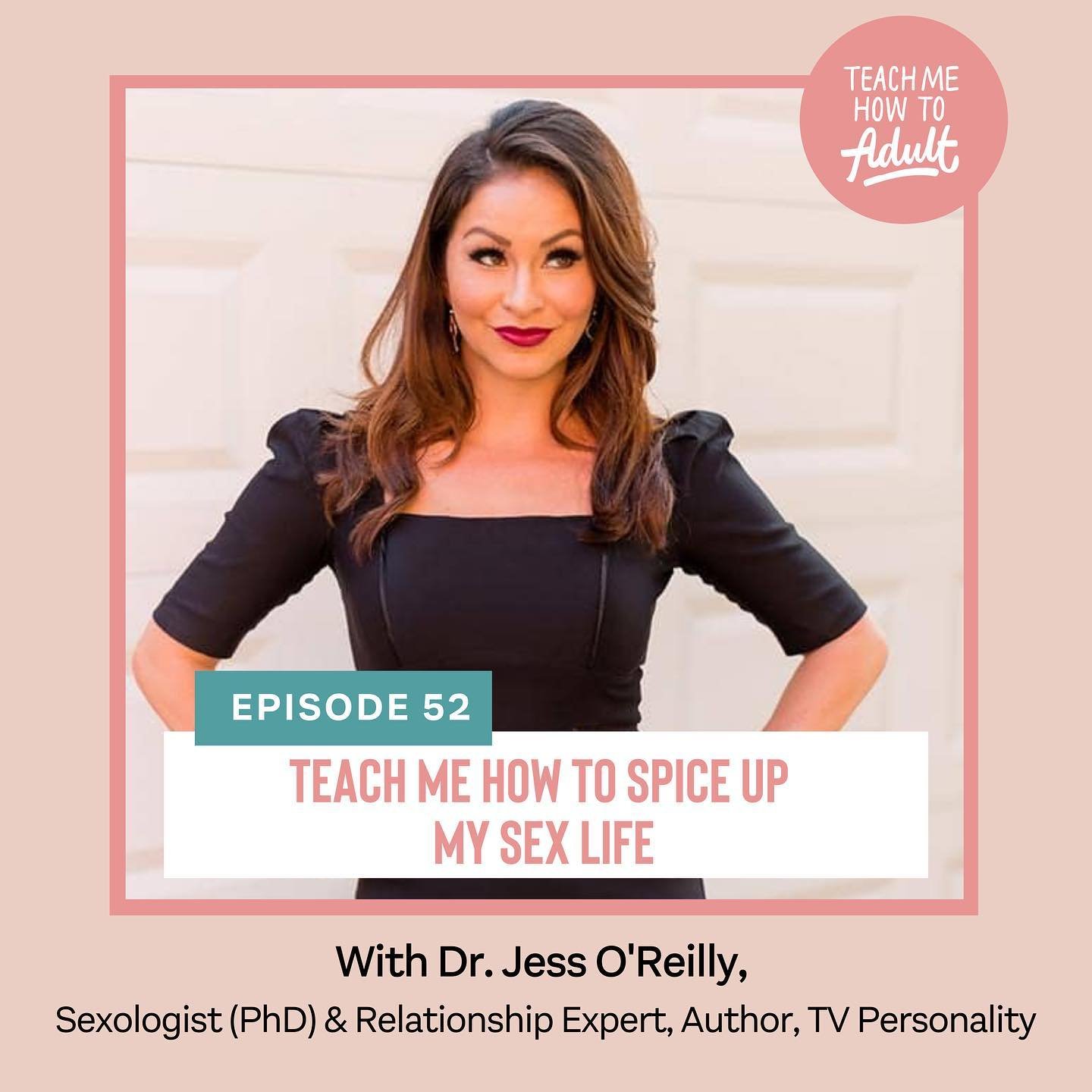
Episode 52: How To Spice Up Your Sex Life
Let’s talk about sex, baby! If you, like us, believe the sex-ed we got in school was a total joke… this one’s for you. We’re talking communication, sexting, pleasure, technique, toys, kinks, and yes… butt stuff.
We grew up in a time when there was so much shame surrounding sex, especially around female pleasure, and that still affects the way a lot of us navigate our own sexuality. But the best way to counter that, is to normalize and talk about it. Because one of the key cornerstones of a solid relationship is great sex, and for those who aren’t in relationships, a huge part of figuring out who you are and what you like is exploring sex.
Let’s talk about sex, baby! If you, like us, believe the sex-ed we got in school was a total joke… this one’s for you. We’re talking communication, sexting, pleasure, technique, toys, kinks, and yes… butt stuff.
We grew up in a time when there was so much shame surrounding sex, especially around female pleasure, and that still affects the way a lot of us navigate our own sexuality. But the best way to counter that, is to normalize and talk about it. Because one of the key cornerstones of a solid relationship is great sex, and for those who aren’t in relationships, a huge part of figuring out who you are and what you like is exploring sex.
So in our latest episode, we called in sexpert extraordinaire, Dr. Jess O’Reilly. Dr. Jess is a sexologist (PhD), relationship expert, best-selling author and TV personality. She has worked with thousands of couples around the world to transform their sexual relationships, and she’s the host of the hit reality series Swing, and hosts Intimately You on CityTV.
Join us as we discuss:
How much sex, conversations in the bedroom, sexting, and toy play YOU guys are having
Navigating different libidos and desire levels
Sexual compatibility and bridging the gap between different erotic preferences
Asking for what you *really* want in the bedroom and giving (constructive!) feedback
Overcoming shame and insecurity so you can be a more open-minded lover
Hot tips for getting confident with dirty talk and sexting
Taking your pleasure to the next level with different penetrative techniques
Dr. Jess’s top ways to reconnect and turn up the heat for relationships that are stuck in a sex rut
The best sex toys to try right now
How to prep for and work up to butt play
We hope this episode inspires you to spice things up in the bedroom and tap into your sexuality a little more, because you deserve alll the pleasure.
Follow Dr. Jess
sexwithdrjess.com
@sexwithdrjess
Sex With Dr.Jess Podcast
Buy her books!
If you have a topic you’d like us to cover or a guest you want us to interview, comment or DM us on Instagram:
Related Episodes:


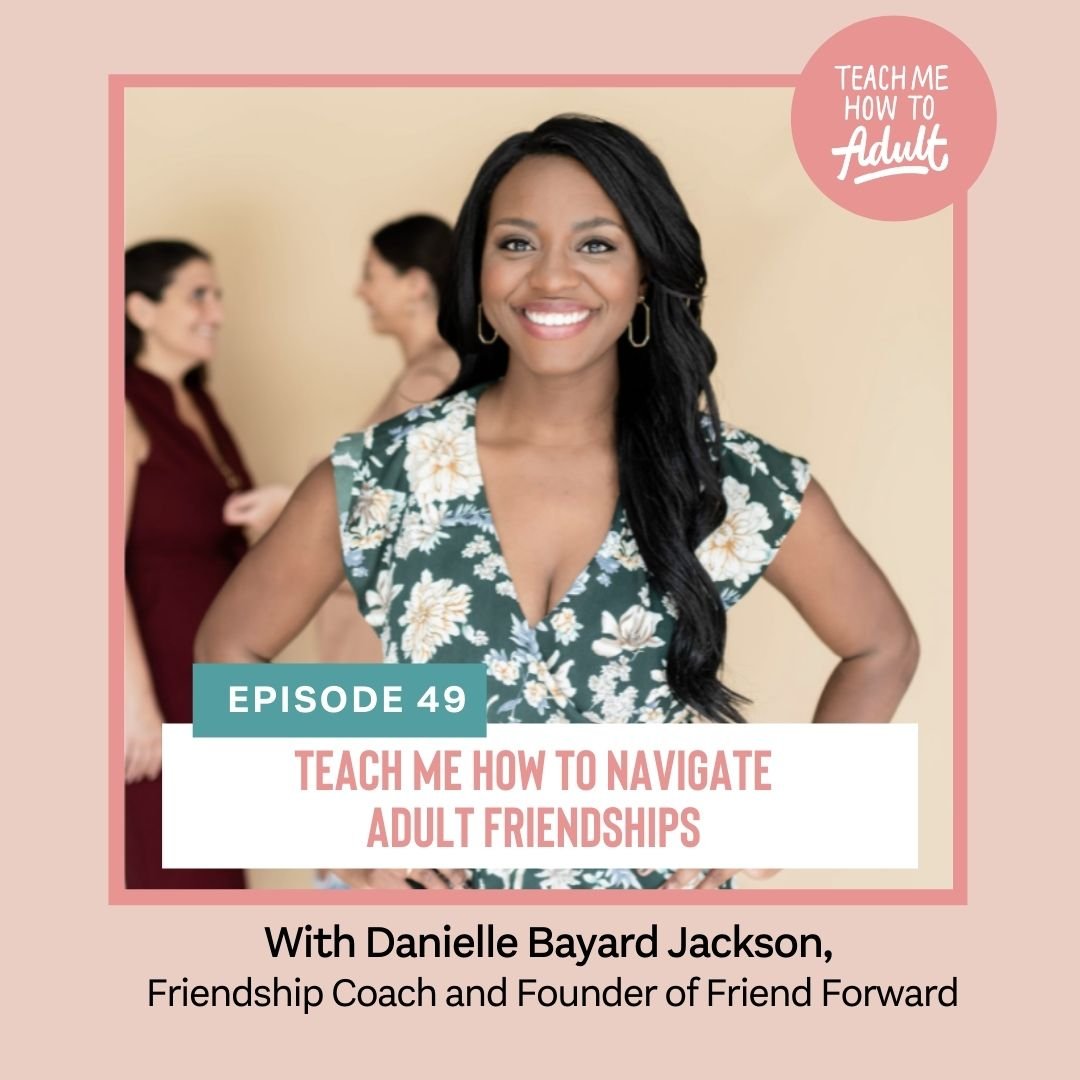
Episode 49: How To Navigate Friendships As An Adult
We can find support for nearly every aspect of our lives these days, from our careers to our mental health. But when it comes to friendships, there's virtually nothing out there to help us maintain and strengthen our relationships with some of the most important people in our lives.
As two besties and business partners, Gillian & Cailyn know all too well the impact that having strong friendships can have on your life. So we called in friendship coach and expert Danielle Bayard Jackson to help us level up our friendships and show up as supportive BFFs.
We can find support for nearly every aspect of our lives these days, from our careers to our mental health. But when it comes to friendships, there's virtually nothing out there to help us maintain and strengthen our relationships with some of the most important people in our lives.
As two besties and business partners, Gillian & Cailyn know all too well the impact that having strong friendships can have on your life. So we called in friendship coach and expert Danielle Bayard Jackson to help us level up our friendships and show up as supportive BFFs.
TBH, after the past year and a half of social distancing, this is the episode you didn't know you needed to help you feel more connected with your #girlgang.
Danielle is a certified friendship coach and national speaker dedicated to teaching women how to create and maintain meaningful friendships through her company, Friend Forward. She’s also the host of the Friend Forward podcast, and she dishes out amazing advice and hilarious videos on IG and TikTok, so be sure to follow her for allll the game-changing friend advice!
Join us as we chat about:
Our biggest friendship lessons and realizations
How to address conflicts in a healthy way
Maintaining your friendships when you’re in different life stages
How to get better at taking and receiving criticism
Clear signs that it might be time to end a friendship and how to do it
Tips for setting boundaries when you can’t spend as much time together
How we can show up as better friends for the people we love
We hope this episode inspires you to build a stronger relationship with your friends or help you take the steps to let go of the ones that are no longer serving you.
Follow Danielle:
If you have a topic you’d like us to cover or a guest you want us to interview, comment or DM us on Instagram:
Related Episodes:
Episode 40: How To Love Yourself More
If you have an idea that you can’t stop dreaming about, this week’s episode is the inspo you need. We chat with Ashley Freeborn, the founder and CEO of the renowned fashion brand Smash + Tess, about all things brand building, entrepreneurship, using fear to fuel your fire, and tapping your network to help get your idea off the ground.
You’ve probably seen people rocking Ashley’s rompers on instagram, or heard about her epic collabs with Jillian Harris, Sarah Landry of The Birds Papaya and Hilary Duff, just to name a few. Her brand started the #romperrevolution but here’s why we honed in on Smash + Tess for today’s episode: Ashley isn’t a serial entrepreneur or longtime business or fashion mogul, she just had an idea to fill a gap in the market, and made her dream a huge reality. What she created is so much more than a clothing company, it’s a community, a lifestyle and an inclusive brand that empowers women to live their best lives.

This episode is brought to you by Dove

Vaxxed girl summer is in full swing, and there’s so much good energy and hope again! But summer can also be a very triggering time for a lot of people when it comes to body image and insecurities. We polled you guys on Instagram about how you’re feeling in terms of confidence and self-acceptance, and we learned that we’re definitely not alone in this feeling. 76% of you said that summer triggers your insecurities, while 77% of you are feeling anxious about re-emerging from lockdowns with all the physical and mental changes we’ve undergone. 91% of you said that you struggle with negative self-talk, and we feel you...we can all be our own worst critics and bullies.
That’s why we called in body positivity activist and the Queen of confidence, Roxy Earle. We’re on a mission to help everyone (including ourselves) positively develop the single most important relationship we’ll ever have — our relationship with ourselves. And that requires unconditional self-love, compassion, gratitude and some helpful tools to get us out of negative spirals when we’re struggling with our self-esteem or body image.
Roxy is a former marketing professional turned model, entrepreneur, body positivity activist and a star on Real Housewives of Toronto. She started the #MySizeRox movement, which advocates that confidence comes in all shapes and sizes. She’s worked with brands like Knix, H&M, Le Chateau and Joe Fresh to bring more inclusive sizing and styles to their stores, and is launching the Ana App, which is a tool to increase positivity & confidence while also optimizing your health.
Tune in as we chat about:
Gill’s mindset shift for dealing with negative spirals, finding pride and respect in herself, and abandoning clothing sizes
Cailyn’s newfound outlook on self-love & body image as a soon-to-be mom
The moment that inspired Roxy to start the #MySizeRoxs movement
How confidence became her secret sauce and how to cultivate it (hint: it’s not genetic, it’s accountability!)
Roxy’s tips for practicing positive self-talk and self-love daily
Why Roxy is advocating for inclusivity and representation in the fashion industry
How a gratitude practice can help you combat insecurities and change your life
Why filters and body contouring apps are unattainable, exhausting and quite honestly...boring!
The mindset shift to have a healthier relationship with your body
The importance of practicing and modelling self-love as a parent
The #1 tip for looking and feeling your best in photos
We hope this episode inspires you to wear the damn shorts this summer and to start loving yourself unconditionally. You deserve it. And if you need any support on your self-love journey, we’re here for you.
Follow Roxy:
Get the Ana App (coming soon):
This episode is brought to you by Dove. Visit teachmehowtoadult.ca/dove for details on how to try a free sample of their Deep Moisture Hand Sanitizer that we can’t stop raving about!
If you have a topic you’d like us to cover or a guest you want us to interview, comment or DM us on Instagram:
Related Episodes:
Episode 35: How To Improve Your Focus and Concentration with 10 easy tips
If you, like us, have been languishing the past few months (AKA feeling super blah and unmotivated) you’ve also probably noticed that your ability to concentrate and focus is dwindling. Whether you’re trying to focus on a task for work, look alive on Zoom meetings, or start that project/hobby you’ve been putting off, our success all comes down to our ability to concentrate on the task ahead. And in this never-ending groundhog day, it can be realllly hard to focus our attention and see things through.
But there are lots of ways to foster concentration! We are here to help everyone get out of their focus ruts with some science-backed solutions and easy antidotes to distraction, so we can get shit done, focus our energy and get back to living life again! #nomorelanguishing

If you, like us, have been languishing the past few months (AKA feeling super blah and unmotivated) you’ve also probably noticed that your ability to concentrate and focus is dwindling. Whether you’re trying to focus on a task for work, look alive on Zoom meetings, or start that project/hobby you’ve been putting off, our success all comes down to our ability to concentrate on the task ahead. And in this never-ending groundhog day, it can be realllly hard to focus our attention and see things through.
But there are lots of ways to foster concentration! We are here to help everyone get out of their focus ruts with some science-backed solutions and easy antidotes to distraction, so we can get shit done, focus our energy and get back to living life again! #nomorelanguishing
Listen to this week’s quickie to learn more about:
Why multitasking just ain’t it—and how to start honing in on one task at a time
The importance of setting boundaries with your phone
How feedback and measuring your progress will improve your focus
Why you should be managing your *energy*, not your time
How sleep, nutrition, hydration and movement can impact focus
The science-backed benefits of meditation for focus and concentration
Cailyn’s hot tips for how to get laser-focused on never-ending Zoom meetings
How listening to music can help you absorb new info
We hope these tips motivate you to get hella focused and crush everything you set out for yourself! You got this.
Mentioned in this episode:
If you have a topic you’d like us to cover or a guest you want us to interview, comment or DM us on Instagram:
Related Episodes:


Episode 32: How to Drink Wine Like A Pro
Possibly the biggest sign that you’ve unlocked adulting status? You seriously know your way around wine. It’s always impressive when one person at the dinner table knows which wine to order with every dish, and the hottest vinos to put on your radar.
So, in this episode, we’re talking all things wine 101 with wine expert Lauren Power. We cover everything from how to host a wine tasting and the most popular go-to grapes, to the winemaking process, food pairings, and the proper temperature to serve your favourites! We also dive into an important chat about mastering our mindset around drinking, consuming with intent, and how to take a dry month if you want a break.

Possibly the biggest sign that you’ve unlocked adulting status? You seriously know your way around wine. It’s always impressive when one person at the dinner table knows which wine to order with every dish, and the hottest vinos to put on your radar.
So, in our latest episode, we’re talking all things wine 101 with wine expert Lauren Power. We cover everything from how to host a wine tasting and the most popular go-to grapes, to the winemaking process, food pairings, and the proper temperature to serve your favourites! We also dive into an important chat about mastering our mindset around drinking, consuming with intent, and how to take a dry month if you want a break.
Lauren runs in-person and virtual wine tasting events to help people explore and develop their own personal wine palates, and she’s the sales and marketing maven behind her family-owned wine and spirit importer, Treamici Wines.
Listen to our chat to learn more about:
The key grapes and regions to know
How to figure out your palette and wine preferences
The six most popular wines to order
How to actually do a wine-tasting, and notes to know
Tips for ordering wine off restaurant menus like a pro
When to decant and proper temperatures for serving wine
Easy, no-brainer food pairings
How to have a more mindful relationship with alcohol
Tips for taking a dry month
We hope this episode helps you feel more confident when it comes to choosing wine and drinking like a pro!
Follow Lauren:
instagram.com/laurenpower_wine/
Wines mentioned in this episode:
Veuve Clicquot Rose Champagne
Louis Bouillot Perle d'Aurore Brut Rosé Crémant de Bourgogne
La Marca Prosecco DOC
Henry Of Pelham Cuvée Catharine Rosé Brut VQA
If you have a topic you’d like us to cover or a guest you want us to interview, comment or DM us on Instagram:
Related Episodes:
Episode 31: How To Crush Your To-Do List and Organize Your Life
If you, like us, have been struggling to cross literally ANYTHING off of your never-ending to-do lists, we are here to help!
In this week’s quickie, we’re giving you tips on how we structure our days (or at least try to), three of the top to-do list methods that pros swear by, and the tools you can use to help you crush all of your goals and leave you worry-free at the end of the day. It all comes down to prioritization.
If you, like us, have been struggling to cross literally ANYTHING off of your never-ending to-do lists, we are here to help!
There are so many reasons why tackling your to-do list can cause anxiety and overwhelm. If you’re super burnt out right now you could be feeling errand paralysis, or if you’re insanely busy these days, those lists can feel so daunting because EVERYTHING seems urgent.
So in this week’s quickie, we’re giving you tips on how we structure our days (or at least try to), three of the top to-do list methods that pros swear by, and the tools you can use to help you crush all of your goals and leave you worry-free at the end of the day. It all comes down to prioritization.
Listen along to learn more about:
The Ivy Lee Method
The Eisenhower Matrix
Warren Buffet’s Two List Method
Cailyn’s tips for getting through to-do lists
Gill’s hot 15-minutes-or-less tip
We hope this episode helps you smash your to-do list and accomplish all of the daily tasks and goals you set out for yourself!
If you have a topic you’d like us to cover or a guest you want us to interview, comment or DM us on Instagram:
Related Episodes:
Episode 30: How To Recover From Burnout and Find Balance
One of the things we’ve been hearing most for the last while (outside of “unprecedented times” and “You’re on mute!”) is that our friends and families are feeling hella burnt out right now.
And even though our lives have slowed down and become more minimal in some ways this past year, there’s a lot more stress, expectation and pressure overall.

One of the things we’ve been hearing most for the last while (outside of “unprecedented times” and “You’re on mute!”) is that our friends and families are feeling hella burnt out right now.
And even though our lives have slowed down and become more minimal in some ways this past year, there’s a lot more stress, expectation and pressure overall.
95% of you that responded to our recent Instagram poll said that you’ve experienced burnout in the last few months, and 89% said you’re feeling more burnout now than you were pre-pandemic. Those are pretty startling stats, and as two people who have experienced burnout, we really want to help ya’ll identify if you’re going through it and how you can recover.
Listen along as we dive into:
What burnout really means
The signs you might be burnt out
Why we’re all feeling it more than ever
How social media can contribute to burnout
How boundaries can help you take back control of your time, energy & wellbeing
The importance of prioritizing sleep and wellness
Why you need to slow down and ask for help when you need it
Mastering your mindset and re-thinking how you measure success
How to fall in love with your life again and find joy everyday
Incorporating self-care daily, and not just on #selfcaresunday
Knowing when it’s time to say “thank you, next!” to your job
How Millennials Became The Burnout Generation Article
We hope this episode helps you prevent or recover from burnout, because you are more than your job and productivity, and you deserve a balanced life. Sending you all lots of love.
If you have a topic you’d like us to cover or a guest you want us to interview, comment or DM us on Instagram:
Related Episodes:
Episode 28: How To Have A Thriving Love Life With The 5 Love Languages
Valentine’s Day is right around the corner and we’ve got love on the brain! So, today we’re talking about the five Love Languages, what they mean, and tips for dating each type.
The Five Love Languages was written by marriage counsellor, Dr. Gary Chapman, and has sold over twelve million copies worldwide— it’s been on the New York Times best-sellers list since 2007! It has totally changed the way we show up for our partners and give them the kind of love that they need.
Welcome to this week's Quickie, our super fast take on all the adulting things that matter to you. Valentine’s Day is right around the corner and we’ve got love on the brain! So, today we’re talking about the five Love Languages, what they mean, and tips for dating each type.
The Five Love Languages was written by marriage counsellor, Dr. Gary Chapman, and has sold over twelve million copies worldwide— it’s been on the New York Times best-sellers list since 2007! It has totally changed the way we show up for our partners and give them the kind of love that they need.
Dr. Chapman noticed that couples often had similar complaints that boiled down to a single feeling: “I feel like my partner doesn’t love me.” Starting to recognize a pattern, he discovered that there were five categories on how people could give their partner the love they need: Words of Affirmation, Quality Time, Receiving Gifts, Acts of Service and Physical Touch.
Each of us has a primary love language that speaks to us more deeply, but that doesn’t mean we don’t still need the other four (we’ll never say no to a thoughtful gift)! And these don’t only apply to romantic relationships. You can identify the love languages of your parents, friends, boss and co-workers, too, so use them to form stronger relationships with everyone in your life! #winning
Listen to our chat to learn more about:
The importance ‘Words of Affirmation’ play in making you feel understood: 2:47
How to spend ‘Quality Time’ together when you see each other 24/7 or are in a LDR: 5:38
Why ‘Receiving Gifts’ isn’t as superficial as it sounds: 12:15
How ‘Acts of Service’ can make your partner’s day: 14:20
Why ‘Physical Touch’ is more than just sexy time: 17:28
Two easy ways to find yours and your partner’s love language: 20:22
Cailyn’s top love languages and how learning them made her relationship thrive: 21:04
Gill’s top love languages and how they can change throughout her life: 23:31
We hope this episode helps you speak the same language of love with the people you care about, and inspires you to keep the spark alive!
Take Dr.Chapman’s free quiz to find out your love language: 5lovelanguages.com/quizzes/
Date Night In a Box: datenightinbox.com/
Teach Me How To Adult is a podcast that serves up expert interviews, candid experiences and actionable advice on everything you never learned growing up. Follow along as we figure it out together!
If you have a topic you’d like us to cover or a guest you want us to interview, comment or DM us on Instagram:
Related Episodes:
Episode 27: How To Feel Healthier in 8 (Totally Doable) Steps
How you doin’? Any guesses what our listeners voted as their #1 goal for 2021? Improving their health—both physical and mental.
It’s been harder than ever to take control of our health in the past year (71% of you said the pandemic has negatively affected your health, while 62% are working to improve their mental health right now). So, today we’re diving into 8 legit doable ways to feel healthier, starting with the four pillars of good health: Sleep, nutrition, physical activity, and stress management.
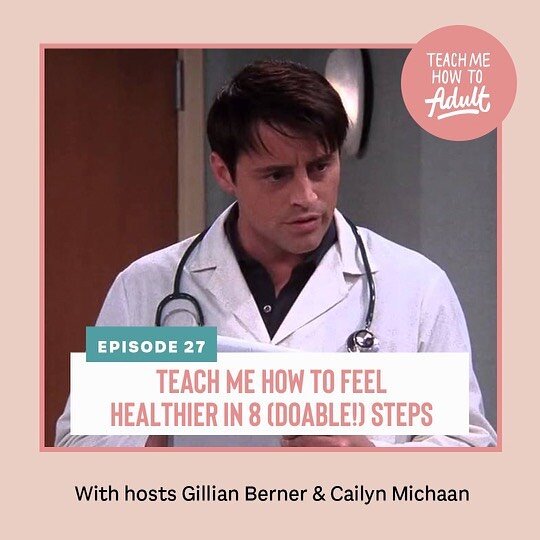
How you doin’? Any guesses what our listeners voted as their #1 goal for 2021? Improving their health—both physical and mental.🏋️♀️🧘🏾♀️
It’s been harder than ever to take control of our health in the past year (71% of you said the pandemic has negatively affected your health, while 62% are working to improve their mental health right now). So, today we’re diving into 8 legit doable ways to feel healthier, starting with the four pillars of good health: Sleep, nutrition, physical activity, and stress management.
OBVI, while we love watching them on TV, we’re not doctors (sorry mom and dad!) or health experts—we’re about as qualified as Joey—so please always consult with your doctor before making any big changes, and never rely on Google (or podcasts) to diagnose yourself.
We’re really passionate about making this year the one where we truly prioritize our health, so we’re sharing all of the research and info we’ve gathered to help make small, healthy changes.
Let’s make this the year of you!
Listen in to learn more about:
😴The crucial reasons you need to prioritize sleep, and how to get more
💧All the wild ways drinking more water can change your life
🍽 Why there IS NO one-size solution to eating healthily, and why we’re advocates for learning what *your specific body* needs for nutrition
👩⚕️The big role gut health plays in your overall health
🏃♀️The power of walking and exercising for pleasure, not punishment
🪑🙅♀️Why sitting is the worst and how micro-exercise can combat that
🤝💗How to get help when your mental health is suffering
🧠The power of a mental health toolbox
💊Why vitamins can be a key factor in your wellness
📆The appointments you *should* be booking every year
If you have a topic you’d like us to cover or a guest you want us to interview, comment or DM us on Instagram:
Related Episodes:
Episode 25: How to Crush Your 2021 Goals
The holidays can be super jolly and joyful for some, but they can also come with a ton of stress, pressure, grief, and loneliness for many. So, in this episode we’re diving into five expert-backed mindset hacks to survive the holidays.

It’s the perfect time to plan our 2021 goals as a roadmap to accomplish our dreams and set our intentions. And this isn’t your basic let’s-set-some-new-year's-resolutions chat. We dive into why you need to set clear goals vs. ambiguous resolutions, and give you our secret sauce to pandemic-proofing your plans for 2021.
If you want to take control of your life, goal-setting is where it’s at...goals give you focus, direction, motivation and a clear benchmark for measuring your success and progress. So we’re breaking down what a SMART goal is, and eight ways you can plan and execute any goal you set.
Listen to our chat to learn more about:
The results of how you all responded to our goal-setting polls on social
Finding your “why”
Setting positive, future-thinking goals
Establishing “SMART” goals
How to integrate your goals into your daily routine
Scheduling your non-negotiables
Mapping out a pandemic-proof plan
The importance of accountability
How to deprioritize to make room for your new goals
How we broke down our individual goals for 2021
PLUS download our free goal setting cheat sheet that outlines all of the steps to creating and achieving your goals for 2021.
We hope this helps you absolutely slay 2021 with clear direction, motivation and planning, no matter what awaits us in the new year. Thanks joining us on our journey this year and supporting this podcast, it has meant the world to us. Happy New Year, friends!
If you have a topic you’d like us to cover or a guest you want us to interview, comment or DM us on Instagram:
Related Episodes:
Episode 24: How to Survive The Holidays with 5 key Mindset Hacks
The holidays can be super jolly and joyful for some, but they can also come with a ton of stress, pressure, grief, and loneliness for many. So, in this episode we’re diving into five expert-backed mindset hacks to survive the holidays.
The holidays can be super jolly and joyful for some, but they can also come with a ton of stress, pressure, grief, and loneliness for many. So, in this episode we’re diving into five expert-backed mindset hacks to survive the holidays.
Listen to our chat to learn more about:
Setting clear boundaries with yourself and loved ones: 1:50
The benefits of an *easy* gratitude practise: 4:08
How to “gamify” holiday drama and stress as a way of (pretty damn fun) coping: 5:30
Dealing with grief and the loss of loved ones during the holiday season: 8:16
Creating new traditions and making your own meaning during the holidays: 12:10
We hope this episode helps you survive the “most wonderful time of the year” a little better during these particularly strange times. Remember, you’re not alone—we’re all on this together. Stay safe and happy holidays, friends!
If you have a topic you’d like us to cover or a guest you want us to interview, comment or DM us on Instagram:
Related Episodes:
Episode 22: How to Be A Morning Person
Welcome to this week's Quickie, our super fast take on all the adulting things that matter to you. This week, we’re diving into *realistic* tips on how you can become a morning person with an AM routine that works for you.

Welcome to this week's Quickie, our super fast take on all the adulting things that matter to you. This week, we’re diving into *realistic* tips on how you can become a morning person with an AM routine that works for you.
We all know that research shows having a productive routine in the morning can set the stage for success. So we did our homework and researched the routines of successful, high-achieving women we love, and five science-backed ways to create a morning routine that works for YOU.
But let’s be real, mornings are not for everyone. So this won’t be a preachy episode where we tell you how perfect our morning routines are, because we’re not robots, and mornings are tough. But If you’re listening to this, it’s probably because you want to hack your AM routine and be a bit more of a morning person.
So listen to our chat to learn more about:
😴Debunking the shame around not being an early riser: 1:55
💃Celebrity morning routines we love, from Pryanka Chopra Jonas to Oprah: 3:30
👯♀️Our current morning routine tricks and hacks: 8:45
👩🔬5 science-backed tips for creating your perfect morning routine: 10:54
We hope that this episode helps you find a morning routine that works for you!
If you have a topic you’d like us to cover or a guest you want us to interview, comment or DM us on Instagram:
Related Episodes:
Episode 21: How to Cultivate Resilience and Master Your Mindset
It seems like pivot and resiliency are the hottest buzzwords of 2020. After all, change and adversity are the only constant in this life, and if this year has taught us anything, it’s that the more you focus on building a solid foundation within yourself, the more external chaos you can handle.
Shifting our mindsets, perception and reactions is far from easy, but that’s the key to healthily recovering from turmoil and trauma. So, we called in mindset and success coach Leisse Wilcox to teach us everything we need to know about how to cultivate mental resilience and turn whatever life throws at you into a beautiful story.

It seems like pivot and resiliency are the hottest buzzwords of 2020. After all, change and adversity are the only constant in this life, and if this year has taught us anything, it’s that the more you focus on building a solid foundation
within yourself, the more external chaos you can handle.
Shifting our mindsets, perception and reactions is far from easy, but that’s the key to healthily recovering from turmoil and trauma. So, we called in mindset and success coach Leisse Wilcox to teach us everything we need to know about how to cultivate mental resilience and turn whatever life throws at you into a beautiful story.
And Leisse is not just your average coach. She is a coveted mindset coach, podcast host, AND bestselling author, who is changing the global conversation on emotional health & wellness. She literally wrote the book on turning adversity into opportunities for growth, joy and beauty.
Listen to our chat with Leisse to learn more about:
👊 Our tools for bouncing back from adversity: 2:08
🙇🏽♀️ Why your mindset matters: 8:50
✨ The meaning of emotional alchemy (turning the dark and heavy pieces of your life into something beautiful and light): 10:37
🔟 Leisse’s 10 steps to cultivating emotional alchemy: 13:11
😬 How to avoid toxic positivity and *actually* deal with your sh*t: 25:46
🤗 Ways to process and feel your feelings: 28:33
💃 How to make a difficult life change with grit and grace: 30:31
💆🏾♀️The importance of staying in the present moment and “zooming out”: 34:27
🙏Why gratitude is the key to mindset: 38:52
We hope this episode helps you harness resilience and a positive perspective to deal with whatever life throws at you.
Follow Leisse:
Get her AMAZING book: To Call Myself Beloved


If you have a topic you’d like us to cover or a guest you want us to interview, comment or DM us on Instagram:
Related Episodes:
Episode 18: How To Cope With Grief and Loss
This week’s topic is a tough one, but it’s something that we’ll all have to navigate at some point in our lives despite most of us feeling totally unequipped to cope with it. We’re talking about grief, with the help of mental health professionals Eleanor Haley and Litsa Williams, the founders of popular website and podcast What’s Your Grief.

This week’s topic is a tough one, but it’s something that we’ll all have to navigate at some point in our lives, even though most of us feel totally unequipped to cope with it. We’re talking about grief, with the help of mental health professionals Eleanor Haley and Litsa Williams, the founders of popular website and podcast What’s Your Grief.
Whether you’re grieving the loss of a loved one, the general uncertainty of the pandemic, job loss, a breakup, a difficult diagnosis, or the loss of connection with the people you love, you might be experiencing grief in ways you didn’t even realize.
How we’ve coped with grief and loss
For Gillian, the recent loss of her incredible Grandma left her feeling overwhelmed with grief and emptiness, leading up to and after her death. While she’s still processing her loss, she’s working to keep her memories alive, and she’s found some helpful ways to cope:
Creating new rituals with her family to remember and honour her Grandma on special occasions
Baking her Grandma’s famous recipes
Talking about her grief with friends and family
Learning how to stop shutting out her memories, and rewriting the painful ones with positive thoughts
For Cailyn, the loss of her Opa and the diagnosis of a close relative had her spiral into waves of grief. She’s found ways to cope by:
Carving out set times for her to feel her grief
Watching happy upbeat content—laughter is the best medicine!
Sleep, exercise, eating well and going on walks with her dog
Opening up to her husband and close friends when she needs to talk, cry or vent
How to identify your individual grief coping style
Tapping into your individual coping style can be really helpful as you figure out how to cope. The first step is to acknowledge that there is more than one way of grieving. Eleanor reminds us that grief is different for everyone: “We think of grief as mostly being an emotional experience, but the reality is that it’s more than that. It’s cognitive, physical, and spiritual. It’s all sorts of different types of experiences.”
You can start by thinking about who you are, what coping mechanisms have worked for you in the past, and have an open mind about things that you think might be helpful for you. For example, someone who processes things more cognitively may find it helpful to get involved in advocacy, planning a memorial, or reading books on grief. While someone who is more of a creative thinker may find comfort in creating art that expresses their emotions, journaling, or writing a letter to the person they have lost.
Finding coping mechanisms that can help you make meaning from your loss and provide you with a new purpose can be very, very healing. “We want people to recognize that there are so many different ways to cope and the best thing to do is think about yourself: What are my strengths? What are my preferences? What are my resources?” says Eleanor.
Coping with anticipatory vs. unexpected grief
“Anticipated losses often allow our brains to start creating a space to imagine what the world might look like without that person,” says Litsa. “You can start to imagine the feelings that might come and create a space to do what we call Anticipatory Grief, which is to start processing the loss before it happens.” However, the looming loss can still impact you more than you expected. And in some cases it can trigger more shock for someone who thought they prepared because the reality of the world without their loved versus the idea of a world without that person is so different.
With unexpected losses, our brains haven’t created that space where we’ve tried to imagine a world without that person: It comes with shock, disbelief and overwhelm as our brains try to catch up to those things that it didn’t get to prepare for in advance.
What not to say to someone who is grieving
When it comes to providing support for someone who is grieving, don’t try to find a silver lining. “Stay away from anything that begins with the words ‘at least’, because ‘at least’ is looking for some sort of silver lining or positive in the situation. And just because the comment may be true (or true someday), it doesn’t mean that someone is ready to hear it or that it is helpful in the moment,” reminds Eleanor.
It’s also important to understand the difference between providing comfort vs. support. Comfort is our attempt to take away pain. It’s our desire to find a silver lining because we’re trying to bypass pain and get to a place where your loved one will start to feel better. But someone who provides support is there to lean on. They walk with the griever without trying to change, suppress them or find their meaning for them.
Litsa points out that sometimes people worry about bringing up the person who died, an anniversary, or sharing a story, but that can often be the most helpful and comforting thing to do. “That’s the kind of gesture that shows people that you’re there for them for the long term, that you want to be there to remember their loved one, and that you’re not just there for the first couple of weeks or months after a loss when everyone tends to show up. Be the person who sticks around long term who is still checking in a year later, five years later, ten years later.”
Eleanor also suggests getting comfortable with silence and not having anything to say. Don’t feel the need to always fill that silence. You might attempt to comfort your loved one by trying to relate to their pain, but that doesn’t always land well with the person who is grieving.
Getting comfortable talking about loss, as a griever and a supporter
“Grief is figuring out how to have an ongoing relationship with a person who has died,” says Litsa. “That means that we’re figuring out how to still talk about them, remember them and live a life that’s still informed so much by their presence in our life. We need to remember that that’s a good thing.”
Even when we get to the best place with our grief it can still be hard, painful and bittersweet. But connection is often what we’re striving for, not disconnection, and the best way to convey that to the people who want to help is to tell them exactly what you need. Lista says when you’re direct about what you need from others—whether it’s a hug, a vent, or a cry—it allows them to show up the way that you need them to.
It helps to express that you don’t need someone to fix that pain or take away the bitter part of bittersweet...that’s just always going to be there.
How to deal with loss during a pandemic
A lot of people are unable to have the types of memorials, services, rituals and support groups that they normally would have if it weren’t for the pandemic. Eleanor also notes that our current isolated world can also bring up past losses or non-death losses for a lot of people, which is perfectly normal.
“We encourage people to have an open mind for things you may not have considered before”, says Eleanor. Things like online or virtual therapy, virtual support groups, journaling, or artistic expression through painting, writing or creating can help you cope while social distancing.
Eleanor and Litsa also recommend their free 10 Day Coping With Grief Challenge to help you discover new coping skills from the comfort of your own home.
After losing multiple loved ones during COVID, Litsa found that reaching out to people who were grieving the same loss as her was helpful for her process. If you are unable to have a funeral or service for your loved one, you may be yearning for connection and conversations with others who are remembering the same person. Litsa suggests reaching out to friends-of-friends to your loved one, even if you’re not that close, and saying: “Hey, I’m feeling really sad and missing [this person] today, and I need somebody to talk to about that.”
“Sometimes when we’re vulnerable, struggling and grieving, we limit things to our inner circle of people,” says Litsa. “But especially in moments like this when the world is more disconnected than ever and we don’t have those same grieving rituals, I think it can be really important to open your mind about who might be a support to you that you haven’t thought about.”
How to survive the holidays when you’re grieving
One of the most difficult things to process when dealing with a loss is coping with the picture that we had created in our minds of what our life was supposed to look like. What our holidays, weddings, family, and special occasions should look like. “But one of the things that happens after a loss is that all of that is disrupted. We’re grieving the future that we thought we were going to have,” says Litsa.
To cope with grief during these special events and holidays, Lista suggests trying to shift your mindset to acknowledged both the loss of our expectations, while also being able to say to yourself, “just because it’s not what I imagined, doesn’t mean that it can’t still be good, meaningful, and filled with love, while also still being filled with loss, sadness and a bittersweet want for what we thought it would be.”
Litsa reminds us that we can carry both of those things together: “If we can go into the holidays or special milestones knowing that that’s what we’re trying to do, it can at least help give you permission for the fact that there will be tears and difficult moments on days that we thought would be wholly joyful. And there will still be lots of joy and we should give ourselves permission and space to feel both things.”
Identifying and managing grief triggers
The first place to start when trying to manage your grief triggers is to acknowledge that they are going to happen. While there may be times when you’ll want to try to avoid them (AKA at work), in general Litsa and Eleanor don’t recommend trying to close yourself off from all of your grief triggers. “When you do that you end up closing yourself off from your loved one”, says Eleanor.
“We often see that the intensity of these experiences diminish over time. So something may cause a sting of sadness, but they also might have a little more warmth to them, comfort, or a continued bond,” says Eleanor. It’s important to create space for both of those emotions and to understand that it is perfectly normal to feel sadness and connection at once.
Litsa also talks about creating “grief space”—a set time and space dedicated to your own grief. Having a set time to manage your grief allows you to set those overwhelming and unmanageable feelings aside in a healthy way and come back to them later when you have the time to unpack them.
Doing this regularly allows you to practise feeling your emotions rather than shutting them out so you can gain more control when triggers do pop up. And it’s not that it gets easier or that the grief goes away—you just get stronger and develop the tools to manage it and integrate your loss into your daily life as you move forward.
Finding balance between grieving and living life again
It can be difficult to balance feeling your grief and jumping back to living your life again. That’s why Litsa is a big fan of the dual process model of grief. One of the underpinnings of this model is that grieving and getting back to your normal routine happen alongside each other. “Part of grief is taking a break from grief”, says Litsa. “It’s creating those spaces to set it aside for a while and engage in healthy avoidance.”
Eleanor reminds us that grief is forever, and our relationship with grief changes over time. “We often think we have to feel pain all the time or we’re forgetting or betraying our loved one, but that’s not the case. Take a break from grief. Have moments of laughter and joy. These are not betrayals.”
Why alcohol and grief aren’t always bffs
“For some people alcohol and other substances can be either numb or intensify their emotions, and it can affect you in different ways”, says Litsa. “One of the things that we know about alcohol and how it affects the brian is that it quiets down the anxiety center of our brain which keeps our emotions in check. When we quiet that down, suddenly our emotions come out more and can be more intensified.”
Litsa stresses that this is why it’s so important to carve out time to deal with any feelings you may be pushing down or repressing. The more we give space to those feelings, the less likely they will come out in an unhealthy way when drinking.
We hope that this episode helps you find ways to cope with whatever you’re experiencing. If you ever need support, know that you can reach out to us.
If you have a topic you’d like us to cover or a guest you want us to interview, comment or DM us on Instagram:
Follow What’s Your Grief:
Related Episodes:
Episode 12: How To Stress Less and Manage Your Mental Health
If you’re feeling super overwhelmed right now, please know that YOU ARE NOT ALONE, and whatever you’re feeling right now, is 100% okay to feel. We’ve been feeling pretty damn stressed and a little moodier than usual if we’re being honest, so we’re really glad we are able to share this conversation. Because the more we open about how we’re feeling, the easier it is for others to share and normalize their experiences, too.
Many of us deal with some level of stress at the best of times, but when you toss a global pandemic and quarantine into the mix, it’s safe to say that almost everyone is feeling anxious and uncertain right now in some capacity. While some of us have been able to take this time at home to slow down and re-connect with the things that matter, others are struggling with unemployment, health issues, insane workloads, financial instability, loneliness, teaching AND parenting their kids, and just general WTF-is-the-future-going-to-look-like anxiety.
So, if you’re feeling super overwhelmed right now, please know that YOU ARE NOT ALONE, and whatever you’re feeling right now, is 100% okay to feel. We’ve been feeling pretty damn stressed and a little moodier than usual if we’re being honest, so we’re really glad we are able to share this conversation. Because the more we open about how we’re feeling, the easier it is for others to share and normalize their experiences, too.
We recorded an episode with therapist Megan Rafuse a while back, and we’ve put together a few highlights from our interview that are super relevant and helpful for anyone who may be feeling stressed today. Her advice and exercises have really helped us navigate our own stress and anxiety during this time.
Megan is a mental health innovator who specializes in millennial wellness. She’s the owner of the Toronto-based therapy clinic, Shift Collab, which offers one-on-one therapy and mental health workshops, catering to busy, highly-driven young adults. We hope Megan’s advice will resonate and offer some coping strategies and stress relief, so carve out a little well-deserved *you* time and read on for our key takeaways.
How can you get out of a stressed, anxious mental state?
“As women, we tend to be givers,” says Megan. “We want to support everyone else and sometimes that comes at the expense of ourselves.” We’re often stuck in a state of what Megan likes to call “Should-ing on yourself” and “Must-erbating”, where you find yourself thinking, “I should have done this, I shouldn’t have done that”. To combat this, Megan suggests we start challenging our “shoulds” with “coulds”. Flip the script and try saying, “I could have done this, but I have compassion for myself now, so I’m telling myself it’s okay that I didn’t.”
Another helpful strategy that Megan recommends is to think of your emotional and mental wellness as a bank account, and be aware of how many deposits you’re putting in versus how much you’re withdrawing. Start by making a list of things that make you feel fulfilled, like painting, working out, watching Netflix, calling a friend, etc. Then take your list and rate each item on a scale of 0-10 (0 being minimal nourishment, and 10 being the most nourishment) to figure out how much emotional “money” each one can add to your emotional bank account..
The key here is to be compassionate with yourself, notes Megan. “If I’m having a really tough day, I might not have the energy to do something that’s a 9. [So] I might not go for a long run, I might do a 2 and watch netflix and order takeout. And that’s okay, because putting $2 in your emotional bank account is better than none. It’s about not shaming yourself.”
And we all know that a reasonable level of stress is inevitable. It’s a part of our everyday lives and that’s what has helped humans adapt and survive over time. But when you start feeling too overwhelmed and burnt out, Megan recommends checking in with yourself and asking: “What have I done recently to put money back into my emotional bank account?”
“Things like our daily commute, how much time we spend at work, and relationship challenges [are] stressors. And stress tends to compound, [so] we need to know what helps us deal with our stress in order for us to be able to cope with it,” says Megan.
This exercise has been so helpful that we created an emotional bank account worksheet for you to use.
You can download it HERE!
How can we avoid the stress and added pressure of social media?
We would be lying if we didn’t admit that we sometimes compare ourselves to others on social media. Especially when we’re stuck at home in quarantine, it can add to the anxiety that we’re not doing enough or being productive enough when we see what everyone else is up to. Megan refers to these thought patterns as “compare and despair”. We compare our current state to other people’s curated highlight reels on social media, and then we despair and project negative thoughts about our own lives. Megan reminds us that “Our brain doesn’t have the capacity to recognize that Suzy probably took 100 photos to get that one shot and she used a filter.” So when you’re going through the compare and despair rabbit hole, Megan recommends to pause, let yourself slow down, and to take a social media break.
How can we identify the areas of our lives that are stressing us out most, and find more balance all around?
“A good way to manage stress, and burn out as well, is to think about our life as a pie,” says Megan. Start by drawing a circle with 8 slices that represent different areas of your life, and then rate how you feel in each area out of 10.
The key is to understand that you’re not going to have a perfectly rounded pie: “I think it’s kind of bullshit that we have to expect ourselves to have a fully round pie. Nobody has one, we will never have one. And it’s awesome not to have a fully balanced pie, because there are some areas in your life that you’re investing more time and energy into than others.”
This exercise will help you identify areas that you’ve been neglecting and may need to spend more time and energy on. It also allows you to give yourself some recognition for the areas where you’re crushing it!
If you’re eager to start doing this exercise, we’ve created a life balance pie downloadable for you as well! Download it HERE !
How to support loved ones and set boundaries when you’re at capacity with your own mental health
According to Megan, stress and burnout wants us to isolate. When showing up for others becomes too overwhelming and you need to focus on yourself, she suggests tackling this straight on and having an open and honest conversation. She recommends saying: “Hey I know I’ve been bailing on our FaceTime dates [for example]. I really care about you and value our friendship, but I am really struggling. Can we put our FaceTime dates on hold, but can you keep reaching out and send me a text every once in a while?” This helps remove the guilt and avoidance that can amplify if you just ignore your plans with people.
It can also be hard to support your loved ones when you personally don’t have the mental or emotional capacity to take on any additional stress. How can you take care of others if you can’t take care of yourself first?! If you find yourself in this situation, Megan suggests total honesty by acknowledging that you’re both struggling and that neither of you have the capacity to support one other. Then, you could brainstorm who else you can both lean on for more support. Not sure how to broach that convo? She recommends saying: “I hear you, and I really care about you, but I also don’t have capacity [right now]. How can we support each other through this [in a way] that doesn’t feel like it’s going to drain us even more?”
How do you know if your problems are “bad enough” to seek help?
We’ve both been guilty of letting our problems fester for too long, or if our problems are even big enough in the first place to warrant talking to a friend or going to therapy. So when it comes to dealing with these thoughts, Megan’s advice is simple: “There is no such thing as ‘bad enough’. If you feel like you’re struggling, reach out. Start with the people that know and love you.”
We hope that our chat with Megan helps you find some ways to manage your stress and anxieties, and also helps you to know that you’re not in this alone.
If you have a topic you’d like us to cover or a guest you want us to interview, comment or DM us on Instagram:
Connect with Megan here:
Related Episodes:
Episode 09: How To Crush Your Workout Routine (at home!)
If you’re getting as restless as we are while we’re all stuck at home, and you’re fresh out of banana bread ingredients, it might be time to tackle that workout regimen you’ve been meaning to start. It’s hard to find motivation while we’re all staying inside, but right now is actually the best time to begin your fitness journey!
If you’re getting as restless as we are while we’re all stuck at home, and you’re fresh out of banana bread ingredients, it might be time to tackle that workout regimen you’ve been meaning to start. It’s hard to find motivation while we’re all staying inside, but right now is actually the best time to begin your fitness journey!

We interviewed fitness coach and Instagram workout sensation Beverley Cheng, and she gave us some seriously fire advice and insight on taking control of your health and workouts. It’s okay if you’re struggling to get moving, but as we all know, staying active is really good for your mental and physical health, and it gives you some much-needed structure and normalcy. Here’s a few things that have helped us stick to a fitness routine:
1. Find what you love. Don’t push yourself to do a workout you hate or a big part of your routine will be dreaded. Gillian’s favourite workouts include: Studio Lagree reformer pilates, Big Hit boxing, Kayla’s BBG fitness program, the Glo yoga app, and following Beverley’s Instagram workout videos (which kicked my ass so hard I couldn’t go up the stairs for two days.)
Cailyn loves strength training through the Tone It Up app, HIIT or Tabata, hot yoga classes (or the Yoga With Adriene YouTube Channel) and spin classes. She also just took up cycling with her hubby so they can get outside and enjoy the fresh air while exercising.
2. Workout for a positive goal, not a negative one. Try to workout to feel your best mentally and physically, versus as a punishment or out of guilt. Do it so that you can live your best damn life. And if you fall off the wagon one day or miss a workout, don’t sweat it! Just pick it back up the next day and don’t be hard on yourself.
3. Get some skin in the game. If you’re paying for classes, a personal trainer, or a gym membership, you’re more likely to make the most out of your investment and follow through with your workouts. ClassPass is a great option if you love a variety of exercise, but you can still invest in working out at home right now, too. You don’t need much equipment, just pick up some dumbbells, order a yoga matt and some resistance bands on Amazon and you’ll be good to go. If you can afford to, investing in an at-home training program from one of your favourite trainers will really help keep you on track: Beverley Cheng’s Fit From Home workout program is the perfect way to get in shape from your living room. This affordable 21 day training plan will have you working harder than any gym membership!
4. Get an accountability buddy! Working out with a friend or your partner helps motivate you on days when you’re just not feeling it.
5. Reward yourself! Celebrate your wins and reward yourself with new workout clothes, new running shoes or a special favourite meal you can cook or order in after a great workout. We love treating ourselves to a fresh pair of running shoes or a new sports bra!
Before the Coronavirus hit, we chatted with expert Beverley Cheng for some #realtalk on how to actually commit to our fitness progress. Beverley is a fitness coach and wellness content creator who specializes in online virtual training. You’ve probably seen her killing it on Instagram and on her blog Born to Sweat, where she serves up workout videos and recipes. Recently, she’s been helping people take care of their health while quarantined by live streaming workouts on her Instagram and through her Fit From Home program. This program is amazing—it’ll kick your ass into shape, and it’s only 21 days with 5 workouts a week that are all under 40 minutes long!
Beverley has a refreshingly holistic and body-positive approach to training: “I believe when you start out on your fitness journey a lot of us think it’s just about getting fitter, looking better, getting that skinnier waist or bigger booty, but I like to look at it as having a stronger body, but also a stronger mind, and therefore a stronger you.”
Why routine is more important than that “magic” motivation
Beverley says that learning how to create solid habits and schedules is the key to success in fitness: “I don’t think it’s about motivation. It’s about routine and consistency. I’ve created a structure and life where I have to workout five days a week, and if I don’t, something feels off. A lot of time people are just waiting for motivation to hit, but it’s never going to come. That’s not how we work. But we are very routine as humans, and we do follow habits.”
She also believes that finding your overarching “why” is super beneficial for keeping you accountable. “It really helps to figure out why you’re doing something and why it matters to you. Especially on the days when you really don’t want to go [workout], it’s important to understand why you’re doing something. Not just physically to get a smaller waist or bigger butt, but to be able to live pain free, play with [your] children, or set a good example.”
How to jumpstart your fitness routine this week
If you want to really start your fitness routine right now, there are three simple things Beverley recommends you begin today:
Start drinking more water! You should ideally be drinking 3 litres—and peeing a lot! (It helps to invest in a good water bottle. We love S’well and YETI)
Get organizing and scheduling: Start consistently scheduling your workouts in advance. Putting exercise in your calendar and planning around it is what makes it a priority. That’s when your fitness routine becomes a non-negotiable.
Get an accountability buddy! It can work wonders to share your fitness journey with another human, whether it’s a friend, coworker or coach.
How to overcome weight room anxiety
Next time you’re feeling fearful about trying new equipment at the gym, consider Beverley’s real talk on gym anxieties: “Literally, no one cares about you when you’re working out. Nobody cares about what you’re doing. Everyone cares about themselves. And if anyone is watching you workout, they have a problem with their own workout routine.” #TRUTH.
Beverley also says that if something intimidates you, you should do everything you can to prepare for it in advance so you're confident going into the situation, and “if something makes you uncomfortable, it means you should probably do it.”
Stuck at home? Use this time to prep and perfect those power moves
If you’re new to weight lifting or intimidated by your gym’s weight room, Beverley says there’s a lot of prep and practice you can do in advance. So use this quarantine time to practice and research. “If you really do struggle with trying something new out, prepare for it!” says Beverley. “If you want to do a Barbell Hipthrust, and you don’t understand how to get into the position, how to put weights on the barbell, where you should set your shoulders up, take that as an opportunity to learn. Watch YouTube videos. Google ‘how to set up for a barbell hipthrust’. Do as much research as you can until you feel completely confident.”
You can also use this time to research how you can build up to some of those weight room power moves at home: You could be doing kettlebell swings to build up to deadlifts. All of this will help you so that when we’re free to hit the gym again, you know what you’re doing.
How to set realistic goals
Beverley recommends outlining your overarching goals, and then breaking them down into things that you can do daily or weekly. Those are the micro-goals you want to focus on. “Rather than establishing one big goal, look at all the steps it takes to get you there: Diet, sleep, workouts. Break it down from there and create a structured routine that’s going to help you get to that goal. Set those intentions for yourself.”
These incremental goals will help you stick with it for the long run. Rather than tackling a mountain, incremental benchmarks let you celebrate the small wins along the way and set doable daily intentions.
Your goals will also play a big part in shaping your fitness regime. “When you’re structuring your own workout routines, it depends what your goals are. You can work every week to build a strong back, and work on that area. Say you wanted to firm up your legs or glutes, you would adjust your workout routine to have 2x lower body days a week,” explains Beverley. “But I make sure to hit every part of my body [at some point] throughout the week.”
How to accurately track your progress
The best way to track your progress with unbiased honesty is through photos—unlike the fluctuating (and sometimes toxic) scale, pics don’t lie! Beverley says you should take front, side, and back photos at the same time of day with the same clothing and backdrop when possible for the sake of consistency and accuracy. She also recommends keeping a journal or app to track your workouts and behaviours—Beverley tracks the weight and number of reps she logs at the gym every time she goes, so she can monitor her progression and address any plateaus.
A gentle note on “falling off the wagon”
Just remember, this should be a long and positive journey towards a healthy, balanced life—not a strict quick fix. If you take a fews days off from working out, or eat food that you don’t consider healthy, it doesn’t mean all is lost. “Just look at the next day as a brand new opportunity,” says Beverley. “It doesn't mean that everything has to go down the drain, or that you screwed up...It’s just a new opportunity to eat something better later on that’s going to nourish your body. Become more flexible and look at this as a fun journey, not just a rigid structure.”
We hope you're feeling super fired up and motivated by our chat with Beverley. Slide into our DMs, and hit up Beverley on Insta, to let us on how your fitness journey is going, and what’s been working for you at home!
If you have a topic you’d like us to cover or a guest you want us to interview, comment or DM us on Instagram:
Connect with Beverley here:
Shop this episode:


Related Episodes:
Episode 08: How To Sleep Better So You’re Rested AF
If you’re like us, you might be finding it hard to sync up your sleep schedule with this new WFH life. And even though we’re all stuck at home doing nothing and should be sleeping more than ever, a lot of us are struggling because our entire routine has changed. Obviously, we all know that we should be striving to get eight hours a night—that’s the dream. But it’s way easier said than done.
If you’re like us, you might be finding it hard to sync up your sleep schedule with this new WFH life. And even though we’re all stuck at home doing nothing and should be sleeping more than ever, a lot of us are struggling because our entire routine has changed. Obviously, we all know that we should be striving to get eight hours a night—that’s the dream. But it’s way easier said than done.
So we’ve done the research to help you catch your Zzzs, and we’re diving into 6 tips on how to fall asleep fast:

1: Wake up & go to bed at the same time every day
Yes, even on weekends! Welcome to adulthood. It’s all about regulating your circadian rhythm, which is basically an internal clock that runs in the background of our brains 24 hours a day, and cycles between stages of sleepiness and alertness at regular intervals. Your circadian rhythm works best when you have regular sleep and wake habits at night and in the morning. Obviously things get in the way, like daylight savings, pulling an all-nighter for work or school, or binge-watching Netflix till 3:00am...shit happens, we’ve all been there. But if you can stay regular with your sleep schedule you’ll avoid disrupting your circadian rhythm, and those disruptions can make you feel groggy, moody, and can make it harder for you to pay attention during the day.
2: Watch your caffeine intake
This is a hard one, especially if you’re like us and LIVE off coffee. We’re not saying you need to go cold turkey, but if you're having trouble sleeping at night try reducing your caffeine intake in the afternoon. We’ve learned that our cut-off time is around 3:00pm for our last cup, so test it out and see what works best for you.
3: Watch what you eat and drink before bed
Try to avoid eating large meals before bed that’ll send your digestive system into overdrive. And even though we all love a glass of wine at the end of the day, studies show that booze is known to increase the symptoms of sleep apnea, snoring, and can disrupt your sleep patterns. Yep, we know...this is why we can’t have nice things. Just choose your wine nights wisely, especially when you’re running low on sleep.
4: Create the ultimate sleep den
Optimize your room to become the coziest sleep den. Your bedroom should only be used for two things: sleep and sex. Straight up. Here are some ways that we’ve created our own sleep haven:
Purchase blackout curtains. These have been a game changer for us!
Dim the lighting in your room in the evenings. Mood lighting is key all-around.
Put on a diffuser with sleep-promoting essential oils. Aromatherapy is such a tried-and-tested way to promote calmness and restfulness before bed, and your fave scents can become a tangible cue or trigger for your mind that it’s time to sleep. We love the Sweet Dreams set from Saje or this amazing set that we always keep by our bed-side tables!
Invest in some comfy blankets - weighted ones are all the rage right now and can help you relax and fall asleep faster. This one is our favourite - it’s like a warm hug when you crawl into bed!
Keep it cool. Studies show that the optimal temperature for sleeping should be between 60 to 67 degrees fahrenheit (or 15-19 degrees celsius). AKA cold AF.
5: Limit your exposure to Blue Light
Your phone, TV, and laptop all emit blue light which can trick your brain into thinking it’s earlier than it actually is, and delays the release of sleep-inducing melatonin. If you can, try to not bring any devices into the bedroom an hour before sleep and make it a “no device zone”. If you’re guaranteed to get separation anxiety from your gadgets at night, here are some things you can do:
The only phone hack you truly need to know: Create a shortcut on your phone to switch to a red light at night if you’re like Gill, and can’t stop FaceTiming or watching YouTube videos before bed.
Download an app called F.lux that automatically changes the lighting settings on your laptop at night.
MAJOR HACK: Invest in some cute blue light blocking glasses to wear at night. These pairs are our fave, Cailyn wears them all the time and they’ve been a real game-changer!
6: Establish a bedtime ritual
And finally, establishing a relaxing bedtime ritual can help you wind down at the end of the day. Try doing a meditation (check out our guided meditation with Nina Purewal below from episode 5!), listening to calming music, reading, or unwinding to uber-relaxing ASMR videos. Do something to turn off that chatty mind so you can get to sleep.
We’re going to commit to testing out all these tips this week because we are tired as hell. So follow along with us on insta and we’ll keep you posted on how it goes! Hit us up on social and let us know what tricks help you sleep better. Sweet dreams!
If you have a topic you’d like us to cover or a guest you want us to interview, comment or DM us on Instagram:
@teachmehowtoadultpodcast
See you next week! xo
Shop our favourite sleep picks!


Related Episodes:
Episode 04: How To Start Meditating So You Can Be Mindful AF
Anxiety and uncertainty are at an all-time high right now, so we wanted to share some strategies for finding some calm and peace in all the chaos. The average person has about 50,000 thoughts a day, and the best way to gain control of your thoughts and emotions is through a solid mindfulness and meditation practice.

Anxiety and uncertainty are at an all-time high right now, so we wanted to share some strategies for finding some calm and peace in all the chaos. The average person has about 50,000 thoughts a day, and the best way to gain control of your thoughts and emotions is through a solid mindfulness and meditation practice. It’s like when you have too many tabs open on your laptop... it’s not going to run very fast, and it’s probably going to crash.
We called in the mindfulness Queen herself, Nina Purewal, to learn how we can get mindful AF and master our thoughts. Nina has been studying mindfulness and meditation for over 20 years! She's the owner of Pure Minds, a company that runs mindfulness workshops for the public and corporate sectors, and she's the co-author of the bestselling book, Let That Shit Go. If you’re looking for an approachable, no-BS approach to mindfulness and meditation, this book is for you.
We also recorded an incredible guided meditation with Nina, so make sure you listen to the end of the episode (at 36:20), or queue it up on its own in the bonus meditation episode we uploaded.
There’s never been a better time to adopt new habits like meditating and practise more self-care. Nina reminded us that “Self-love is about bubble baths, netflix and a night out, but it’s also about how we’re talking to ourselves and how we’re treating ourselves.”
What are the benefits of Meditation?
“It’s kind of like going to the gym for your mind,” says Nina. “It’s an opportunity for you to sit there in complete silence and just observe what’s going on. And by doing that, you’ll be much more equipped in the real world when your mind gets the best of you. You’ll know what to do with it, and you’ll have a better sense of how to reign it in.”
There’s a lot of information about practising mindfulness and meditation, so we’re boiling it down to the facts you need to know:
It’s all about living in the present moment, and leaning into your emotions instead of running away from them. Meditation increases awareness, clarity, focus, and even compassion! One study found that when experts meditated on compassion, they altered their brain’s capacity for feeling empathy.
Researchers at John Hopkins University found that meditation improves symptoms of depression, anxiety, irritability, and pain related to stress.
In one study, people who used a meditation app for 8 weeks had a 46% reduction in depression and a 31% reduction in anxiety.
In another study, after only 30 days of using the meditation app Headspace, participants’ stress was down by a third.
In our own experience, practising meditation and mindfulness has had a major impact on our mind and mood. But the key is trying to find a practice that fits into your everyday life. We love guided meditations apps like Headspace and Calm to help center us before our day starts, or help us get focused before we sit down to work.
How can meditation help shape your thoughts?
From the second we wake up to the moment we fall asleep, we are constantly connected. Whether it’s via our smartphones, work emails, or everyday stressors, our mind is always inundated with racing thoughts. Nina calls this our “chatty mind” (or monkey mind), and it just keeps swinging from thought to thought without stopping. This can lead to feelings of anxiety, overwhelm, or negativity for a lot of us. Meditation allows us to calm these thoughts and tap into what Nina calls our “observing mind”. “The observing mind simply observes what the chatty mind is doing. It doesn’t judge the chatty mind. It doesn’t try to solve for the thoughts you’re thinking. It doesn’t make you feel guilty for thinking those thoughts,” she says.
The observing mind’s job is to recognize what’s going on in your head, and to help bring you back to the present moment. That’s the exact skill that meditation develops— it helps us control the chatty mind. “The observing mind is like a muscle,” explains Nina. The more you lean into it, the more you’ll be able to leverage it. “Because at the end of the day, we are not our thoughts,” she says.
How can we stop the negative thinking?
Take the time to “CSI the shit out of your thoughts,” says Nina. Once you tap into your observing mind and create some space between all of those negative thoughts, ask yourself where they came from...Are they even really true? Are you really bad at your job? What proof do you have of that? Weren’t you hired for a reason? Take a step back and replace negative thoughts with truths, or with a more positive perspective.
How do we disconnect and check in with ourselves?
Set some boundaries for yourself. Nina suggests setting hard and fast rules when it comes to devices and distraction:
Don’t check your phone before bed. Give yourself a mental break, and try reading a book, meditating or doing something for yourself besides scrolling.
Don’t look at your phone when you wake up. Give yourself some peace in the morning before logging onto Instagram or responding to the 50 emails that piled up over night.
Pick a day to disconnect. Try doing a digital detox on Sundays and give yourself a break from your phone. If that’s too daunting, Nina suggests picking one day a month to truly go offline and chill.
Create physical boundaries. When you get home from work, try leaving your phone somewhere you won’t be tempted to look at it 24/7. Leave it in your car, charge it in your basement, or put it somewhere that’s out of site, out of mind.
Turn off your notifications. Turning off all notifications puts you in control of when you need to check your phone.
Take work off your phone. Does that 10:00pm email really need to be answered right away? Assuming it’s not a 911 emergency, taking your work email off your phone helps create a healthy boundary between work and personal life.
Notice what makes you feel good. Take inventory of the types of people and accounts that you follow on social media and how they make you feel.
How can we incorporate mindfulness in our busy lives?
It’s hard to actually practice mindfulness IRL, when you’re balancing work, your personal life, and day to day stresses that come up. So how can you realistically incorporate more mindfulness?
Implement a gratitude practice. Nina suggests thinking of five things you’re grateful for each morning when you wake up to stop negative thoughts in their tracks. You can go big picture or get super granular with your gratitudes, from recognizing the awesome people and opportunities you’re surrounded by, to the daily details we take for granted like shelter and running water.
Match your train of thought with your actions. Nina learned this technique from one of her meditation teachers in California, who suggested matching the thoughts in your head with the actions that you are doing. So, if you’re washing the dishes, you would think to yourself: “I am now washing a pot. Now I'm putting soap on the sponge. Now I’m rinsing the pot,” and so on. It might feel a bit crazy at first, but this allows you to practise bringing yourself back into the present moment.
Lean into breath. Taking deep breaths can help alleviate feelings of stress, anxiety and anger. The more shallow our breathing is, the more panic we feel.
Have mindful triggers throughout your day. Nina recommends picking a small activity that you do daily (think: brushing your teeth, making a coffee, showering, etc.) that acts as a consistent trigger to bring you back into the present moment.
Meditate. Whether you have five minutes, or half an hour, carve out some time to sit in silence and let your thoughts flow. Try different kinds of meditation, from breathwork to mantras to visualizations, and see what works best for you.
If you’re feeling a little lost right now, get some comfort from the advice Nina’s meditation teacher in California shared: “If you get to a point where you don’t know who you are, that’s a good thing. It just means that you are taking off all of the layers, and building yourself back up.”
We hope that this episode inspires you to start (or continue!) a mindfulness and meditation practice. If you liked this episode it would mean the world to us if you would rate the podcast and share it with your friends!
If you have a topic you’d like us to cover or a guest you want us to interview, comment or DM us on Instagram:
@teachmehowtoadultpodcast
@cailynmichaan
@yunggillianaire
See you next week! xo







I’ve been hitting a ceiling with my upper limits lately — in love, business, and life decisions, limiting beliefs and self-sabotage have been showing all the way up. So I revisited this episode with Lori Harder, and it was a powerful reminder of how to get out of my own way… it felt right to throw it back to this top-performing episode today for anyone who needs to hear this.