

Episode 13: How To Have a Healthy Relationship Right Now
If you’ve got love on the brain, and you’re crazy in love, but it’s killing you softly, this one’s for you! This week we’re talking about relationships: The struggles couples are facing right now, communication strategies to help improve things, and what we’ve learned about our own relationships in quarantine!
If you’ve got love on the brain, and you’re crazy in love, but it’s killing you softly, this one’s for you! This week we’re talking about relationships: The struggles couples are facing right now, communication strategies to help improve things, and what we’ve learned about our own relationships in quarantine!
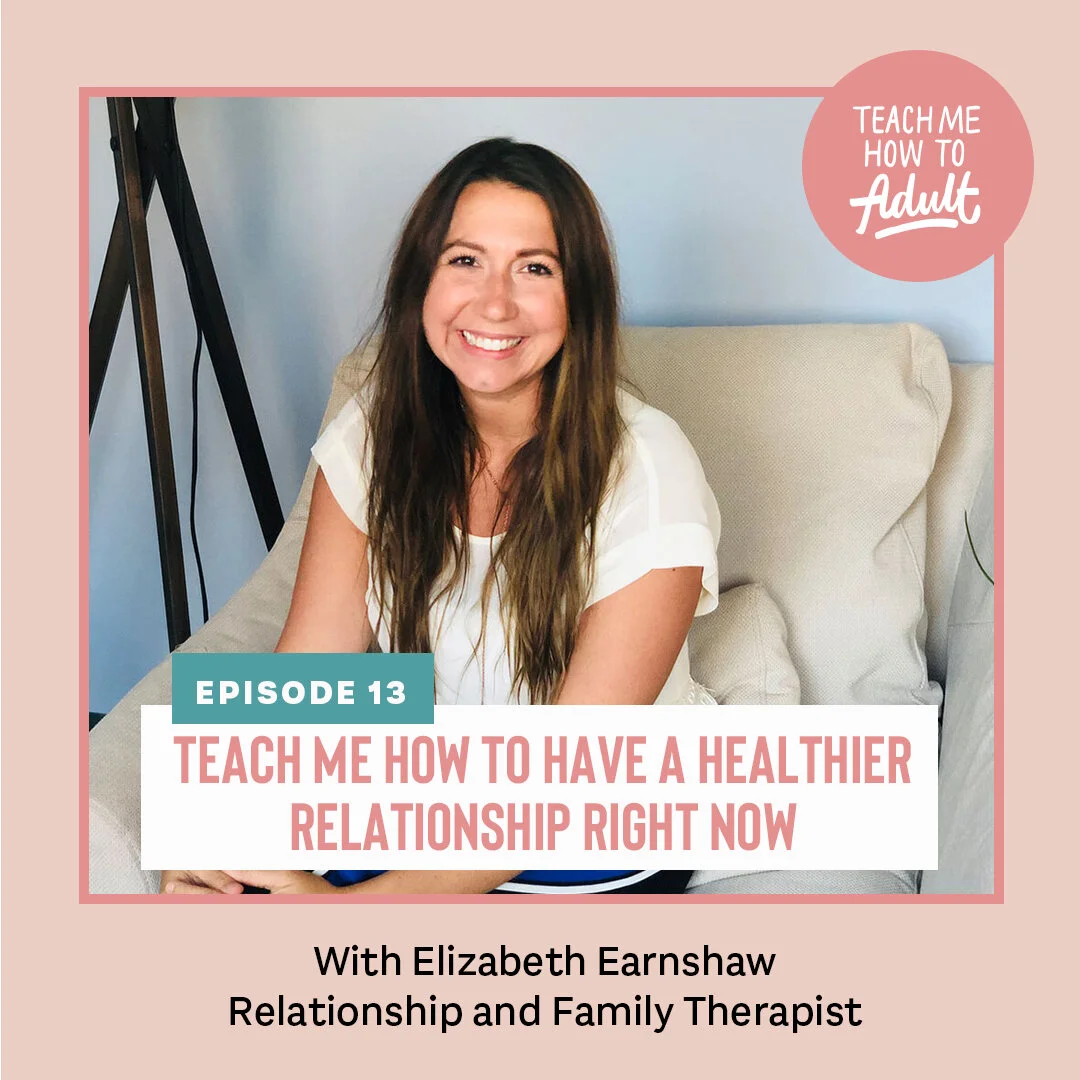
Couples are navigating totally new and unprecedented stressors in their relationships right now, whether they are stuck quarantining together 24/7, isolating far apart in a distanced relationship, dealing with parenting, or coping with financial and career stress. And it’s more important than ever to come at these new challenges as a team, to have super strong communication, and to still find ways to enjoy a fun and loving relationship together.
We called in relationship therapist Liz Earnshaw, who helps her clients and hundreds of thousands of social media followers develop healthier relationships everyday. Liz is a licensed marriage and family therapist and founder of A Better Life Therapy in Philadelphia. She helps couples through issues like betrayal, grief, loss, and trauma, while teaching the art of communication. You also might’ve seen her on Instagram where she shares incredibly valuable relationship advice and therapy strategies on her account @lizlistens.
Read on for Part 1 of our relationship deep dive, and tune back in for Part 2 of the episode in two weeks, where we chat about managing conflict and more communication tips! Here’s Liz’s advice for successfully navigating your relationship, so you can have a happy partnership no matter what’s going on in the world right now!
How can you maintain a healthy relationship when you’re dealing with long distance?
When it comes to long distance relationships, especially during COVID, Liz recommends three strategies that you can do as a couple to help your relationship thrive:
1. Find ways to stay ritualized with each other.
Since you may not be able to plan your next visit, what else can you depend on to keep the love going? Liz suggests creating rituals such as every Friday night at 6pm you watch a movie together virtually, or every morning you send each other a ‘Good Morning’ text. Find ways to create fun, reinforcing routines together and then be super diligent at following through with them.
2. Be responsive. “If you’re really far apart you need extra responsiveness than you would if you were together,” says Liz. “You don’t get to see the non-verbal responses, the non-verbal signals. You don’t see the person passing by your office down the hallway, and you don’t really know if they’re there.” Liz recommends finding realistic ways for you both to create as much secure attachment as you can, such as messaging each other back promptly when apart so your partner knows you’re there. And if one partner is voicing their concerns or stresses about the relationship, it helps if the other partner validates their concerns and is verbally responsive to any stress their partner may be going through. “Giving them some validity to their experience is important,” Liz says.
3. Find ways to still dream together. Even though it’s hard to plan trips and fun future activities right now, you can still find ways to dream together, Liz reminds us. “We are living in survival mode mostly right now, but the thing that makes life feel good and beautiful is being out of that...you might not know when you’re going to take that vacation, but can you still send emails back and forth about how beautiful Iceland is.”
How can couples thrive when self-isolating together 24/7?
If you’re living with your partner right now, Liz notes that a lot of the same advice still applies. Dreaming together and creating rituals is still so important, and creating time that is just relationship-time and not work-time is important, says Liz.
The biggest thing to keep in mind when you’re spending a lot of time together is how respectful you are being of one another. Liz recommends thinking about your relationship as if you were roommates: How you would want to be treated, and how would you treat your roommate? “[In] normal times you might only see each other a few hours a day, and the little quirks of leaving a sock somewhere or forgetting about the dishes is not a big deal because you’re in the house for three hours,” says Liz. “But if you’re in your house all day long with another person and you’re not showing manners towards each other, that’s going to be very problematic. It’s going to light a fuse that might be very long, but eventually will become very short.”
Another helpful tip to remember when you’re cooped up with your boo, is that responsiveness is still super important. If your partner is experiencing stress and you have too much on your plate to help them, instead of dismissing them, Liz recommends having an open and honest conversation with your partner so they know that now is not a good time, and establishing in advance what that conversation looks like so feelings aren’t hurt. Liz suggests starting a polite conversation such as, “Hey babe, when we’re both stressed can we agree that if one of us can’t hear it, this is what we’ll say…”.
How couples can use this time to reconnect and improve their relationship
Sometimes the best place to start is reconnecting with yourself first. “It’s actually much easier to be intentional about connecting when you also know the ways in which you’re going to get your own time,” says Liz. “If people don’t have their own free time then it starts to bleed into connection time.” Carving out time for you will make the time that you spend with your partner much more intentional, and intentionality can be key for quality time spent together. Pick the times that are relationship times, and give your partner all of your attention without distractions.
How can you communicate better with your partner, especially during a conflict
We’ve all heard that communication is key to a healthy relationship, but communicating effectively while in an argument is what can make or break a healthy relationship. Liz recommends learning about The Four Horsemen, a term coined by psychologist and relationship researcher, Dr. John Gottman. Dr. Gottman has been studying couples for almost four decades, and has revolutionized the study of marriage by identifying couples who are “Masters” or “Disasters” at navigating the Four Horsemen in a relationship: Criticism, Contempt, Defensiveness and Stonewalling. “Once you see these things in your relationship, you really want to figure out how [you] can shift out of them,” warns Liz.
But here’s the good news: “In all of his research, he found that people can change. A couple who is using all of these things and has become a Disaster can become a Master if they replace their behaviours,” says Liz. Here’s what Liz had to say about identifying the Four Horsemen and the the antidote to each one:
Criticism: You can recognize Criticism if you or your partner take a problem and place it inside of the other person. “You can catch yourself being critical if you are using the words “always” or never,” notes Liz.
Example: You come home from work and you’re upset that there are dishes in the sink. The problem is the dishes and how the dishes are being handled, but if you’re being critical you might say to your partner, “You are always sitting on the couch when I get in the door!”
The Antidote: Liz recommends replacing Criticism with something called A Gentle Start Up. “You start the conversation gently, because the research shows that the first three minutes of a conversation determine the direction.”
Example: Instead of criticizing your partner for not doing the dishes, you can start by saying, “Babe, can we talk? When I come in at the end of the day and see dishes in the sink, it makes me feel stressed and frustrated, and I need us to come up with a solution.”
Defensiveness: You can recognize Defensiveness if you or your partner victimize yourselves, and reverse the blame on each other when you are in an argument.
Example: If you’re being defensive, your response to your partner criticizing you about the dishes might be, “Well when do you expect me to clean the dishes? I was busy all day while you were out. And when are YOU going to take your car to get fixed? You said you would do that last week!”
The Antidote: The best way to combat Defensiveness is to learn how to take responsibility for your part.
Example: Instead of finding ways to turn the argument on your partner when they have criticized you about the dishes, Liz suggests to take responsibility for the smallest part that is true. “This might look like saying, ‘You are right. The sink is a disaster’ or ‘I hear you. I know you’re tired that the house is a mess right now and you’re right I didn’t clean the dishes’. The key is owning the piece that you are responsible for.”
Stonewalling: Stonewalling occurs “when somebody gets so flooded in a conversation, and too many emotions come up for them that their body actually physically shuts down,” says Liz. When Stonewallers are hooked up to machines, they often have a heart rate that’s elevator to 110 beats per minute or more, and the body releases the same hormones as when it’s in fight or flight mode. “Their body just shuts down and they can’t access the part of their brain that allows for conversation. They can only access the part that will let them run away.”
Example: You can recognize Stonewalling in your partner if they are withdrawing from or avoiding the argument. Liz also notes that you may notice that your partner is kicking their foot nervously, or they cross their arms across their body and have a blank stare, because they are psychologically trying to soothe themselves.
The Antidote: The best way to combat Stonewalling is learning how to Self-Sooth, says Liz. Taking a moment to tell your partner, “I’m feeling very flooded. I don’t know what’s going on. I love you, I just need a break,” will allow you to come back to things when you’re in a better state to work it out constructively. “Letting the other person know that you love them and letting them know that you’re still there is an antidote to Stonewalling,” says Liz.
Contempt: The final and fourth Horsemen is the most detrimental of them all. “When there is Contempt in a relationship, it’s really a sign that the relationship is in a harmful space. It is criticism supercharged and it can verge on abuse or become abuse,” warns Liz.
Example: Liz notes that Contempt shows up when we have “superiority in our voice, condescension, belittling, and we do things that hit below the belt.” Another way to recognize contempt is by noticing your partner’s facial expressions. “It’s the only unilateral facial expression,” explains Liz, “When we have contempt we only use one side of our face...when people feel contempt they cannot hide it. It’s very powerful.”
The Antidote: You can combat Contempt by getting clear on what you’re really upset about. Is there a deep rooted betrayal or resentment that has turned into Contempt? This one requires a lot of deep work to recognize what triggers you and what you need to work on personally so that you can still treat your partner with respect. Gottman’s research also recommends combating Contempt by reminding yourself of your partner’s positive qualities and finding gratitude in them.
“[Understanding these] is a great adult hack because once you know it’s only four behaviours [that] are not going to do any good to your relationship, it’s a lot easier to pick them out,” notes Liz. If you recognize when you or your partner are showing signs of the four behaviours, you can make shifts to combat them. “Doing those little shifts can make huge differences in the way that you communicate.”
How to handle the general uncertainty of the current economy, workforce and state of the world as a team
Stressful times are either going to bring you and your partner together, or serve as the fuse that leads to what Liz calls ‘The Big Bang’. “[Couples] are going to have this amazing experience with each other, of coming together during a stressful, traumatic event. And they are going to look back at this as something that is an anchor to them [and] created really strong roots to their relationship,” says Liz. “And then there are other couples that are going to experience what I like to call ‘The Big Bang’, which is when there is a really stressful experience and your partner doesn’t respond very well, or you don’t respond well as a couple, and even though it doesn’t cause the end of the relationship in that moment, it’s kind of like The Big Bang where over time the relationship is going to go extinct. Because the pain of how something was responded to when you really needed your partner isn’t overcome.”
To avoid ‘The Big Bang’, Liz recommends creating secure attachments with your partner. Ask yourself: “How are you showing your partner that you’ve got their back and that you are their ally?”
And on the flipside, we also need to be very mindful of how we are bringing ourselves into our relationships, notes Liz. It’s important to lean on your partner in times of stress, but it’s just as important to recognize the impact that it can have on our partner over time. Liz suggests to find other outlets so that you can balance being there for your partner and also being there for yourself. Things like journaling, reading, talking to friends or speaking with a therapist are healthy ways to cope if your partner needs a break.
We hope that our convo with Liz helps you and your partner deal with whatever life throws at your relationship! Stay tuned for Part 2 with Liz two weeks from now where we dive into setting boundaries, overcoming power struggles and more!
If you have a topic you’d like us to cover or a guest you want us to interview, comment or DM us on Instagram:
Connect with Liz here:
Related Episodes:


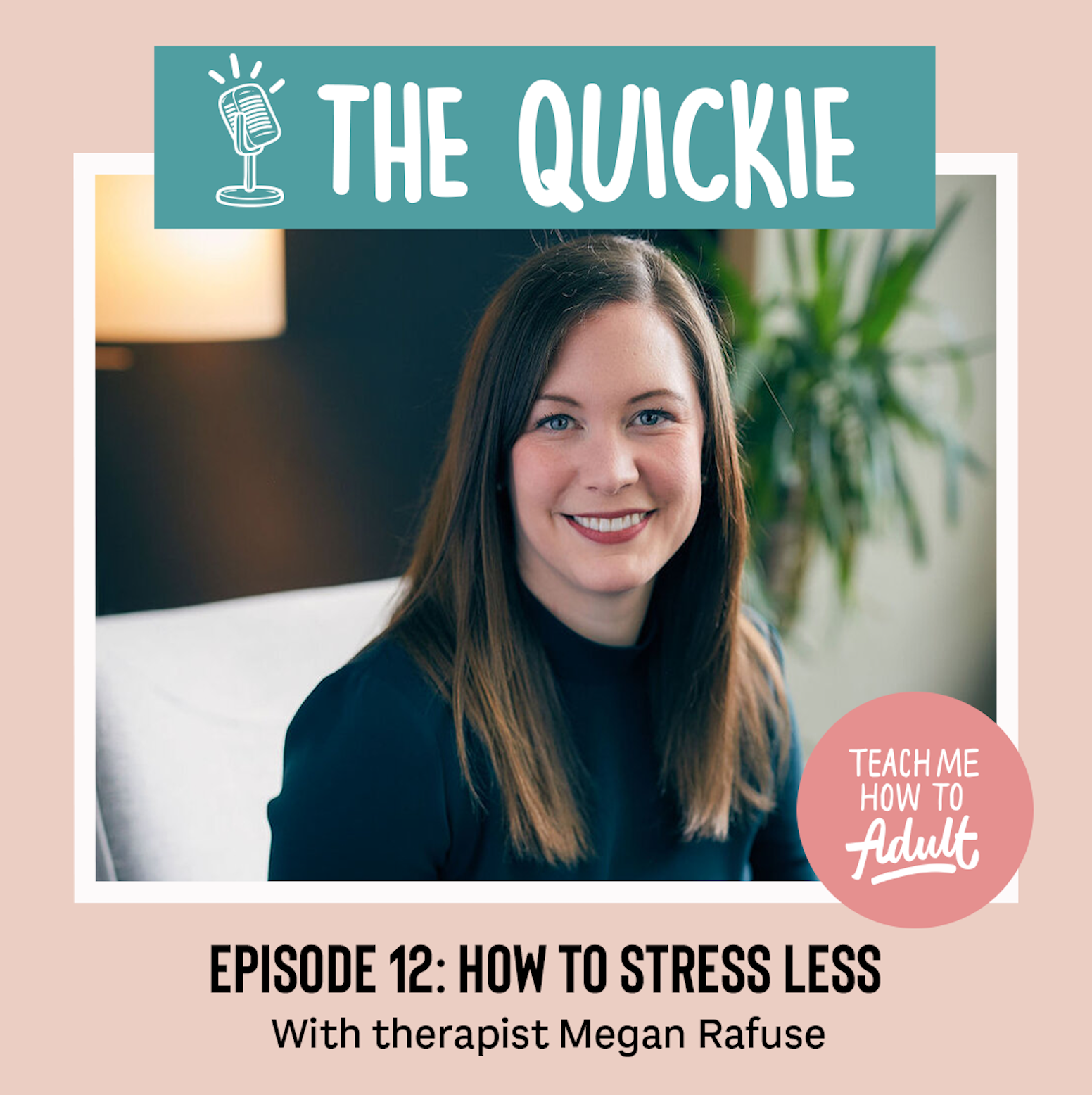
Episode 12: How To Stress Less and Manage Your Mental Health
If you’re feeling super overwhelmed right now, please know that YOU ARE NOT ALONE, and whatever you’re feeling right now, is 100% okay to feel. We’ve been feeling pretty damn stressed and a little moodier than usual if we’re being honest, so we’re really glad we are able to share this conversation. Because the more we open about how we’re feeling, the easier it is for others to share and normalize their experiences, too.
Many of us deal with some level of stress at the best of times, but when you toss a global pandemic and quarantine into the mix, it’s safe to say that almost everyone is feeling anxious and uncertain right now in some capacity. While some of us have been able to take this time at home to slow down and re-connect with the things that matter, others are struggling with unemployment, health issues, insane workloads, financial instability, loneliness, teaching AND parenting their kids, and just general WTF-is-the-future-going-to-look-like anxiety.
So, if you’re feeling super overwhelmed right now, please know that YOU ARE NOT ALONE, and whatever you’re feeling right now, is 100% okay to feel. We’ve been feeling pretty damn stressed and a little moodier than usual if we’re being honest, so we’re really glad we are able to share this conversation. Because the more we open about how we’re feeling, the easier it is for others to share and normalize their experiences, too.
We recorded an episode with therapist Megan Rafuse a while back, and we’ve put together a few highlights from our interview that are super relevant and helpful for anyone who may be feeling stressed today. Her advice and exercises have really helped us navigate our own stress and anxiety during this time.
Megan is a mental health innovator who specializes in millennial wellness. She’s the owner of the Toronto-based therapy clinic, Shift Collab, which offers one-on-one therapy and mental health workshops, catering to busy, highly-driven young adults. We hope Megan’s advice will resonate and offer some coping strategies and stress relief, so carve out a little well-deserved *you* time and read on for our key takeaways.
How can you get out of a stressed, anxious mental state?
“As women, we tend to be givers,” says Megan. “We want to support everyone else and sometimes that comes at the expense of ourselves.” We’re often stuck in a state of what Megan likes to call “Should-ing on yourself” and “Must-erbating”, where you find yourself thinking, “I should have done this, I shouldn’t have done that”. To combat this, Megan suggests we start challenging our “shoulds” with “coulds”. Flip the script and try saying, “I could have done this, but I have compassion for myself now, so I’m telling myself it’s okay that I didn’t.”
Another helpful strategy that Megan recommends is to think of your emotional and mental wellness as a bank account, and be aware of how many deposits you’re putting in versus how much you’re withdrawing. Start by making a list of things that make you feel fulfilled, like painting, working out, watching Netflix, calling a friend, etc. Then take your list and rate each item on a scale of 0-10 (0 being minimal nourishment, and 10 being the most nourishment) to figure out how much emotional “money” each one can add to your emotional bank account..
The key here is to be compassionate with yourself, notes Megan. “If I’m having a really tough day, I might not have the energy to do something that’s a 9. [So] I might not go for a long run, I might do a 2 and watch netflix and order takeout. And that’s okay, because putting $2 in your emotional bank account is better than none. It’s about not shaming yourself.”
And we all know that a reasonable level of stress is inevitable. It’s a part of our everyday lives and that’s what has helped humans adapt and survive over time. But when you start feeling too overwhelmed and burnt out, Megan recommends checking in with yourself and asking: “What have I done recently to put money back into my emotional bank account?”
“Things like our daily commute, how much time we spend at work, and relationship challenges [are] stressors. And stress tends to compound, [so] we need to know what helps us deal with our stress in order for us to be able to cope with it,” says Megan.
This exercise has been so helpful that we created an emotional bank account worksheet for you to use.
You can download it HERE!
How can we avoid the stress and added pressure of social media?
We would be lying if we didn’t admit that we sometimes compare ourselves to others on social media. Especially when we’re stuck at home in quarantine, it can add to the anxiety that we’re not doing enough or being productive enough when we see what everyone else is up to. Megan refers to these thought patterns as “compare and despair”. We compare our current state to other people’s curated highlight reels on social media, and then we despair and project negative thoughts about our own lives. Megan reminds us that “Our brain doesn’t have the capacity to recognize that Suzy probably took 100 photos to get that one shot and she used a filter.” So when you’re going through the compare and despair rabbit hole, Megan recommends to pause, let yourself slow down, and to take a social media break.
How can we identify the areas of our lives that are stressing us out most, and find more balance all around?
“A good way to manage stress, and burn out as well, is to think about our life as a pie,” says Megan. Start by drawing a circle with 8 slices that represent different areas of your life, and then rate how you feel in each area out of 10.
The key is to understand that you’re not going to have a perfectly rounded pie: “I think it’s kind of bullshit that we have to expect ourselves to have a fully round pie. Nobody has one, we will never have one. And it’s awesome not to have a fully balanced pie, because there are some areas in your life that you’re investing more time and energy into than others.”
This exercise will help you identify areas that you’ve been neglecting and may need to spend more time and energy on. It also allows you to give yourself some recognition for the areas where you’re crushing it!
If you’re eager to start doing this exercise, we’ve created a life balance pie downloadable for you as well! Download it HERE !
How to support loved ones and set boundaries when you’re at capacity with your own mental health
According to Megan, stress and burnout wants us to isolate. When showing up for others becomes too overwhelming and you need to focus on yourself, she suggests tackling this straight on and having an open and honest conversation. She recommends saying: “Hey I know I’ve been bailing on our FaceTime dates [for example]. I really care about you and value our friendship, but I am really struggling. Can we put our FaceTime dates on hold, but can you keep reaching out and send me a text every once in a while?” This helps remove the guilt and avoidance that can amplify if you just ignore your plans with people.
It can also be hard to support your loved ones when you personally don’t have the mental or emotional capacity to take on any additional stress. How can you take care of others if you can’t take care of yourself first?! If you find yourself in this situation, Megan suggests total honesty by acknowledging that you’re both struggling and that neither of you have the capacity to support one other. Then, you could brainstorm who else you can both lean on for more support. Not sure how to broach that convo? She recommends saying: “I hear you, and I really care about you, but I also don’t have capacity [right now]. How can we support each other through this [in a way] that doesn’t feel like it’s going to drain us even more?”
How do you know if your problems are “bad enough” to seek help?
We’ve both been guilty of letting our problems fester for too long, or if our problems are even big enough in the first place to warrant talking to a friend or going to therapy. So when it comes to dealing with these thoughts, Megan’s advice is simple: “There is no such thing as ‘bad enough’. If you feel like you’re struggling, reach out. Start with the people that know and love you.”
We hope that our chat with Megan helps you find some ways to manage your stress and anxieties, and also helps you to know that you’re not in this alone.
If you have a topic you’d like us to cover or a guest you want us to interview, comment or DM us on Instagram:
Connect with Megan here:
Related Episodes:




Episode 11: How To Budget…And Feel Good About My Money
Money is on everyone's minds right now, but most of us can't make sense of how to manage it. It’s more important than ever to keep an open dialogue about your financial wellbeing, especially as we navigate the effects of the Coronavirus on the economy and workforce. So we're diving into money management, budgeting, savings hacks and the psychology behind how we spend our money with finance expert Melissa Leong.
Money is on everyone's minds right now, but most of us can't make sense of how to manage it. It’s more important than ever to keep an open dialogue about your financial wellbeing, especially as we navigate the effects of the Coronavirus on the economy and workforce. So we're diving into money management, budgeting, savings hacks and the psychology behind how we spend our money with finance expert Melissa Leong.

Melissa is an award-winning finance writer, an on-air money expert on Canada’s leading daytime talk show, The Social, the best-selling author of the feel-good finance guide, Happy Go Money, and the host of the Money Moves podcast. We spoke with Melissa a while ago, before the Coronavirus hit, but her advice on saving, spending, and improving your relationship with money is more relevant than ever.
Melissa makes personal finance fun and relatable, and she wants everyone to start having more conversations with themselves and their peers about money. And when it comes to spending habits, she keeps it refreshingly real: “I’ve learned you can make money work for you, you have to take risks, and you have to invest in the things you care about, like your business, or the things you value...It’s okay to spend money.”
Here are some of the key takeaways from our chat with Melissa:
Budgeting 101: Six key steps for your “spending plan”
1. Calculate your after-tax income and your fixed costs
Your after-tax income is the amount of money that you actually take home each paycheck after all applicable taxes and deductions have been applied. If you’re not sure what your provincial or state tax is, check out these resources:
Your fixed costs are all of the things that you have to pay each month. Think: rent, your mortgage, student loans, car insurance, internet, hydro, etc. Make sure these necessity costs are covered in your budget and that you’re chipping away at being debt-free!
2. Automate your savings
“The savings habits that you establish now will set you up for when you are older,” says Melissa. “You need to start early. You need to have started saving...yesterday! Ten years ago! So if you can, start right now and set up something [that is] automatic.”
Most banks let you set up automatic deposits from your checking account to your savings account on a monthly basis, which you can increase over time. “I don’t care if it’s $5, $20, or $50, set yourself a calendar reminder to bump it up a tiny bit every few months and see if you can keep bumping it up,” suggests Melissa. “I promise you, you’re not going to notice that the money's gone and it will go towards your goals. You need to be putting aside money for short term goals, like a wedding, and long term goals like, retirement. No one is going to look after you, but you.”
3. Track your spending
Once you know your income and fixed costs, track the rest of your spending for one to three months so that you know where your money is actually going (UberEats? Sephora? Manicures? The struggle is real.) There are tons of apps out there like TD MySpend and Quicken (our personal faves) that can do this for you. Once you know where your money is going, you’ll have a better idea of where you might need to cut back—did I really need to sign up for a wine delivery subscription service!?—and how much you can allocate to other important things, like your money values.
4. Set up an emergency fund
As Melissa reminded us, “you don’t know when life is going to turn sour, and you don’t want money to make your life’s problems even worse.” Especially right now, when there’s so much economic uncertainty and job instability in the near future, it’s so important to save up and contribute to your emergency fund. Melissa recommends setting aside three months of living expenses—even more if you’re a freelance worker.
5. Identify your money values
We’re both cutting back and saving up right now, as are a lot of us, but you can still figure out the things that matter most to you that you are comfortable spending money on. These are the priorities that genuinely fulfill you and feel good to spend on, and you should do so without guilt so long as you make concessions elsewhere.
6. Get clear on your financial goals
Trust us, it’s real hard to save if you don’t know what you’re saving for. So whether it’s a new car, a future trip, or a downpayment on a home, get super clear about your goals so you have some purpose to drive all of that saving.
The psychology behind money and spending
Before you can succeed with a spending plan and your financial goals, you first need to understand and solve for your relationship with money. This goes back to how you were raised, Melissa explains. Money is tied to vanity, pride, values, worth, self-esteem and years of associations that you’ve picked up from your environment. But the more we talk about it, the more we can demystify the power money holds: “Let’s talk about how you use money, because money is just a tool,” says Melissa. “It has no meaning. You give it meaning. What meaning are you giving money? What do you think of automatically when someone mentions it?”
The truth is, very few of the things that make you happy can be acquired. “Often, what people spend their money on is to alleviate some sort of pain…we’re buying as a symptom of something. [So] you need to fill your void before you can think about your budget...If you spend because you’re stressed, let’s work on the stress. Then spend your money on meditation classes, or time with loved ones, or experiences.”
Turns out money CAN buy “happiness”...you just need to know how to spend it
“Part of being an adult is making choices, and personal finance is all about choices,” says Melissa. “Don’t let anyone tell you that you can’t buy a latte if you really love lattes.” Remember, it’s not about counting every single penny that goes out your door: “It’s about choosing something that you enjoy, something that you value, something that makes you happy, and then allocating your resources to that and sacrificing elsewhere.”
And that, friends, is why establishing your money values is so important! Identifying them will help you cut back on areas that aren’t actually important to you, so you can spend on areas that fulfill you.
But is there really a happiness threshold when it comes to making money?
Researchers have studied the “magic number” of how much money people need to make to feel happy, and they’ve landed on two figures: Melissa explains that when it comes to day-to-day happiness, the income threshold is $60-$65k USD per household. When it comes to overall life satisfaction, that threshold is closer to $90k per household. But what does that even mean?
“What this [research] is showing is that you need to cover your basics. Any more money above these thresholds is associated with a decline in happiness,” says Melissa. “You may be working more, [it’s] more stressful, you may be focusing on other things that are not as affirming like comparing yourself to others or more material goods.”
One of the interesting aspects of the human psyche is that “we have this wonderful thing called hedonic adaptation, which means whatever it is that you get, you often get used to it, and return to a baseline of happiness,” explains Melissa. This means that no matter how much you make and obtain, you’ll generally get used to that level, and you’ll want more.
So what do we do about it? It’s all a never-ending quest for happiness, says Melissa, but if you want to use benchmarks to be effective in your earnings and success, you should say: “‘If I make this amount, then I will achieve this specific goal.’ That makes it not about happiness—which is a futile quest—it makes it about doing something tangible and helpful to your life, like [paying] off your mortgage faster. Those are specific things, it’s not about joy.”
How do you “flip the script” on your negative money talk and get comfortable broaching it?
When it comes to talking more positively and openly about money, Melissa recommends a few strategies:
Watch your language: “Being aware of the way that you automatically talk about money is the first huge hurdle”, says Melissa. We often don’t pay attention to our internal dialogue and the kind of language we use towards ourselves. “There is a lot of shame and there is a lot of guilt [around money], so being aware of how you put yourself down when it comes to finances is a first step.” Instead of joking that you’re too broke to go out with friends, flip the script and say that you’re working on paying down your debt. “You’re not broke—you’re working on something,” says Melissa. “I don’t feel empowered when somebody is bullying me. So if you’re bullying yourself in your mind, you’re doing yourself a disservice.”
Talk to someone you trust: Talking about your money and savings goals with a friend, family member or colleague will make it okay for them to reveal their own truths about money. “Together we can empower each other to make that conversation easier,” says Melissa.
Take action: “Often confidence comes from doing”, Melissa explains, so even the smallest actions like putting $5 aside each week, or emailing HR about your company’s retirement plans, will help you gain more confidence when it comes to your finances.
What’s the skinny on TFSAs and corporate RRSP programs?
Despite its name (TFSA = tax-free savings account), Melissa reminds us that even though “it’s called a savings account, the power of [a TFSA] is that it’s an investment account.” The beauty of a tax free savings account is that your investments can grow tax-free, so to reap the full benefits of a TFSA, Melissa recommends using it for investing and long-term savings. The Canadian government first introduced TFSAs in 2019 to encourage Canadians to save more money, and since you paid taxes on the money that you put into your TFSA, you do not have to pay any taxes when you take money out. And unlike an RRSP, you can take money out of your TFSA at any time. But there is a limit as to how much money you can contribute to your TFSA each year (known as your contribution limit), which varies from year to year. You can check your contribution limit by logging into your CRA account.
When it comes to corporate RRSP matching programs, Melissa says it best: ”Any program where you are essentially getting free money is...Go! Run there now! Flip your desk and run to HR!” RRSPs (registered retirement savings plan) were introduced to help provide Canadians with tax breaks to incentivize them to save for retirement. The main benefit of an RRSP is that any tax on your RRSP contributions are deferred until retirement when you withdraw your money, so you pay less tax in the year that you contribute. Your RRSP contribution room is 18% of your income, or a maximum amount, which you can also find on your CRA account.
If you can enroll in a company RRSP program or an employee share program where your company matches a portion of your contribution, never leave money on the table!
It might feel overwhelming to get started, but remember that it’s never too late. “I’m sure we can all look back and regret the things we’ve done in the past,” says Melissa, “but we made the choices that we made based on the situation at that time. We did our best. So now we’re trying to empower you with information...but it’s up to you to actually take action!”
We know that these may be stressful times financially, so be sure to consult with a financial advisor or trusted expert if you do need help, and take advantage of any financial resources that you may be eligible for, like the Canada Emergency Response Benefit, if your income has been affected by COVID-19.
We hope that our convo with Melissa inspires you to take control of your personal finances! DM us and let us know how your financial journey is going, and what tips and tricks you’ve used to find financial freedom. See you next week!
If you have a topic you’d like us to cover or a guest you want us to interview, comment or DM us on Instagram:
Connect with Melissa here:
Shop this Episode:


Related Episodes:


Episode 10: How To Form A Habit - And Stick To It
We’ve all heard these famous sayings, “We are what we repeatedly do” and “excellence is not an act but a habit.” But how do you actually form new ones that stick? In episode 10, we’re diving into how to hack your habits (and actually stick to them).
We’ve all heard these famous sayings, “We are what we repeatedly do” and “excellence is not an act but a habit.” But how do you actually form new ones that stick? In episode 10, we’re diving into how to hack your habits (and actually stick to them).
It only takes 21 days to form a habit, and with all this time spent at home right now, a lot of us have more time and space to work on developing new behaviours we’ve always wanted to tackle. But it can feel really daunting and hard to find the motivation, because we’re all out of our routines, and habits require routine.

But habits don’t need to be these huge, crazy life changes! They actually work best when they’re small, subtle tweaks, and the key to making them stick is routine. It’s turning your habits into automatic processes where you can act without thinking, like brushing your teeth before bed.
The science behind our habits
It helps to understand why habits are at the core of everything we do, and how you can shape and change them to have a positive impact on your life. One of the best books on this topic is The Power of Habit: Why We Do What We Do in Life & Business by Pulitzer-prize winning best-selling author Charles Duhigg. Duhigg explains that habits work in 3-step loops: Cue, Routine & Reward.
The Cue is what triggers you to do a habit, so, setting your alarm to wake you up everyday at 8:00AM. Having a trigger helps create a ritual that you can use to follow through with your habit.
The Routine is the behavior that you then automatically do after the Cue. For example when you first get out of bed you might brush your teeth, wash your face and go make a coffee in the same order every day.
And then the Reward is the part of the loop where you receive something for completing your habit. So that could be the comforting feeling of that first sip of coffee in the morning. Or maybe it’s taking a long hot shower after a tough workout.
So the key to start forming new habits or to changing any bad habits, is to understand your cue, change your routine and, reward yourself in a positive way that will encourage you to want to do that habit again and again.
Shaping your identity with habits
Simple habits have the power to change your self-image, confidence and mindset. That’s why they really matter—they change your internal narrative about yourself. How many times have you told yourself that, “you’re not a morning person, you’re bad at remembering things, you’re just not organized, or you’re always late?” The thing about habits is that when you show up and follow through with them, they help support the ideals of being a certain type of person.
Habits are the evidence that allows you to identify as something: Your immediate goal may be to run a marathon, but it’s ultimately to identify as a “runner”. You might want to start reading a few books on your list, but what you actually want, is to be “a reader”.
You can also think of habits like you think of compound interest, in the sense that the effects of your habits multiply as you repeat them. You might not see a lot of difference day to day, but they can really change your life in a few months or years. They’re like the compound interest of self-improvement!
7 Ways To Hack Your Habits
Whether you’re looking to nail a new morning routine, start meditating, read more, or start working out (check out episode #9 of the podcast, with fitness coach Beverley Cheng, for more workout inspo), we’ve rounded up seven proven strategies for making new habits stick.
1. Commit to 21 days
It only takes 21 days for a habit to stick, and once you’ve established that habit, if you keep up with it for 90 days, it’s guaranteed to become a permanent lifestyle change.
2. Be realistic
It’s way easier to stick to new habits if you start simple. Don’t try to completely change your life in one day, so start small and build from there. If you’re feeling super overwhelmed by a big goal, habit expert James Clear (the author of Atomic Habits: An Easy & Proven Way to Build Good Habits & Break Bad Ones) recommends The Two Minute Rule: Take whatever habit you’re trying to build and scale it down to something that takes just two minutes everyday. So, reading more books becomes reading just one page a day. Working out daily becomes a quick two minute sweat sesh. Then you can build on that scale up once it’s become a habit.
3. Be consistent
Consistency is super important for making a habit stick. Try doing it at the same time, and in the same place when possible for those three weeks. Cues like time of day, place and environment will help make these changes permanent.
A great way to stay consistent is to try Filmmaker and Youtuber Matt D'Avella’s The Two Day Rule: Don’t go 2 days in a row without doing your new habit. That way, if you skip one day you don’t need to beat yourself up over it or give up. Give yourself a one day grace period and you’ll be more likely to stick to your new habit.
4. Try habit stacking
If you’re trying to do a bunch of small tasks regularly, a proven way to get shit done consistently is to group those activities together into a routine, and to link that to a habit you’ve already already set in your day. This anchors your new habits to an existing trigger, and it really does work.
5. Create visual cues
Tangible cues can act as regular reminders to practice your habit. For example, put your running shoes somewhere visible if you want to workout more or put athletic clothes on when you wake up, or leave your book on your night stand if you’re trying to read more.
6. Schedule in your habits
Scheduling whatever it is you’re trying to accomplish will help you treat it as a non-negotiable that you have to work around. Using an app to track your progress or to help set daily reminders is a great app—we recommend the Tally app, which lets you set daily or weekly goals for each habit. You could also use a connected device like Amazon Alexa to set reminders during the day.
7. Track your progress
You can also track your process the good ol’ fashion way with pen and paper, with something that habit hackers call the Seinfeld method, which was coined by—you guessed it!—Jerry Seinfled. When he was training to become a comedian, he knew that the only way to get better was to consistently write and test out new jokes, so he got a giant calendar and a big red magic marker and would mark an “X” every day that he wrote. Eventually you’ll get a big chain of X’s that will keep motivating you to add more.

We’ve created a free downloadable habit tracker to help you get started, so be sure to check it out here and start tracking your progress!
We hope these tips will help motivate you to start forming the new habits you’ve been dreaming of. Hit us up on social and let us know what’s been working for you!
If you have a topic you’d like us to cover or a guest you want us to interview, comment or DM us on Instagram:
Shop this episode:


Related Episodes:

Episode 09: How To Crush Your Workout Routine (at home!)
If you’re getting as restless as we are while we’re all stuck at home, and you’re fresh out of banana bread ingredients, it might be time to tackle that workout regimen you’ve been meaning to start. It’s hard to find motivation while we’re all staying inside, but right now is actually the best time to begin your fitness journey!
If you’re getting as restless as we are while we’re all stuck at home, and you’re fresh out of banana bread ingredients, it might be time to tackle that workout regimen you’ve been meaning to start. It’s hard to find motivation while we’re all staying inside, but right now is actually the best time to begin your fitness journey!

We interviewed fitness coach and Instagram workout sensation Beverley Cheng, and she gave us some seriously fire advice and insight on taking control of your health and workouts. It’s okay if you’re struggling to get moving, but as we all know, staying active is really good for your mental and physical health, and it gives you some much-needed structure and normalcy. Here’s a few things that have helped us stick to a fitness routine:
1. Find what you love. Don’t push yourself to do a workout you hate or a big part of your routine will be dreaded. Gillian’s favourite workouts include: Studio Lagree reformer pilates, Big Hit boxing, Kayla’s BBG fitness program, the Glo yoga app, and following Beverley’s Instagram workout videos (which kicked my ass so hard I couldn’t go up the stairs for two days.)
Cailyn loves strength training through the Tone It Up app, HIIT or Tabata, hot yoga classes (or the Yoga With Adriene YouTube Channel) and spin classes. She also just took up cycling with her hubby so they can get outside and enjoy the fresh air while exercising.
2. Workout for a positive goal, not a negative one. Try to workout to feel your best mentally and physically, versus as a punishment or out of guilt. Do it so that you can live your best damn life. And if you fall off the wagon one day or miss a workout, don’t sweat it! Just pick it back up the next day and don’t be hard on yourself.
3. Get some skin in the game. If you’re paying for classes, a personal trainer, or a gym membership, you’re more likely to make the most out of your investment and follow through with your workouts. ClassPass is a great option if you love a variety of exercise, but you can still invest in working out at home right now, too. You don’t need much equipment, just pick up some dumbbells, order a yoga matt and some resistance bands on Amazon and you’ll be good to go. If you can afford to, investing in an at-home training program from one of your favourite trainers will really help keep you on track: Beverley Cheng’s Fit From Home workout program is the perfect way to get in shape from your living room. This affordable 21 day training plan will have you working harder than any gym membership!
4. Get an accountability buddy! Working out with a friend or your partner helps motivate you on days when you’re just not feeling it.
5. Reward yourself! Celebrate your wins and reward yourself with new workout clothes, new running shoes or a special favourite meal you can cook or order in after a great workout. We love treating ourselves to a fresh pair of running shoes or a new sports bra!
Before the Coronavirus hit, we chatted with expert Beverley Cheng for some #realtalk on how to actually commit to our fitness progress. Beverley is a fitness coach and wellness content creator who specializes in online virtual training. You’ve probably seen her killing it on Instagram and on her blog Born to Sweat, where she serves up workout videos and recipes. Recently, she’s been helping people take care of their health while quarantined by live streaming workouts on her Instagram and through her Fit From Home program. This program is amazing—it’ll kick your ass into shape, and it’s only 21 days with 5 workouts a week that are all under 40 minutes long!
Beverley has a refreshingly holistic and body-positive approach to training: “I believe when you start out on your fitness journey a lot of us think it’s just about getting fitter, looking better, getting that skinnier waist or bigger booty, but I like to look at it as having a stronger body, but also a stronger mind, and therefore a stronger you.”
Why routine is more important than that “magic” motivation
Beverley says that learning how to create solid habits and schedules is the key to success in fitness: “I don’t think it’s about motivation. It’s about routine and consistency. I’ve created a structure and life where I have to workout five days a week, and if I don’t, something feels off. A lot of time people are just waiting for motivation to hit, but it’s never going to come. That’s not how we work. But we are very routine as humans, and we do follow habits.”
She also believes that finding your overarching “why” is super beneficial for keeping you accountable. “It really helps to figure out why you’re doing something and why it matters to you. Especially on the days when you really don’t want to go [workout], it’s important to understand why you’re doing something. Not just physically to get a smaller waist or bigger butt, but to be able to live pain free, play with [your] children, or set a good example.”
How to jumpstart your fitness routine this week
If you want to really start your fitness routine right now, there are three simple things Beverley recommends you begin today:
Start drinking more water! You should ideally be drinking 3 litres—and peeing a lot! (It helps to invest in a good water bottle. We love S’well and YETI)
Get organizing and scheduling: Start consistently scheduling your workouts in advance. Putting exercise in your calendar and planning around it is what makes it a priority. That’s when your fitness routine becomes a non-negotiable.
Get an accountability buddy! It can work wonders to share your fitness journey with another human, whether it’s a friend, coworker or coach.
How to overcome weight room anxiety
Next time you’re feeling fearful about trying new equipment at the gym, consider Beverley’s real talk on gym anxieties: “Literally, no one cares about you when you’re working out. Nobody cares about what you’re doing. Everyone cares about themselves. And if anyone is watching you workout, they have a problem with their own workout routine.” #TRUTH.
Beverley also says that if something intimidates you, you should do everything you can to prepare for it in advance so you're confident going into the situation, and “if something makes you uncomfortable, it means you should probably do it.”
Stuck at home? Use this time to prep and perfect those power moves
If you’re new to weight lifting or intimidated by your gym’s weight room, Beverley says there’s a lot of prep and practice you can do in advance. So use this quarantine time to practice and research. “If you really do struggle with trying something new out, prepare for it!” says Beverley. “If you want to do a Barbell Hipthrust, and you don’t understand how to get into the position, how to put weights on the barbell, where you should set your shoulders up, take that as an opportunity to learn. Watch YouTube videos. Google ‘how to set up for a barbell hipthrust’. Do as much research as you can until you feel completely confident.”
You can also use this time to research how you can build up to some of those weight room power moves at home: You could be doing kettlebell swings to build up to deadlifts. All of this will help you so that when we’re free to hit the gym again, you know what you’re doing.
How to set realistic goals
Beverley recommends outlining your overarching goals, and then breaking them down into things that you can do daily or weekly. Those are the micro-goals you want to focus on. “Rather than establishing one big goal, look at all the steps it takes to get you there: Diet, sleep, workouts. Break it down from there and create a structured routine that’s going to help you get to that goal. Set those intentions for yourself.”
These incremental goals will help you stick with it for the long run. Rather than tackling a mountain, incremental benchmarks let you celebrate the small wins along the way and set doable daily intentions.
Your goals will also play a big part in shaping your fitness regime. “When you’re structuring your own workout routines, it depends what your goals are. You can work every week to build a strong back, and work on that area. Say you wanted to firm up your legs or glutes, you would adjust your workout routine to have 2x lower body days a week,” explains Beverley. “But I make sure to hit every part of my body [at some point] throughout the week.”
How to accurately track your progress
The best way to track your progress with unbiased honesty is through photos—unlike the fluctuating (and sometimes toxic) scale, pics don’t lie! Beverley says you should take front, side, and back photos at the same time of day with the same clothing and backdrop when possible for the sake of consistency and accuracy. She also recommends keeping a journal or app to track your workouts and behaviours—Beverley tracks the weight and number of reps she logs at the gym every time she goes, so she can monitor her progression and address any plateaus.
A gentle note on “falling off the wagon”
Just remember, this should be a long and positive journey towards a healthy, balanced life—not a strict quick fix. If you take a fews days off from working out, or eat food that you don’t consider healthy, it doesn’t mean all is lost. “Just look at the next day as a brand new opportunity,” says Beverley. “It doesn't mean that everything has to go down the drain, or that you screwed up...It’s just a new opportunity to eat something better later on that’s going to nourish your body. Become more flexible and look at this as a fun journey, not just a rigid structure.”
We hope you're feeling super fired up and motivated by our chat with Beverley. Slide into our DMs, and hit up Beverley on Insta, to let us on how your fitness journey is going, and what’s been working for you at home!
If you have a topic you’d like us to cover or a guest you want us to interview, comment or DM us on Instagram:
Connect with Beverley here:
Shop this episode:


Related Episodes:

Episode 08: How To Sleep Better So You’re Rested AF
If you’re like us, you might be finding it hard to sync up your sleep schedule with this new WFH life. And even though we’re all stuck at home doing nothing and should be sleeping more than ever, a lot of us are struggling because our entire routine has changed. Obviously, we all know that we should be striving to get eight hours a night—that’s the dream. But it’s way easier said than done.
If you’re like us, you might be finding it hard to sync up your sleep schedule with this new WFH life. And even though we’re all stuck at home doing nothing and should be sleeping more than ever, a lot of us are struggling because our entire routine has changed. Obviously, we all know that we should be striving to get eight hours a night—that’s the dream. But it’s way easier said than done.
So we’ve done the research to help you catch your Zzzs, and we’re diving into 6 tips on how to fall asleep fast:

1: Wake up & go to bed at the same time every day
Yes, even on weekends! Welcome to adulthood. It’s all about regulating your circadian rhythm, which is basically an internal clock that runs in the background of our brains 24 hours a day, and cycles between stages of sleepiness and alertness at regular intervals. Your circadian rhythm works best when you have regular sleep and wake habits at night and in the morning. Obviously things get in the way, like daylight savings, pulling an all-nighter for work or school, or binge-watching Netflix till 3:00am...shit happens, we’ve all been there. But if you can stay regular with your sleep schedule you’ll avoid disrupting your circadian rhythm, and those disruptions can make you feel groggy, moody, and can make it harder for you to pay attention during the day.
2: Watch your caffeine intake
This is a hard one, especially if you’re like us and LIVE off coffee. We’re not saying you need to go cold turkey, but if you're having trouble sleeping at night try reducing your caffeine intake in the afternoon. We’ve learned that our cut-off time is around 3:00pm for our last cup, so test it out and see what works best for you.
3: Watch what you eat and drink before bed
Try to avoid eating large meals before bed that’ll send your digestive system into overdrive. And even though we all love a glass of wine at the end of the day, studies show that booze is known to increase the symptoms of sleep apnea, snoring, and can disrupt your sleep patterns. Yep, we know...this is why we can’t have nice things. Just choose your wine nights wisely, especially when you’re running low on sleep.
4: Create the ultimate sleep den
Optimize your room to become the coziest sleep den. Your bedroom should only be used for two things: sleep and sex. Straight up. Here are some ways that we’ve created our own sleep haven:
Purchase blackout curtains. These have been a game changer for us!
Dim the lighting in your room in the evenings. Mood lighting is key all-around.
Put on a diffuser with sleep-promoting essential oils. Aromatherapy is such a tried-and-tested way to promote calmness and restfulness before bed, and your fave scents can become a tangible cue or trigger for your mind that it’s time to sleep. We love the Sweet Dreams set from Saje or this amazing set that we always keep by our bed-side tables!
Invest in some comfy blankets - weighted ones are all the rage right now and can help you relax and fall asleep faster. This one is our favourite - it’s like a warm hug when you crawl into bed!
Keep it cool. Studies show that the optimal temperature for sleeping should be between 60 to 67 degrees fahrenheit (or 15-19 degrees celsius). AKA cold AF.
5: Limit your exposure to Blue Light
Your phone, TV, and laptop all emit blue light which can trick your brain into thinking it’s earlier than it actually is, and delays the release of sleep-inducing melatonin. If you can, try to not bring any devices into the bedroom an hour before sleep and make it a “no device zone”. If you’re guaranteed to get separation anxiety from your gadgets at night, here are some things you can do:
The only phone hack you truly need to know: Create a shortcut on your phone to switch to a red light at night if you’re like Gill, and can’t stop FaceTiming or watching YouTube videos before bed.
Download an app called F.lux that automatically changes the lighting settings on your laptop at night.
MAJOR HACK: Invest in some cute blue light blocking glasses to wear at night. These pairs are our fave, Cailyn wears them all the time and they’ve been a real game-changer!
6: Establish a bedtime ritual
And finally, establishing a relaxing bedtime ritual can help you wind down at the end of the day. Try doing a meditation (check out our guided meditation with Nina Purewal below from episode 5!), listening to calming music, reading, or unwinding to uber-relaxing ASMR videos. Do something to turn off that chatty mind so you can get to sleep.
We’re going to commit to testing out all these tips this week because we are tired as hell. So follow along with us on insta and we’ll keep you posted on how it goes! Hit us up on social and let us know what tricks help you sleep better. Sweet dreams!
If you have a topic you’d like us to cover or a guest you want us to interview, comment or DM us on Instagram:
@teachmehowtoadultpodcast
See you next week! xo
Shop our favourite sleep picks!


Related Episodes:

Episode 07: How To Pivot Your Small Business and Thrive Online During Coronavirus
With the hard-hitting effects of coronavirus, it’s a tough time for entrepreneurs and small businesses right now, so we’re diving into all the ways you can pivot your business to digital, because your business deserves to make it.
Today, we’re tapping into our favourite moment from Friends so we can all learn to PIVOTTTT! PIVOTTTT.
With the hard-hitting effects of coronavirus, it’s a tough time for entrepreneurs and small businesses right now, so we’re diving into all the ways you can pivot your business to digital, because your business deserves to make it.
How your business responds to this crisis will play a huge part in its future, and we want to help, so we talked to digital guru, business consultant and productivity strategist, Alyssa Coleman. She’s the founder of The Productive Entrepreneur, a strategic coaching program, she hosts events for companies like Lululemon, and she runs epic career-coaching retreats around the world. Listen to the episode or scroll down to see all of the tips, tricks and strategies that Alyssa shared with us to help keep your small business going.
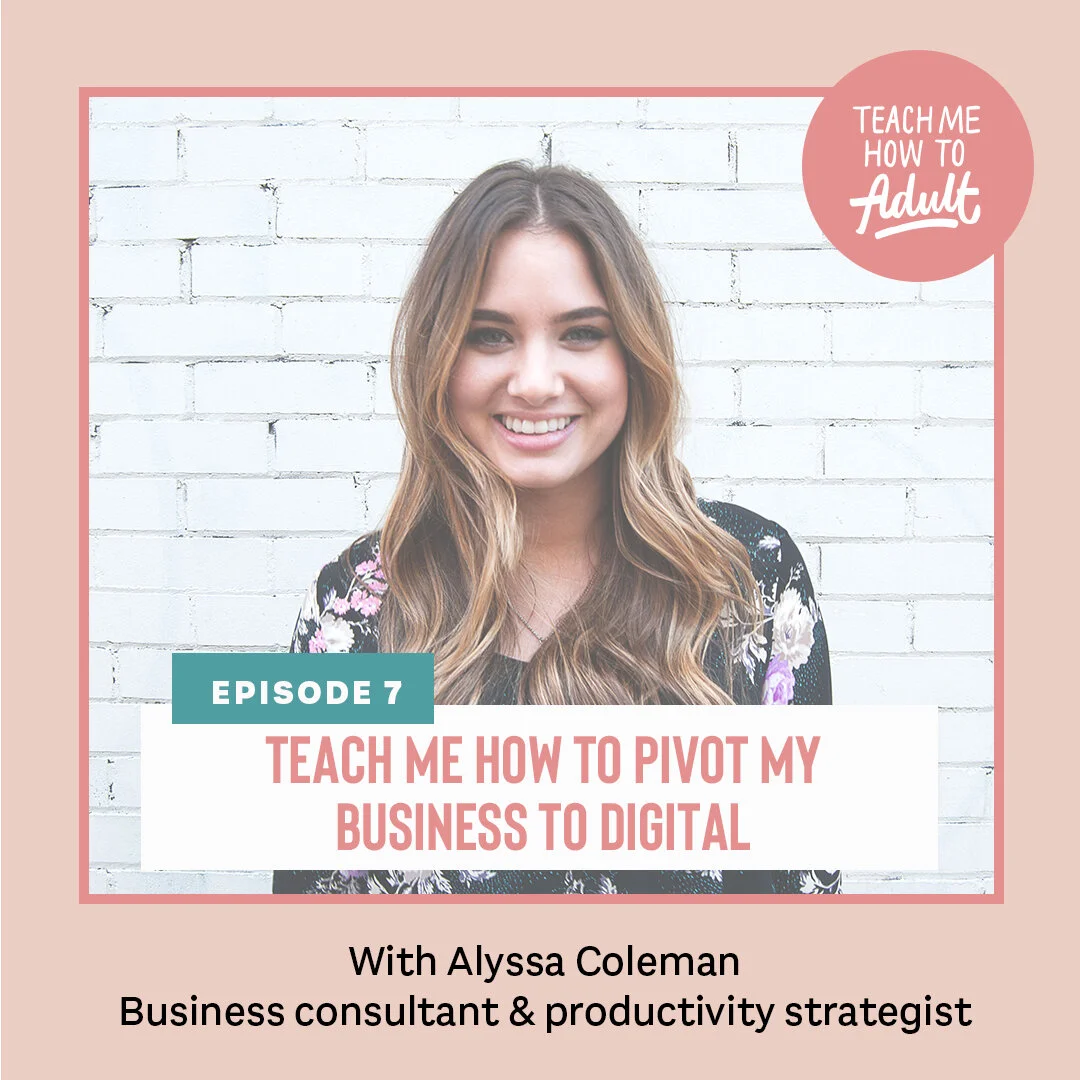
We were SO inspired by our chat with Alyssa and have already started seeing results from her advice. She has tons more strategies that helped us, and you can access all those processes, templates, workbooks, video training and tools in
her signature program Your Most Profitable Quarter Yet.
BONUS: She’s giving Teach Me How To Adult listeners a special discount of $250.00 off the program when you sign up with THIS LINK and use the code “FRIENDPRICE”!
Things may look a lot different for you for the next while, but that doesn’t mean you need to give up on our business altogether. Whether you’re a big company like Dyson, which is producing ventilators to help fight Covid-19, or a local distillery that’s now exclusively making hand sanitizer (shoutout to Mill St. Brewery), there are lots of ways to pivot and make an impact.
And if you’re just trying to stay afloat and make ends meet right now, the best place to start is online. Spend this time rethinking your products or services to meet current demands, and consider how you can help out and get active in your online community:
Offer encouragement and support to your audience
Give them a behind the scenes look at your brand on social
Remind them that you’re still in business and that you still have services, products or content to offer
Experiment! Get super active on social media and forge new connections. Find your people and let them know how they can help you
Figure out what your customers need right now, and help solve their current problems
Lots of gyms and fitness studios are offering free classes Live on social now. In Toronto, Tribe Fitness is running some of their most popular classes on Instagram Live and offering their full class schedule at a discounted rate via Zoom. All Day Fit launched an online hub with daily workouts that focus on body weight and minimal equipment...just in case we decide to move from the couch. Here’s our favourite gear to use for at home workouts.
Nail salons like Naked Beauty Bar, Olive & June, and Her Majesty’s Pleasure are offering new retail products like at-home nail kits to ensure their customers are still taken care of. (The nail situation is getting dire, people!)
Local restaurants are donating food to the front lines and moving to delivery options at lightning speed. In Toronto, Miss Thing’s developed an online delivery strategy so they could cut out the middleman and keep 100% of their sales revenue, and they’re helping other restaurants develop sites that allow contactless delivery.
Just remember that incredible innovation has still happened during global crises. Uber and AirBnB were invented in the 2008 recession. Shakespeare wrote some of his most famous plays during a plague, Newton discovered gravity and invented calculus while quarantined… although we could’ve lived without calculus.
So, don’t give up! Here’s Alyssa’s advice on pivoting to digital:
Is now a good time to get planning and innovating in your small business?
According to Alyssa, now is the best time to ramp up and rethink your digital strategy. “People are being forced to get creative and become really resourceful with their businesses. They’re using this time as a magnifying glass to say: ‘Hey, I really rely on one specific income stream, and I'm going to use this time to diversify’.”
This quarantine is also a call-to-action of sorts for people who have side hustles or who have been putting their dreams on the back burner. “A lot of us are using this time to really focus on our businesses, on the things that we can control as a way to get through this. Sometimes you need to put your head down and focus on the things that you can control and be optimistic about in order to move forward,” says Alyssa.
Four non-negotiables entrepreneurs should be doing daily
To succeed as a small business in the digital world right now, Alyssa recommends following her “Big Four”—four non-negotiable steps that brands should focus on every single day to increase their sales and customers:
Business mindset: Now more than ever, it's super important to invest in your business mindset. “Entrepreneurship is a mental game,” Alyssa says, “and you need to make sure that you are not becoming the thing that's holding your business back.”
Growth: Look at your audience, and potential audience, and figure out how you can grow by at least one person on your email list or social channels everyday.
Nourish: How can I help people? Every single day, you need to show up and provide value to your audience, regardless of whether or not they’re going to buy something from you.
Make an offer: If you number three really well, then this should never come off as a hard sell. “I love that a lot of businesses are really showing up and offering things for free right now,” says Alyssa, “But we should all be putting out free value everyday, whether you’re showing up on social and answering questions or providing free training videos or podcasts.” Then, you never need to feel uncomfortable for promoting your product or service.
How to make the pivot to digital as a brick-and-mortar business
It’s a really overwhelming time for brick-and-mortar businesses, but it’s also an opportunity, says Alyssa. “You’re going to need to get creative, and most entrepreneurs are very creative and resourceful, so you already have those tools in your tool belt. You need to look strategically at what [you] can provide to [your] current audience, rather than trying to start from scratch and grow a whole new audience. Most of these people already do have potential customers, past customers, online followers.
I think it's really important to ask yourself: ‘How can I show up for them right now in a way that's going to provide value, and then how can I offer something more that's going to make their life easier or better that I can charge for?”
Take a hair salon, for example. Owners could start by putting out some free, value-added content like videos or articles on how to treat, cut or style your hair at home while keeping it healthy. Then, they could buy in bulk and start delivering at-home hair masks, colour correctors and dry shampoo (so we can all look fresh on our Zoom meetings!).
How to make digital sales if you’re a service-based business
Alyssa says that the biggest shift to digital happens when you start selling digital products and resources. Let's say you're a hair colourist, you can start selling digital products and in-depth courses for other hair colourists to master their pro techniques while they’re stuck at home. That’s where the big money happens.
“Create a course and sell that to other people who follow you. Ask yourself, ‘Where are my skills?’ and then find the middle of the Venn Diagram between [your] skills and [the] problems you can solve,” says Alyssa.
If you don’t already, start offering and promoting gift cards for your services that devoted customers can buy for future use. “You could offer a discount where, if you book now or purchase a gift card now, you get a free treatment or an offer that’s fairly low cost to you, but is a value-add to people who might not want to invest in something they’re [maybe not even going to get] in the next six months,” Alyssa suggests.
How can companies shift their messaging to sell in a sensitive, appropriate way?
“The best part about being a business owner in the digital age is that you don't have to force anyone to buy anything that they're not financially able to buy”, says Alyssa. As long as you aren’t trying to scam your customers, and you’re being ethical, there’s nothing wrong with continuing to sell your products and services. Not to mention, the Canadian economy is relying on digital businesses right now to keep commerce going while we all social distance! (No pressure.)
“I really want to encourage, women specifically, to not put their businesses on the back burner because they're worried it's going to offend someone,” says Alyssa. “As long as you're using your common sense, your intuition and you’re being sensitive, then I think absolutely you should continue making offers to people. Because if you can solve someone's problem then it's almost a disservice to them for you to not show up right now.”
How to capitalize on that captive audience and engage your online community
Now is the time to build brand awareness and invest in online advertising. “Ad costs are quite low right now because of the current supply and demand since more people are online and they're really engaged, so ad costs are going down,” Alyssa explains.
Whether you’re starting a social media challenge, hosting a panel or webinar, or going live on Instagram and Facebook, “those things are really designed to create a trusting relationship between you and your ideal client and for them to understand your philosophy on their problems,” says Alyssa. “The whole purpose of selling a digital course is to solve a problem, so your dream client needs to understand what your philosophy is. If they don't understand that, they’re so much less likely to buy, so this gives you a great opportunity to make it super clear.”
Part of forming that trust is giving your audience a behind the scenes look at you and your company. Going live on social platforms allows you to share more personally, and to tell your audience what your products and services are all about. “It's such an incredible way for people to feel like they're hanging out with you right there in your house”, says Alyssa.
Alyssa says going live allows you to “nourish” your audience with free content before you “Create an offer” (two of those four steps in her “Big Four”). Alyssa recommends doing this towards the end of your video so that you start off with the value-add content before getting to your main offer...which you should never feel any shame for promoting!
Is now a good time to start an email list?
Yes! Email marketing lets you show up in people’s inboxes in a consistent way that you just can’t guarantee on social media, with the ever-changing algorithms.
“With email marketing, you have a lot more control. People are—don't quote me on this—70 percent more likely to make purchases from their inbox than they are from social. Literally some of the smartest people in Silicon Valley are being paid a lot of money to keep you scrolling (or tapping to the next story) and they have put a lot of money into you not leaving their app. So a lot of people aren't leaving their app to make purchases. It's great to be able to get into someone's Inbox and have a relationship with them when you send something valuable to their [email].”
Create something super simple, like a checklist, a video, or just offer a coupon or discount for a future appointment. Then, offer it to people in exchange for their email so you can grow your e-newsletter audience. There are lots of simple tools you can use to start: MailChimp is a go-to free service for beginners, and Alyssa’s favourite tool is Convertkit, which is specifically built for businesses and content creators that want to email out regular content.
Don’t know what content or services to put out there? Ask!
“A great way to find out what people need right now, is to just ask them! Especially on social. I always recommend putting up polls [asking]: would you rather learn more about this, or this? Are you more interested in getting it through social or stories or through emails? You'll be surprised at how many people are willing to answer and how valuable that information is for you,” says Alyssa.
“But will online audiences even make me money?” Here’s why increasing your brand awareness online is key
“People need to hear about you many, many times [before making a sale]. Some people say 7 to 14 times, I’ve now heard that it's more like 14 to 21 times [before they consider buying anything],” Alyssa explains. “Sometimes you have to be following someone for years and years before you're ready to take the plunge, so the more you can create that relationship with someone, the easier your sale will be later on.”
Ultimately, you should always be investing into your community, regardless of whether or not they're going to buy right now, so you can add value, create long-term loyalty and reap the benefits down the road.
We hope that this episode inspires you to make some moves with your business! If you liked this episode it would mean the world to us if you would rate the podcast and share it with your friends!
If you have a topic you’d like us to cover or a guest you want us to interview, comment or DM us on Instagram:
See you next week! xo
Connect with Alyssa Coleman here:
Related Episodes:


Episode 06: How To Be More Productive While You’re Working From Home
Most of us are figuring out how to work from home right now as we all practice social distancing and self-isolation due to the Coronavirus. And we know it ain’t easy. So we did some research on some of the most effective and easy productivity hacks that experts swear by.
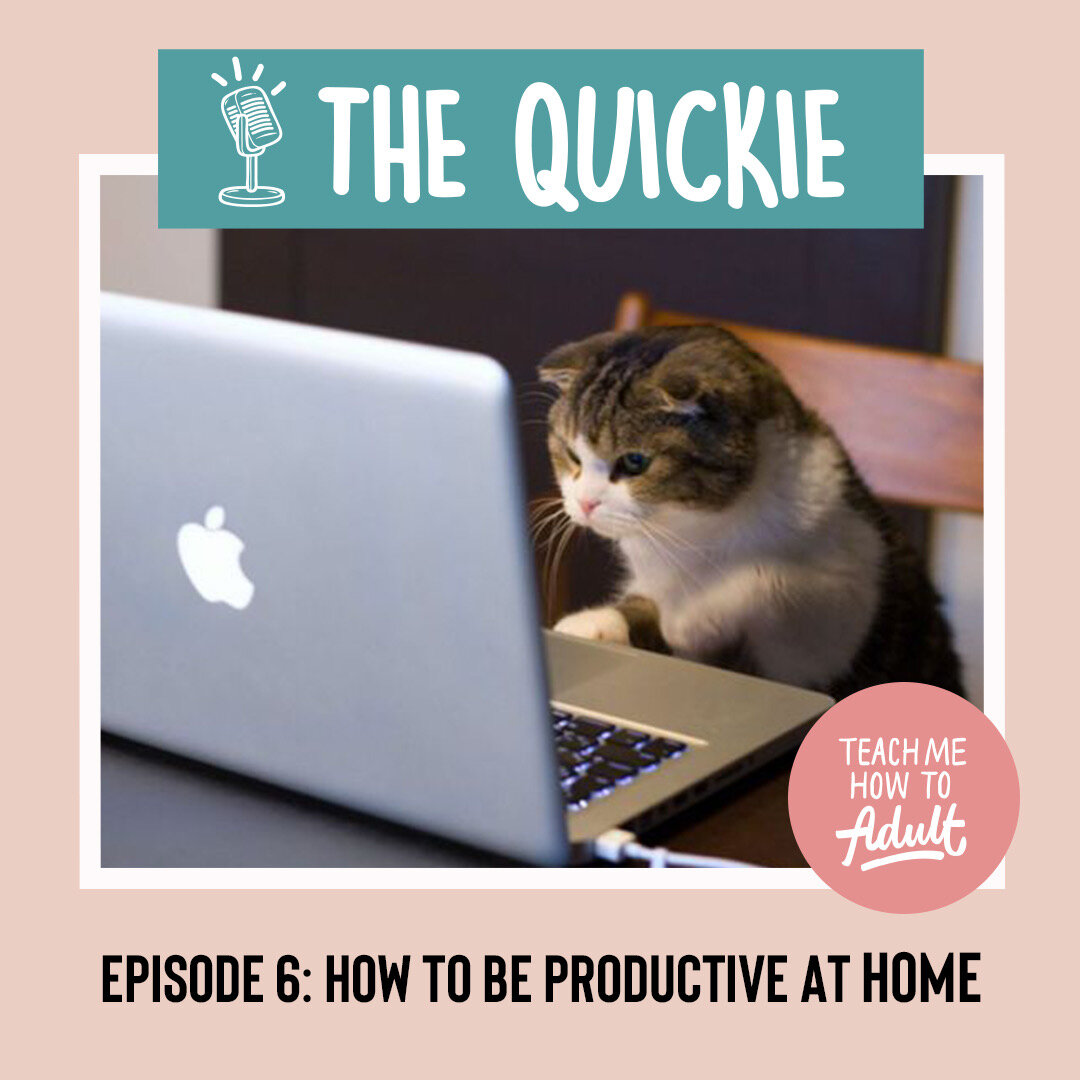
Most of us are figuring out how to work from home right now as we all practice social distancing and self-isolation due to the Coronavirus. And we know it ain’t easy. So we did some research on some of the most effective and easy productivity hacks that experts swear by. For us, method #2 has been a serious game changer, so keep reading (and listen below!) so you can learn how to beat procrastination and cross off all the things on that never-ending to-do list (yes, that includes Tiger King) all from the comfort of your couch.
Method #1: The Pomodoro Method
This technique was developed in the early 1990s by Italian entrepreneur Francesco Cirillo when he was studying in university and used a kitchen timer in the shape of a tomato to time out his study sessions. You don’t have to use an actual tomato timer to do this method, any timer will do, but we’re kind of obsessed with this Pomodoro cutie on Amazon!
How does it work?
This method can be broken down into three easy steps:
First, you need to break up your tasks into 25 minute increments, called Pomodoros.
Once you’ve finished your Pomodoro you’re encouraged to take a short five minute break. Exercise, make a coffee, or call a friend, just make sure to give your brain a break and do something that isn’t work-related.
Once you’ve done a total of 4 Pomodoros you can take a longer break (15-20 minutes).
Here’s the catch - if you didn’t finish your task during the Pomodoro, Cirillo says you have to move on and start a new timer for that same task later on. If you do finish your task during the Pomodoro, he suggests staying on that task and reviewing your work, or learning something new about the subject.
When should you use this method?
This method is perfect for students who have to memorize a ton of content, or anyone who is trying to learn a new skill because it forces you to get laser focused on one topic at a time.
Method #2: Timeboxing
We SWEAR by this method. No seriously, this podcast would not have been possible without timeboxing. It’s honestly like speed dating for productivity.
How does it work?
It’s simple. All you need to do is write down your to-do list and allocate a fixed amount of time to each activity. If you don’t finish the task within that fixed time frame, you have to move on to the next task—no matter what.
It’s helped us get realistic about how much we can actually accomplish in a given time, and it made us stop over-scheduling our days or setting unrealistic expectations on how much work we can actually get done in a day.
When should you use this method?
This is great for anyone who has a bunch of annoying mini tasks to do (i.e. paying bills, responding to emails, cleaning out your inbox, submitting expense reports) because it allows you to block off a set amount of time within your day to complete these tasks.
It is also a great method for anyone who, like us, is a perfectionist, because it forces you to move on from a task and accomplish more in your day.
When you get realistic about how long each activity on your to-do list actually takes, you start to realize you can probably only complete half of those items really well. So make sure to check in after timeboxing and reflect on how much you actually got done and if you need to approach your tasks differently next time.
We swear by this method and found it helpful to use a timer so that we know when to stop. We LOVE this time cube !
Method #3: Eat That Frog Method
Don’t worry, no frogs were harmed in the making of this method. The Eat That Frog method was developed by CEO and author Brian Tracy in his book, Eat that Frog: 21 Great Ways To Stop Procrastinating and Get More Done in Less Time.
He got the term “eat that frog” from Mark Twain who once famously said, “If you eat a live frog first thing in the morning nothing worse will happen to you the rest of the day”.
Ew...how does it work?
This method is all about prioritizing the harder, more important stuff first, when you have the most energy, so that you’ll be able to power through all of the smaller, easier tasks later on in the day.
When should you use this method?
This method is perfect for people who procrastinate because instead of feeling overwhelmed by your to-do list, it helps you focus on the most important stuff that needs to get done that day.
Usually these are the things that we put off because they are the most time consuming or the most difficult. But if you do the hard shit first the rest of your day will be a breeze.
We know it can be hard working from home, so we hope that these methods help you feel a little bit more confident to get shit done!
Leave us a comment below or DM us on Instagram if you try any of these methods, or if you have any other productivity hacks that you swear by!
If you have a topic you’d like us to cover or a guest you want us to interview, comment or DM us on Instagram:
See you next week! xo
Related Episodes:






Episode 04: How To Start Meditating So You Can Be Mindful AF
Anxiety and uncertainty are at an all-time high right now, so we wanted to share some strategies for finding some calm and peace in all the chaos. The average person has about 50,000 thoughts a day, and the best way to gain control of your thoughts and emotions is through a solid mindfulness and meditation practice.

Anxiety and uncertainty are at an all-time high right now, so we wanted to share some strategies for finding some calm and peace in all the chaos. The average person has about 50,000 thoughts a day, and the best way to gain control of your thoughts and emotions is through a solid mindfulness and meditation practice. It’s like when you have too many tabs open on your laptop... it’s not going to run very fast, and it’s probably going to crash.
We called in the mindfulness Queen herself, Nina Purewal, to learn how we can get mindful AF and master our thoughts. Nina has been studying mindfulness and meditation for over 20 years! She's the owner of Pure Minds, a company that runs mindfulness workshops for the public and corporate sectors, and she's the co-author of the bestselling book, Let That Shit Go. If you’re looking for an approachable, no-BS approach to mindfulness and meditation, this book is for you.
We also recorded an incredible guided meditation with Nina, so make sure you listen to the end of the episode (at 36:20), or queue it up on its own in the bonus meditation episode we uploaded.
There’s never been a better time to adopt new habits like meditating and practise more self-care. Nina reminded us that “Self-love is about bubble baths, netflix and a night out, but it’s also about how we’re talking to ourselves and how we’re treating ourselves.”
What are the benefits of Meditation?
“It’s kind of like going to the gym for your mind,” says Nina. “It’s an opportunity for you to sit there in complete silence and just observe what’s going on. And by doing that, you’ll be much more equipped in the real world when your mind gets the best of you. You’ll know what to do with it, and you’ll have a better sense of how to reign it in.”
There’s a lot of information about practising mindfulness and meditation, so we’re boiling it down to the facts you need to know:
It’s all about living in the present moment, and leaning into your emotions instead of running away from them. Meditation increases awareness, clarity, focus, and even compassion! One study found that when experts meditated on compassion, they altered their brain’s capacity for feeling empathy.
Researchers at John Hopkins University found that meditation improves symptoms of depression, anxiety, irritability, and pain related to stress.
In one study, people who used a meditation app for 8 weeks had a 46% reduction in depression and a 31% reduction in anxiety.
In another study, after only 30 days of using the meditation app Headspace, participants’ stress was down by a third.
In our own experience, practising meditation and mindfulness has had a major impact on our mind and mood. But the key is trying to find a practice that fits into your everyday life. We love guided meditations apps like Headspace and Calm to help center us before our day starts, or help us get focused before we sit down to work.
How can meditation help shape your thoughts?
From the second we wake up to the moment we fall asleep, we are constantly connected. Whether it’s via our smartphones, work emails, or everyday stressors, our mind is always inundated with racing thoughts. Nina calls this our “chatty mind” (or monkey mind), and it just keeps swinging from thought to thought without stopping. This can lead to feelings of anxiety, overwhelm, or negativity for a lot of us. Meditation allows us to calm these thoughts and tap into what Nina calls our “observing mind”. “The observing mind simply observes what the chatty mind is doing. It doesn’t judge the chatty mind. It doesn’t try to solve for the thoughts you’re thinking. It doesn’t make you feel guilty for thinking those thoughts,” she says.
The observing mind’s job is to recognize what’s going on in your head, and to help bring you back to the present moment. That’s the exact skill that meditation develops— it helps us control the chatty mind. “The observing mind is like a muscle,” explains Nina. The more you lean into it, the more you’ll be able to leverage it. “Because at the end of the day, we are not our thoughts,” she says.
How can we stop the negative thinking?
Take the time to “CSI the shit out of your thoughts,” says Nina. Once you tap into your observing mind and create some space between all of those negative thoughts, ask yourself where they came from...Are they even really true? Are you really bad at your job? What proof do you have of that? Weren’t you hired for a reason? Take a step back and replace negative thoughts with truths, or with a more positive perspective.
How do we disconnect and check in with ourselves?
Set some boundaries for yourself. Nina suggests setting hard and fast rules when it comes to devices and distraction:
Don’t check your phone before bed. Give yourself a mental break, and try reading a book, meditating or doing something for yourself besides scrolling.
Don’t look at your phone when you wake up. Give yourself some peace in the morning before logging onto Instagram or responding to the 50 emails that piled up over night.
Pick a day to disconnect. Try doing a digital detox on Sundays and give yourself a break from your phone. If that’s too daunting, Nina suggests picking one day a month to truly go offline and chill.
Create physical boundaries. When you get home from work, try leaving your phone somewhere you won’t be tempted to look at it 24/7. Leave it in your car, charge it in your basement, or put it somewhere that’s out of site, out of mind.
Turn off your notifications. Turning off all notifications puts you in control of when you need to check your phone.
Take work off your phone. Does that 10:00pm email really need to be answered right away? Assuming it’s not a 911 emergency, taking your work email off your phone helps create a healthy boundary between work and personal life.
Notice what makes you feel good. Take inventory of the types of people and accounts that you follow on social media and how they make you feel.
How can we incorporate mindfulness in our busy lives?
It’s hard to actually practice mindfulness IRL, when you’re balancing work, your personal life, and day to day stresses that come up. So how can you realistically incorporate more mindfulness?
Implement a gratitude practice. Nina suggests thinking of five things you’re grateful for each morning when you wake up to stop negative thoughts in their tracks. You can go big picture or get super granular with your gratitudes, from recognizing the awesome people and opportunities you’re surrounded by, to the daily details we take for granted like shelter and running water.
Match your train of thought with your actions. Nina learned this technique from one of her meditation teachers in California, who suggested matching the thoughts in your head with the actions that you are doing. So, if you’re washing the dishes, you would think to yourself: “I am now washing a pot. Now I'm putting soap on the sponge. Now I’m rinsing the pot,” and so on. It might feel a bit crazy at first, but this allows you to practise bringing yourself back into the present moment.
Lean into breath. Taking deep breaths can help alleviate feelings of stress, anxiety and anger. The more shallow our breathing is, the more panic we feel.
Have mindful triggers throughout your day. Nina recommends picking a small activity that you do daily (think: brushing your teeth, making a coffee, showering, etc.) that acts as a consistent trigger to bring you back into the present moment.
Meditate. Whether you have five minutes, or half an hour, carve out some time to sit in silence and let your thoughts flow. Try different kinds of meditation, from breathwork to mantras to visualizations, and see what works best for you.
If you’re feeling a little lost right now, get some comfort from the advice Nina’s meditation teacher in California shared: “If you get to a point where you don’t know who you are, that’s a good thing. It just means that you are taking off all of the layers, and building yourself back up.”
We hope that this episode inspires you to start (or continue!) a mindfulness and meditation practice. If you liked this episode it would mean the world to us if you would rate the podcast and share it with your friends!
If you have a topic you’d like us to cover or a guest you want us to interview, comment or DM us on Instagram:
@teachmehowtoadultpodcast
@cailynmichaan
@yunggillianaire
See you next week! xo
Related Episodes:




Episode 03: How to Prep for Tax Season
Welcome to this week's quickie, our super fast take on all the adulting things that matter to you. Today, we’re helping you get ready for tax season with Laura Davidson, an Accounting Consultant, Business Coach, Entrepreneur, and the founder of Modern Money, a financial resource for millennial women.

It's tax season folks, but it doesn’t need to be a horrible, scary thing. You just need to be prepared, organized and informed about how the whole process works.
Whether you’re filing as an individual or as a small business, there’s lots of things to consider to make sure you’re filing correctly and getting all the tax breaks that you can.
What are tax deductions VS tax credits? (2:00-4:00)
Deductions and credits are all the things that can offset the amount of taxes that you owe at the end of the year. You don’t want to leave money on the table, so do your research to maximize your tax return.
Tax deductions reduce your taxable income. For example, if you make $50,000, and have eligible deductions of $5,000, the government will only tax you as if you made $45,000 of income.
This is key for entrepreneurs, freelancers or anyone who currently has a side hustle. When it comes to entrepreneurial costs, as long as it’s necessary for the operation of your business, and you have proof of purchase, you can expense almost anything for your business. Check your own provincial or state government for what deductions you are eligible for, but some examples in Canada include:
RRSP contributions
Charitable donations
Child care expenses
Medical and dental expenses
Moving expenses
Expenses towards your business, or freelance expenses, essentially any expense that is deemed operationally necessary to your business
Advertising fees
Rent/mortgage
Utility costs
New laptop
Phone
Transportation, including car mileage or ubers
Professional fees like legal and accounting
Office supplies
Educational courses & training
Tax credits, on the other hand, are credits that can reduce the amount of taxes that you owe. For example, if you owe $5,000 in taxes at the end of the year but you are eligible for $2,000 in tax credits, you would only have to pay $3,000 in taxes.
When you’re filing your taxes, you’ll be prompted to check any of the tax credit boxes that apply to you. Again, you will have to check your individual provincial or state credits, but in Canada these could include credits for:
Children and dependents benefits
Home Buyers credit
Senior Citizens
Disability
Pension
Student tuition, textbooks, and loan interest
Charitable donations
Expert Tax Advice (4:17)
We’re not the experts, so we called in Laura Davidson to teach us everything you need to know about prepping for your taxes, especially for small businesses and freelancers. Laura is an Accounting Consultant, Business Coach, entrepreneur, and the founder of Modern Money, a financial resource for millennial women. Here are the Taxes 101 basics to know:
The deadline for submitting Canadian taxes as an individual has been extended to June 1, 2020 due to COVID-19. Self-employed professionals can now file up till June 15, 2020.
The deadline to pay all balances owing on your 2019 tax return has been extended to August 31, 2020 to accommodate the effects of COVID-19.
If you’re a corporation, you have six months after your company’s year-end date to file your taxes. So if your year-end is December 1st, that gives you until June 1st.
If you’re filing on your own, the easiest way to submit your taxes is through automated programs like uFile, SimpleTax, TurboTax and QuickBooks.
If you work with a tax accountant, make sure you stay involved and aware of the process. “The more hands on you can be with your money and taxes, the better,” says Laura.
Pay on time! If you miss deadlines the penalties and fees are heavy.
Forms to submit
Individual tax-payers should expect a T4 slip from their employers. Sole proprietors will need a T1, Corporations will file a T2, and anyone with investment income will receive a T5 from their bank.
Preparing for tax season throughout the year
Always be audit-proof: You can be audited back seven years, so make sure you’re prepared for an audit. Especially if you’re an entrepreneur or business owner, it is crucial to keep all of your receipts, says Laura. “Think of a receipt as lost money. If you don’t have it, consider it non-expensable, because you can’t prove the purchase.”
Top up your RRSPs: (10:25) You get a tax credit for contributing to your RRSP, so take full advantage! Your contribution room is 18% of your earnings or a maximum amount. In 2019 the limit was $26,500, and for 2020 the RRSP deduction limit is $27,230. If you don’t contribute in this calendar year, it carries forward to next year. The myCRA.ca site is a great portal when filing your taxes as it shows the contribution limit that’s available for both your RRSP and TFSA accounts. The deadline for RRSP contributions is generally the end of February or beginning of March each year (for 2019 contributions the deadline was March 2, 2020).
Business-owners and HST: (8:00min) “If you are a business owner, sole proprietor, side hustler, or someone who pays HST and income tax, open up a savings account and put aside 20-25% of your revenue every month,” says Laura. “When you charge HST, your cash flow looks higher because you have more money sitting in your bank account, but you don’t own that HST.”
Setting aside that HST money automatically each month will help you prepare for the taxes you owe at the end of the year if they aren’t regularly deducted from your salary.
Once you start earning $30,000, you must register for an HST number for your business. You can register for one before that time if you know you’ll have high operating costs in your first year. “When you spend a lot on business start-up costs, you’ll be charged HST, and you’ll get a refund from the government on all that HST you’ve spent. Then, once you start earning revenue, that HST will balance out and you will owe HST,” Laura explains.
We hope that this episode helps you feel prepared and informed for tax season! If you liked the episode, it would mean the world to us if you would rate the podcast and share it with your friends!
If you have a topic you’d like us to cover or a guest you want us to interview, comment or DM us on Instagram:
@teachmehowtoadultpodcast
@cailynmichaan
@yunggillianaire
Connect with Laura:
Related Episodes:

Episode 02: How To Gain Confidence and Overcome Impostor Syndrome
Raise your hand if you’ve ever felt like you’re not good enough, or that you don't deserve the job or promotion or opportunity that you’ve earned. That’s Impostor Syndrome talking, and most of us (70% of the population!) have experienced it at some point, in the workplace or our relationships or passions. It's super common among high achievers, creatives and women.

Raise your hand if you’ve ever felt like you’re not good enough, or that you don't deserve the job or promotion or opportunity that you’ve earned. That’s Impostor Syndrome talking, and most of us (70% of the population!) have experienced it at some point, in the workplace or our relationships or passions. It's super common among high achievers, creatives and women.
But fear not! Today we’re talking to the expert, Raia “Coach” Carey, who knows a thing or two about how to stop Impostor Syndrome in its tracks. She’s a 3x certified life coach and motivational speaker who specializes in confidence, visualization, and career coaching, and she gave us some FIRE strategies for gaining confidence and shutting down those doubtful voices in our heads.
What does Impostor Syndrome sound like?
One of the most common signs of Impostor Syndrome is that voice in your head that questions: “Who am I to do this?” It shows up as negative self-talk and doubtful narratives we plant in our minds. “It’s the language we use that reflects our lack of confidence,” says Coach Carey. “It’s like, ‘I don’t have any experience, so no one will ever hire me’.”
According to Coach Carey, Impostor Syndrome shows up in the places and spaces you need to be, “Deep down you know that’s where you need to grow, and it’s going to be uncomfortable. There’s something inside you that knows this is the exact kind of growth and challenge you need. Lean into that.”
The truth is, you don’t have to be perfect to be qualified or capable. That’s just a story we tell ourselves. “We want to be perfect before we inspire,” says Carey, “But it’s the imperfections that actually end up inspiring people.”
Signs that Impostor Syndrome is taking over can include burnout, avoidance, and an ongoing lack of fulfilment for perfectionists. It shows up as employees overworking themselves to compensate for a perceived deficit, taking on way too much to prove that they’re worthy. And it can lead to missed opportunities for people who are hella deserving.
The five types of Impostor Syndrome
Dr. Valerie Young has made a career of studying Impostor Syndrome, and she breaks it down into five different types, which helped us understand where and how Impostor Syndrome can creep up.
The Perfectionists: They have extremely high expectations for themselves, and even when they meet 99% of their goals, they still feel like failures.
The Experts: These folks feel like they need to know allllll the info before they’re willing to start a project, and they won’t apply for a job if they don’t meet every bit of criteria in the description.
The Natural Genius: They’re used to things coming easily to them, and when they have to put in more effort, their brain tells them that’s proof they’re an impostor.
The Soloists: These guys feel like they have to accomplish everything on their own, and that needing help makes them a failure.
The Superwoman/Superman: They push themselves to work harder than those around them to prove they’re not impostors. They need to succeed in all aspects of life, and feel stressed when they’re not the best at something.
If you identify with any of these, Coach Carey recommends trying to reframe these thought processes by questioning and countering them. For example, if you’re a soloist who needs to do everything on your own to feel worthy, challenge that idea by exploring the value of forming a mastermind group where you can gain info from other subject matter experts. You’ll likely end up finding empowerment in collaboration after all.
Strategies for overcoming it
“Everyday remind yourself that no matter where you are in life, you can always get to other places,” says Carey. “You have every single thing you need. You can make any change in your life if you take the time to figure it out.” Consider us inspired AF.
Watch how you talk to yourself. Negative self-talk leeches into your subconscious and your subconscious will focus on the harmful statements that hold the most power, like “I could never get that job,” or “I’ll never be beautiful enough to do that thing.” Your words shape your world, so be careful which ones you use. Write down or say positive affirmations out loud to replace those negative thoughts.
Coach Carey is even careful of how she talks about to-do lists. “To-do lists are a choose list. Every single day you get to choose what you do. We always have a choice.”
It can also help to have a positive mantra or quote to keep you going. Coach Carey’s is: “Embrace where you are today in life, knowing it’s not where you have to stay.”
Unpack yourself. Coach Carey recommends starting with the following four questions every night before bed:
What worked well for me today?
What didn’t work well for me?
What fuelled me?
What drained me?
After two weeks you’ll see patterns of what’s helping or hindering you. It helps to track your goals, momentum and behaviours so you can figure out what you want to change or do more of, so take conscious quality time with yourself to check in with no distractions.
Use visualization. Coach Carey uses visualization a lot to help her clients. Here’s what her approach looks like:
Start with imagining what your ideal life would look like if you could change anything you wanted. Let your imagination wander, picture what your day is like, how you are acting and feeling.
Break that down into three top “goals” or “wants” that you can work towards. These could look like a raise in your job, or living in a different city, or a better health and fitness regime.
From there, come up with action-oriented steps and tools you can implement to make those changes.
Ask yourself who is impacted by these changes you would make. Will your family be happier living in a better city? Will a shorter commute allow you to spend more time with your loved ones? This will help form your “why” that will motivate your goal.
Remember, the key to effective visualization is removing the barriers and mental blocks, and creating a safe space to imagine what your life could be like. Because everything you can imagine is possible. So imagine, then come up with the strategies and tools to implement.
Fight fiction with fact. When you’re feeling not good enough for something, make a list of all the things that prove you're just as qualified as anyone else. Get specific and include tangible results that support your value. And keep track of your wins! We naturally hold onto all the times we felt that we failed, but we should be focusing on the times we succeeded. Keep a document or Inbox folder of any praise, kudos and positive feedback that can remind you of your value.
Engage with your hobbies: Do the things that make you feel at your best, says Coach Carey. If you consistently show up feeling your best, you’re more likely to succeed in other areas of your life.
“We live in a time where we did all of our hobbies as kids, and then bills, work, school and society got us to stop,” explains Coach Carey. “But those are the things that truly bring us joy. And joy and happiness are different. Happiness you can find in almost everything, but joy you can only give to yourself.”
Dealing with Impostor Syndrome in your career
Impostor Syndrome can get in the way of pursuing promotions, new gigs and higher salaries or freelance rates. While most people focus on perfectionism and having all the experience before they pursue opportunities, Coach Carey says it’s not always about being the most experienced. “People are way more willing to follow a leader than a boss.”
“Vulnerability makes you way more relatable as a leader. We’re all learning, and people are way more willing to learn with you. Humility is what resonates,” she says.
And what if you don’t have all the answers or expertise in a job interview? Coach Carey suggests approaching an interview by saying: “That’s one area I’m not fully well-versed in, but I’m happy, motivated and willing to learn. I’ve already signed up for a course [to fill that knowledge gap]. If you already recognize the problem and come with solutions, I’d give you the job over the perfectionist.”
And when it comes to gaining the confidence to negotiate your pay, Coach Carey recommends figuring out what number you’d be really happy with, then adding onto that. Even if you just add $500-$1000. And if you get paid that much, the next time you can try adding more. Because you’ll deserve it.
Connect with Raia “Coach” Carey!
Related Episodes:












Episode 01: Meet the hosts of Teach Me How To Adult Podcast!
Welcome to season one of Teach Me How To Adult! We’re so excited that you’re joining us on our journey to be the best possible grown-ass people we can be. We are BFFs, work wives and podcast partners on a mission to help you crush it at adulting so you can live your best damn life.

Welcome to season one of Teach Me How To Adult! We’re so excited that you’re joining us on our journey to be the best possible grown-ass people we can be. We are BFFs, work wives and podcast partners on a mission to help you crush it at adulting so you can live your best damn life.
So, what’s it all about?
Teach Me How To Adult is a smart, unfiltered podcast on everything you never learned about growing up, from crushing your career and love life to balancing budgets and wellness.
Trust us, we know what it's like trying to be the best version of yourself. We see you out there giving 110% to your job, saving up to buy a house (or a much-needed vacay), keeping up with your social calendar, and squeezing in the odd kale salad...all while trying to carve out some time for you. It’s a lot of pressure. We're trying to do it all too, and it’s so. damn. hard.
That's why we created Teach Me How To Adult. We aspire to help millennials navigate the ups and downs of their 20s and 30s, teaching them the things they never learned in school (Investing! Taxes! Home ownership! Relationship goals! Taking control of your mental health! Networking! Fitness! Folding a fitted sheet!?). We’re by no means the experts, so we chat with the pros and hustlers who are crushing it in their field for legit advice and actionable tips. And we serve up #realtalk with open and honest convos about our own vulnerable experiences. So get ready to feel seriously seen and to level up your goals, habits and business game.
Meet the hosts!
Gillian Berner is a content strategist, video producer, writer, and editor. She’s been the Content Manager at one of Canada's leading film and entertainment companies and an editor at Chatelaine and Flare magazines. Gillian lives for travel, storytelling, poetry, photography, cottage getaways, charcuterie boards, and her adorable baby nieces.
Cailyn Michaan is a Digital Marketer and people manager with a passion for building killer teams. She's managed client relationships with major film studios and fortune 500 brands at some of the largest Media and Entertainment companies in the country. When she's not behind the mic, Cailyn loves a girls' night in, travelling the world with her amazing husband, yoga, a good glass of wine, and any comedy with Paul Rudd.
Stay tuned for weekly episodes!
We can’t wait to share all our learnings and amazing interviews with you. Season one has been in the works for a while, so you’ll get a front-row seat to our experiences dealing with burnout, stress, work struggles, family life, and some big decisions we made after we both quit our jobs to pursue new dreams and opportunities.
Stay tuned each week as we alternate between long-form deep dives on big topics with expert guests, and our Quickies—a super fast and focused take on all the adulting hacks that will help you slay all day. So follow along and holler at us on social @teachmehowtoadultpodcast. We’d love to know what you’re struggling with, what topics matter to you, and who you’d like to hear from!


