

Episode 34: How to Thrive In Long Distance Relationships
These days, long distance relationships are a reality for a lot of people who have been separated by the corona, border closures, quarantines, or the usual reasons like university and work relocations. (A quarter of you who responded to our Instagram polls said you’re in a long distance relationship right now!) And tons of couples start out distanced through apps and online dating.
So we’re diving into how to navigate long distance relationships right now, from communication and bonding tips to dealing with loneliness and insecurity, with relationship expert Dr. Morgan Cutlip. And this isn’t just for romantic relationships! All the advice we share today really does apply to anyone in your life that you care about if you’re separated right now, so if you can’t see someone you love, give this a listen.

These days, long distance relationships are a reality for a lot of people who have been separated by the corona, border closures, quarantines, or the usual reasons like university and work relocations. (A quarter of you who responded to our Instagram polls said you’re in a long distance relationship right now!) And tons of couples start out distanced through apps and online dating.
So we’re diving into how to navigate long distance relationships right now, from communication and bonding tips to dealing with loneliness and insecurity, with relationship expert Dr. Morgan Cutlip. And this isn’t just for romantic relationships! All the advice we share today really does apply to anyone in your life that you care about if you’re separated right now, so if you can’t see someone you love, give this a listen.
Dr. Morgan Cutlip has a PhD in counseling psychology and holds a master’s degree in Human Development and Family Sciences. For over 13 years, she’s worked at Love Thinks, a company that creates practical relationship education resources. Morgan’s passion is helping her fellow millennials find love, happiness and longevity in their relationships—without the drama. And we are HERE FOR THAT.
Tune in to hear more about:
The importance of strong communication in distance relationships
How to meet each other’s love languages when you’re apart
How to stay connected and bonded through rituals and new experiences
Dealing with loneliness, how to ask for help, and ways to self-soothe
Navigating having needs with feeling “neediness”
What to do if your efforts don’t feel reciprocated
Why we should strive for an interdependent relationship
How to give and receive relationship feedback with friends
How to overcome insecurities and doubts when you’re living two separate lives?
Tips for online dating and practicing your relationship skills
We hope this episode helps you feel closer to anyone you are apart from right now! We’re just two cheesy romantics, but to us, love always wins.
Follow Dr. Morgan:
instagram.com/mylovethinks
Drmorgancutlip.com
Mylovethinks.com
Mentioned in this episode:
New York Times article on “Languishing”: https://www.nytimes.com/2021/04/19/well/mind/covid-mental-health-languishing.html
Marco Polo: https://www.marcopolo.me/
If you have a topic you’d like us to cover or a guest you want us to interview, comment or DM us on Instagram:
Related Episodes:







Episode 33: How To Live Sustainably in 12 easy Steps
Sustainability is extra top-of-mind with Earth Day this week, and in the past year alone, we’ve seen just how huge an impact our small actions can have on the environment. (Seriously, just watch David Attenborough’s new doc…in just a few weeks after lockdown, air pollution cleared so much in Jalandhar, India, that the snowy peaks of the Himalayas were visible for the FIRST TIME IN THREE DECADES!)
We’ve really wanted to improve our carbon footprints and become more eco-conscious, so in this week’s quickie, we’re giving you 12 easy tips for going green that you can implement around your kitchen, living room, bathroom, closet, shopping habits, and outdoor space to live a more sustainable life.

Sustainability is extra top-of-mind with Earth Day this week, and in the past year alone, we’ve seen just how huge an impact our small actions can have on the environment.
(Seriously, just watch David Attenborough’s new doc…in just a few weeks after lockdown, air pollution cleared so much in Jalandhar, India, that the snowy peaks of the Himalayas were visible for the FIRST TIME IN THREE DECADES!)
We’ve really wanted to improve our carbon footprints and become more eco-conscious, so in this week’s quickie, we’re giving you 12 easy tips for going green that you can implement around your kitchen, living room, bathroom, closet, shopping habits, and outdoor space to live a more sustainable life.
Listen to this week’s chat to learn more about:
The impact you can make by substituting plant-based alternatives a few times a week
The scoop on what you can and can’t put in the recycle, garbage and green bin
Sustainable food storage tips we learned from our Grandmas
How to reduce your waste when grocery shopping
Reducing your kitchen waste (i.e. eco-friendly swaps for paper towels!)
Buying second hand furniture and Gill’s tips for upcycling your home decor
The impact you can make by switching to LED lights
The environmental, health & financial benefits of DIY cleaning products
How switching to a safety razor can save you $5,000!
The dirty truth behind fast fashion & enviro-friendly clothing brands we love
How to revive, repurpose or sell clothes you no longer love
How to start a garden and grow your own food, even if you don’t have a backyard/balcony
We hope this helps you make some simple swaps and changes in your life that will make a big difference for our beautiful planet!
Mentioned in this episode:
Zero Waste DIY Cleaning Products:
Our fave eco-friendly clothing brands:
If you have a topic you’d like us to cover or a guest you want us to interview, comment or DM us on Instagram:
Shop This Episode:






Related Episodes:


Episode 32: How to Drink Wine Like A Pro
Possibly the biggest sign that you’ve unlocked adulting status? You seriously know your way around wine. It’s always impressive when one person at the dinner table knows which wine to order with every dish, and the hottest vinos to put on your radar.
So, in this episode, we’re talking all things wine 101 with wine expert Lauren Power. We cover everything from how to host a wine tasting and the most popular go-to grapes, to the winemaking process, food pairings, and the proper temperature to serve your favourites! We also dive into an important chat about mastering our mindset around drinking, consuming with intent, and how to take a dry month if you want a break.

Possibly the biggest sign that you’ve unlocked adulting status? You seriously know your way around wine. It’s always impressive when one person at the dinner table knows which wine to order with every dish, and the hottest vinos to put on your radar.
So, in our latest episode, we’re talking all things wine 101 with wine expert Lauren Power. We cover everything from how to host a wine tasting and the most popular go-to grapes, to the winemaking process, food pairings, and the proper temperature to serve your favourites! We also dive into an important chat about mastering our mindset around drinking, consuming with intent, and how to take a dry month if you want a break.
Lauren runs in-person and virtual wine tasting events to help people explore and develop their own personal wine palates, and she’s the sales and marketing maven behind her family-owned wine and spirit importer, Treamici Wines.
Listen to our chat to learn more about:
The key grapes and regions to know
How to figure out your palette and wine preferences
The six most popular wines to order
How to actually do a wine-tasting, and notes to know
Tips for ordering wine off restaurant menus like a pro
When to decant and proper temperatures for serving wine
Easy, no-brainer food pairings
How to have a more mindful relationship with alcohol
Tips for taking a dry month
We hope this episode helps you feel more confident when it comes to choosing wine and drinking like a pro!
Follow Lauren:
instagram.com/laurenpower_wine/
Wines mentioned in this episode:
Veuve Clicquot Rose Champagne
Louis Bouillot Perle d'Aurore Brut Rosé Crémant de Bourgogne
La Marca Prosecco DOC
Henry Of Pelham Cuvée Catharine Rosé Brut VQA
If you have a topic you’d like us to cover or a guest you want us to interview, comment or DM us on Instagram:
Related Episodes:


Episode 31: How To Crush Your To-Do List and Organize Your Life
If you, like us, have been struggling to cross literally ANYTHING off of your never-ending to-do lists, we are here to help!
In this week’s quickie, we’re giving you tips on how we structure our days (or at least try to), three of the top to-do list methods that pros swear by, and the tools you can use to help you crush all of your goals and leave you worry-free at the end of the day. It all comes down to prioritization.
If you, like us, have been struggling to cross literally ANYTHING off of your never-ending to-do lists, we are here to help!
There are so many reasons why tackling your to-do list can cause anxiety and overwhelm. If you’re super burnt out right now you could be feeling errand paralysis, or if you’re insanely busy these days, those lists can feel so daunting because EVERYTHING seems urgent.
So in this week’s quickie, we’re giving you tips on how we structure our days (or at least try to), three of the top to-do list methods that pros swear by, and the tools you can use to help you crush all of your goals and leave you worry-free at the end of the day. It all comes down to prioritization.
Listen along to learn more about:
The Ivy Lee Method
The Eisenhower Matrix
Warren Buffet’s Two List Method
Cailyn’s tips for getting through to-do lists
Gill’s hot 15-minutes-or-less tip
We hope this episode helps you smash your to-do list and accomplish all of the daily tasks and goals you set out for yourself!
If you have a topic you’d like us to cover or a guest you want us to interview, comment or DM us on Instagram:
Related Episodes:

Episode 30: How To Recover From Burnout and Find Balance
One of the things we’ve been hearing most for the last while (outside of “unprecedented times” and “You’re on mute!”) is that our friends and families are feeling hella burnt out right now.
And even though our lives have slowed down and become more minimal in some ways this past year, there’s a lot more stress, expectation and pressure overall.

One of the things we’ve been hearing most for the last while (outside of “unprecedented times” and “You’re on mute!”) is that our friends and families are feeling hella burnt out right now.
And even though our lives have slowed down and become more minimal in some ways this past year, there’s a lot more stress, expectation and pressure overall.
95% of you that responded to our recent Instagram poll said that you’ve experienced burnout in the last few months, and 89% said you’re feeling more burnout now than you were pre-pandemic. Those are pretty startling stats, and as two people who have experienced burnout, we really want to help ya’ll identify if you’re going through it and how you can recover.
Listen along as we dive into:
What burnout really means
The signs you might be burnt out
Why we’re all feeling it more than ever
How social media can contribute to burnout
How boundaries can help you take back control of your time, energy & wellbeing
The importance of prioritizing sleep and wellness
Why you need to slow down and ask for help when you need it
Mastering your mindset and re-thinking how you measure success
How to fall in love with your life again and find joy everyday
Incorporating self-care daily, and not just on #selfcaresunday
Knowing when it’s time to say “thank you, next!” to your job
How Millennials Became The Burnout Generation Article
We hope this episode helps you prevent or recover from burnout, because you are more than your job and productivity, and you deserve a balanced life. Sending you all lots of love.
If you have a topic you’d like us to cover or a guest you want us to interview, comment or DM us on Instagram:
Related Episodes:





Episode 29: How to Get Fit And Motivated At home
It’s so hard to stay motivated to exercise in the colder months, and when you throw in lockdowns, working out just seems impossible. We’ve heard from a lot of you that are struggling to stay active right now, and we’re right there with you. So we called in the delightful and motivating fitness expert we all need, Cassie Day. She’s an athlete, coach, nutritionist, fitness personality and CEO of All Day Fit, a fitness community with online and in-person classes and personal training that takes a 360° approach to wellness.

It’s so hard to stay motivated to exercise in the colder months, and when you throw in lockdowns, working out just seems impossible. We’ve heard from a lot of you that are struggling to stay active right now, and we’re right there with you. So we called in the delightful and motivating fitness expert we all need, Cassie Day. She’s an athlete, coach, nutritionist, fitness personality and CEO of All Day Fit, a fitness community with online and in-person classes and personal training that takes a 360° approach to wellness.
Cassie dishes on so many helpful tips for getting motivated to move at home, shares the single most important moves to gain serious strength and tone, and talks about how we can all have a healthier mindset towards fitness and food. Plus, we share some of our own tricks that have helped keep us motivated, from investing in good gear and signing up for workout challenges, to game-ifying workouts and scheduling exercise with an accountabilibuddy.
We’re also learning what it really means to embrace fitness for our overall health, and not just for appearance, so we’re ready to say goodbye to restriction and diet culture, and to add in more holistic movement into our everyday life, like mobility stretches and walking.
PLUS if you slide into Cassie’s DMs on Instagram and share your fave part of this interview, she’ll hook you up with an exclusive offer to her online fitness hub, All Day Fit!
Let’s all help each other stay motivated to move at home! Listen in for:
How we’ve been staying active at home: 2:23
Cassie’s journey as an athlete & how she starting All Day Fit: 14:10
How the pandemic has affected Cassie’s approach to exercise: 16:19
The key benefits of exercising during these lockdowns—especially for our mental health: 18:46
How to stay motivated & find routine when we’re stuck at home: 21:36
Budget-friendly equipment & props to use at home: 23:58
Three at-home workouts for limited equipment & time (AKA the best bang for your buck!) 26:08
Stretches & mobility movements to fix bad laptop posture and pain: 28:50
The 6 foundational movement patterns for balanced training: 32:51
The *best* go-to moves for targeting your core & butt: 36:15
How to approach food & fitness with a healthy, body-positive perspective: 39:21
We hope this episode helps you listen to your body, get moving and keep pushing for the life you want to live. Remember, in the words of Jillian Michaels, “Fitness isn’t about building a better body, it’s about building a better life.”
Follow Cassie:
Workouts mentioned in this episode:
Cassie’s Kettlebell Complex - bets bang for your buck workout:
Animal Flow:
Cassie’s Stretches for low back, neck & shoulder pain:
Cassie’s top moves for core & glutes:
Dead Bugs: instagram.com/tv/CADIIkcHLAW/
Single Leg Exercises: instagram.com/reel/CI8aWwPnvzg/
Glute Bridges: instagram.com/p/CKhAaxyH4oq/
Mobility movements:
All Day Fit’s 6 Foundational movement patterns: instagram.com/p/CKKLQ8IHim8/
90/90 stretch: youtube.com/watch?v=2uW-9KD5XOM
Equipment mentioned:


If you have a topic you’d like us to cover or a guest you want us to interview, comment or DM us on Instagram:
Related Episodes:

Episode 28: How To Have A Thriving Love Life With The 5 Love Languages
Valentine’s Day is right around the corner and we’ve got love on the brain! So, today we’re talking about the five Love Languages, what they mean, and tips for dating each type.
The Five Love Languages was written by marriage counsellor, Dr. Gary Chapman, and has sold over twelve million copies worldwide— it’s been on the New York Times best-sellers list since 2007! It has totally changed the way we show up for our partners and give them the kind of love that they need.
Welcome to this week's Quickie, our super fast take on all the adulting things that matter to you. Valentine’s Day is right around the corner and we’ve got love on the brain! So, today we’re talking about the five Love Languages, what they mean, and tips for dating each type.
The Five Love Languages was written by marriage counsellor, Dr. Gary Chapman, and has sold over twelve million copies worldwide— it’s been on the New York Times best-sellers list since 2007! It has totally changed the way we show up for our partners and give them the kind of love that they need.
Dr. Chapman noticed that couples often had similar complaints that boiled down to a single feeling: “I feel like my partner doesn’t love me.” Starting to recognize a pattern, he discovered that there were five categories on how people could give their partner the love they need: Words of Affirmation, Quality Time, Receiving Gifts, Acts of Service and Physical Touch.
Each of us has a primary love language that speaks to us more deeply, but that doesn’t mean we don’t still need the other four (we’ll never say no to a thoughtful gift)! And these don’t only apply to romantic relationships. You can identify the love languages of your parents, friends, boss and co-workers, too, so use them to form stronger relationships with everyone in your life! #winning
Listen to our chat to learn more about:
The importance ‘Words of Affirmation’ play in making you feel understood: 2:47
How to spend ‘Quality Time’ together when you see each other 24/7 or are in a LDR: 5:38
Why ‘Receiving Gifts’ isn’t as superficial as it sounds: 12:15
How ‘Acts of Service’ can make your partner’s day: 14:20
Why ‘Physical Touch’ is more than just sexy time: 17:28
Two easy ways to find yours and your partner’s love language: 20:22
Cailyn’s top love languages and how learning them made her relationship thrive: 21:04
Gill’s top love languages and how they can change throughout her life: 23:31
We hope this episode helps you speak the same language of love with the people you care about, and inspires you to keep the spark alive!
Take Dr.Chapman’s free quiz to find out your love language: 5lovelanguages.com/quizzes/
Date Night In a Box: datenightinbox.com/
Teach Me How To Adult is a podcast that serves up expert interviews, candid experiences and actionable advice on everything you never learned growing up. Follow along as we figure it out together!
If you have a topic you’d like us to cover or a guest you want us to interview, comment or DM us on Instagram:
Related Episodes:

Episode 27: How To Feel Healthier in 8 (Totally Doable) Steps
How you doin’? Any guesses what our listeners voted as their #1 goal for 2021? Improving their health—both physical and mental.
It’s been harder than ever to take control of our health in the past year (71% of you said the pandemic has negatively affected your health, while 62% are working to improve their mental health right now). So, today we’re diving into 8 legit doable ways to feel healthier, starting with the four pillars of good health: Sleep, nutrition, physical activity, and stress management.
How you doin’? Any guesses what our listeners voted as their #1 goal for 2021? Improving their health—both physical and mental.🏋️♀️🧘🏾♀️
It’s been harder than ever to take control of our health in the past year (71% of you said the pandemic has negatively affected your health, while 62% are working to improve their mental health right now). So, today we’re diving into 8 legit doable ways to feel healthier, starting with the four pillars of good health: Sleep, nutrition, physical activity, and stress management.
OBVI, while we love watching them on TV, we’re not doctors (sorry mom and dad!) or health experts—we’re about as qualified as Joey—so please always consult with your doctor before making any big changes, and never rely on Google (or podcasts) to diagnose yourself.
We’re really passionate about making this year the one where we truly prioritize our health, so we’re sharing all of the research and info we’ve gathered to help make small, healthy changes.
Let’s make this the year of you!
Listen in to learn more about:
😴The crucial reasons you need to prioritize sleep, and how to get more
💧All the wild ways drinking more water can change your life
🍽 Why there IS NO one-size solution to eating healthily, and why we’re advocates for learning what *your specific body* needs for nutrition
👩⚕️The big role gut health plays in your overall health
🏃♀️The power of walking and exercising for pleasure, not punishment
🪑🙅♀️Why sitting is the worst and how micro-exercise can combat that
🤝💗How to get help when your mental health is suffering
🧠The power of a mental health toolbox
💊Why vitamins can be a key factor in your wellness
📆The appointments you *should* be booking every year
If you have a topic you’d like us to cover or a guest you want us to interview, comment or DM us on Instagram:
Related Episodes:

Episode 26: How to Negotiate Like A boss
How different would your life be if you weren’t afraid to ask for what you deserve?
In this week’s episode, we’re talking all things negotiation and how to confidently go after the things you want with negotiation expert Fotini Iconomopolous.
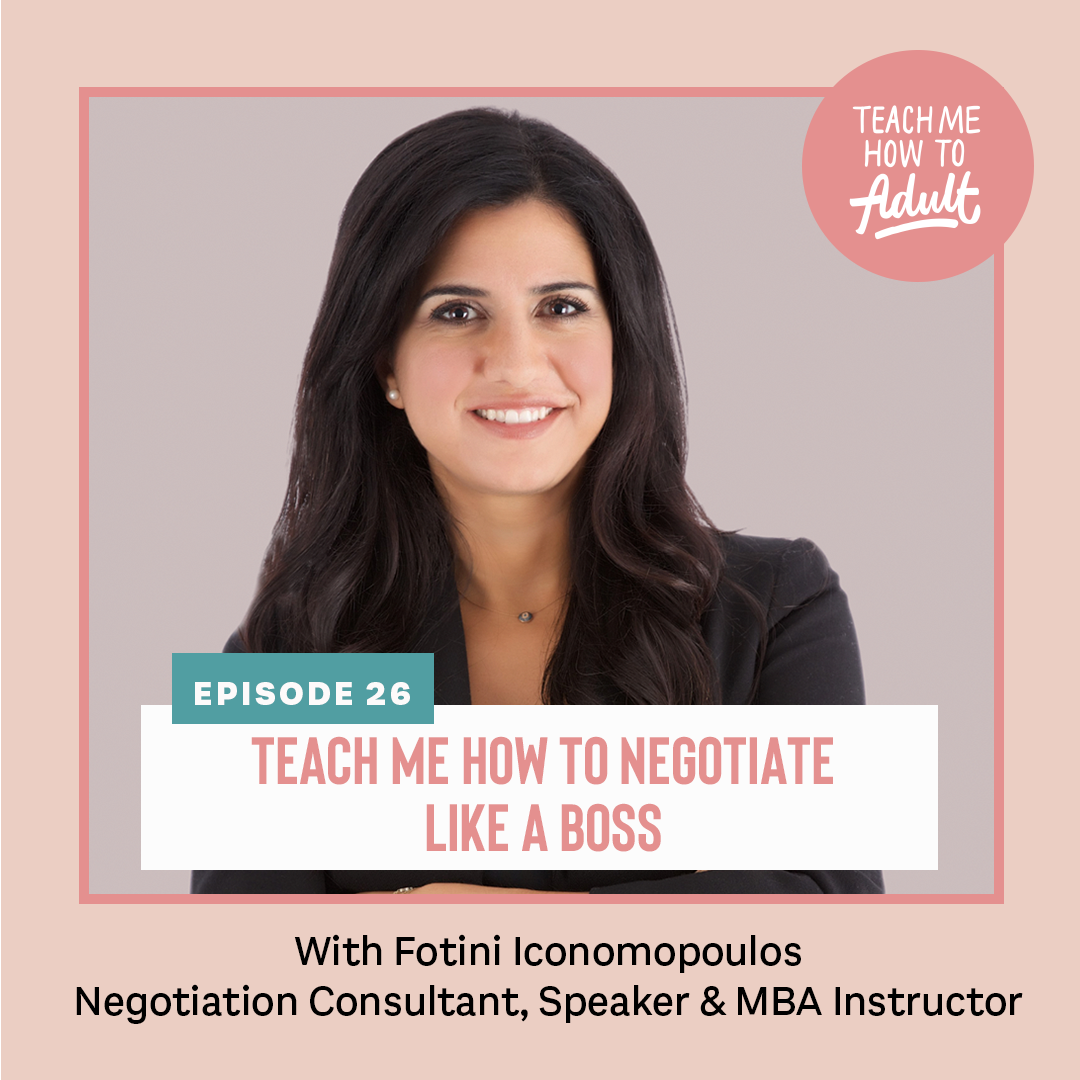
How different would your life be if you weren’t afraid to ask for what you deserve?
In this week’s episode, we’re talking all things negotiation and how to confidently go after the things you want in life, with negotiation expert Fotini Iconomopoulos!
A lot of us don’t even realize that anytime you want someone to say "yes” to something, you're actually entering a negotiation. So whether it’s saying yes to a raise, to buying your product, to buying a house, or to ordering in from YOUR favourite restaurant...you, friends, are already negotiating!
And here’s the thing: Negotiations are not about bulldozing others so you can get your way...it’s about creating a collaboration that helps both parties get what they want. It’s about confidence, clear communication, listening and empathy, and when you break it down like that, a lot of us already have these skills—we just need to apply them!
Fotini dives into all of this and more. She’s been helping people get what they want for decades through her new book, keynotes, workshops and virtual courses, which teach the negotiation and communication skills required to navigate any scenario. She teaches MBA Negotiations at the Schulich School of Business at York University, and in April 2021, Fotini is releasing her first book “Say Less, Get More: Unconventional Negotiation Techniques to Get What You Want”, so stay tuned for that!
Listen to our chat to learn more about:
3️⃣ 3 ways to practise negotiating on a daily basis: 6:29
🤝All the ways you don’t realize you’re negotiating: 12:47
🙅♀️What’s holding most women back from asking for what they want: 15:10
🗣The most effective language to use and phrases to avoid: 19:07
🤫 Why pauses are okay and key to any negotiation: 24:26
🔑Key body language cues to look out for: 29:35
🧠 How emotional intelligence is crucial in a negotiation: 37:03
😠 The difference between being assertive and aggressive: 41:16
🙋🏾♀️How to ask for a raise in 2021: 43:13
👍 Easy ways to brush up on your negotiation skills: 49:38
We hope this episode inspires you to go after what you want and ask for what you deserve!
Connect with Fotini:
linkedin.com/in/fotiniiconomopoulos/
Courses, books and resources mentioned:
Chris Voss Masterclass
Never Split the Difference: Negotiating As If Your Life Depended On It - by Chris Voss
If you have a topic you’d like us to cover or a guest you want us to interview, comment or DM us on Instagram:
Related Episodes:

Episode 25: How to Crush Your 2021 Goals
The holidays can be super jolly and joyful for some, but they can also come with a ton of stress, pressure, grief, and loneliness for many. So, in this episode we’re diving into five expert-backed mindset hacks to survive the holidays.

It’s the perfect time to plan our 2021 goals as a roadmap to accomplish our dreams and set our intentions. And this isn’t your basic let’s-set-some-new-year's-resolutions chat. We dive into why you need to set clear goals vs. ambiguous resolutions, and give you our secret sauce to pandemic-proofing your plans for 2021.
If you want to take control of your life, goal-setting is where it’s at...goals give you focus, direction, motivation and a clear benchmark for measuring your success and progress. So we’re breaking down what a SMART goal is, and eight ways you can plan and execute any goal you set.
Listen to our chat to learn more about:
The results of how you all responded to our goal-setting polls on social
Finding your “why”
Setting positive, future-thinking goals
Establishing “SMART” goals
How to integrate your goals into your daily routine
Scheduling your non-negotiables
Mapping out a pandemic-proof plan
The importance of accountability
How to deprioritize to make room for your new goals
How we broke down our individual goals for 2021
PLUS download our free goal setting cheat sheet that outlines all of the steps to creating and achieving your goals for 2021.
We hope this helps you absolutely slay 2021 with clear direction, motivation and planning, no matter what awaits us in the new year. Thanks joining us on our journey this year and supporting this podcast, it has meant the world to us. Happy New Year, friends!
If you have a topic you’d like us to cover or a guest you want us to interview, comment or DM us on Instagram:
Related Episodes:

Episode 24: How to Survive The Holidays with 5 key Mindset Hacks
The holidays can be super jolly and joyful for some, but they can also come with a ton of stress, pressure, grief, and loneliness for many. So, in this episode we’re diving into five expert-backed mindset hacks to survive the holidays.
The holidays can be super jolly and joyful for some, but they can also come with a ton of stress, pressure, grief, and loneliness for many. So, in this episode we’re diving into five expert-backed mindset hacks to survive the holidays.
Listen to our chat to learn more about:
Setting clear boundaries with yourself and loved ones: 1:50
The benefits of an *easy* gratitude practise: 4:08
How to “gamify” holiday drama and stress as a way of (pretty damn fun) coping: 5:30
Dealing with grief and the loss of loved ones during the holiday season: 8:16
Creating new traditions and making your own meaning during the holidays: 12:10
We hope this episode helps you survive the “most wonderful time of the year” a little better during these particularly strange times. Remember, you’re not alone—we’re all on this together. Stay safe and happy holidays, friends!
If you have a topic you’d like us to cover or a guest you want us to interview, comment or DM us on Instagram:
Related Episodes:

Episode 23: How to Champion a Diverse & Inclusive Workplace
We had the privilege of talking with Karlyn Percil about the racial pandemic we’re still facing, and the state of diversity and equality in the workplace, and what we can do to make businesses more inclusive. Because equitable work is a key to breaking the cycle of oppression, and the right to earn a living in a safe, inclusive workplace is a basic human right.
In this episode, we learned how to use emotional intelligence and positive psychology to help create equal opportunities for BIPOC employees, to shift hiring practices and dated work cultures, and to eliminate harmful microaggressions that prevent employees from feeling safe enough to bring their whole selves to work.
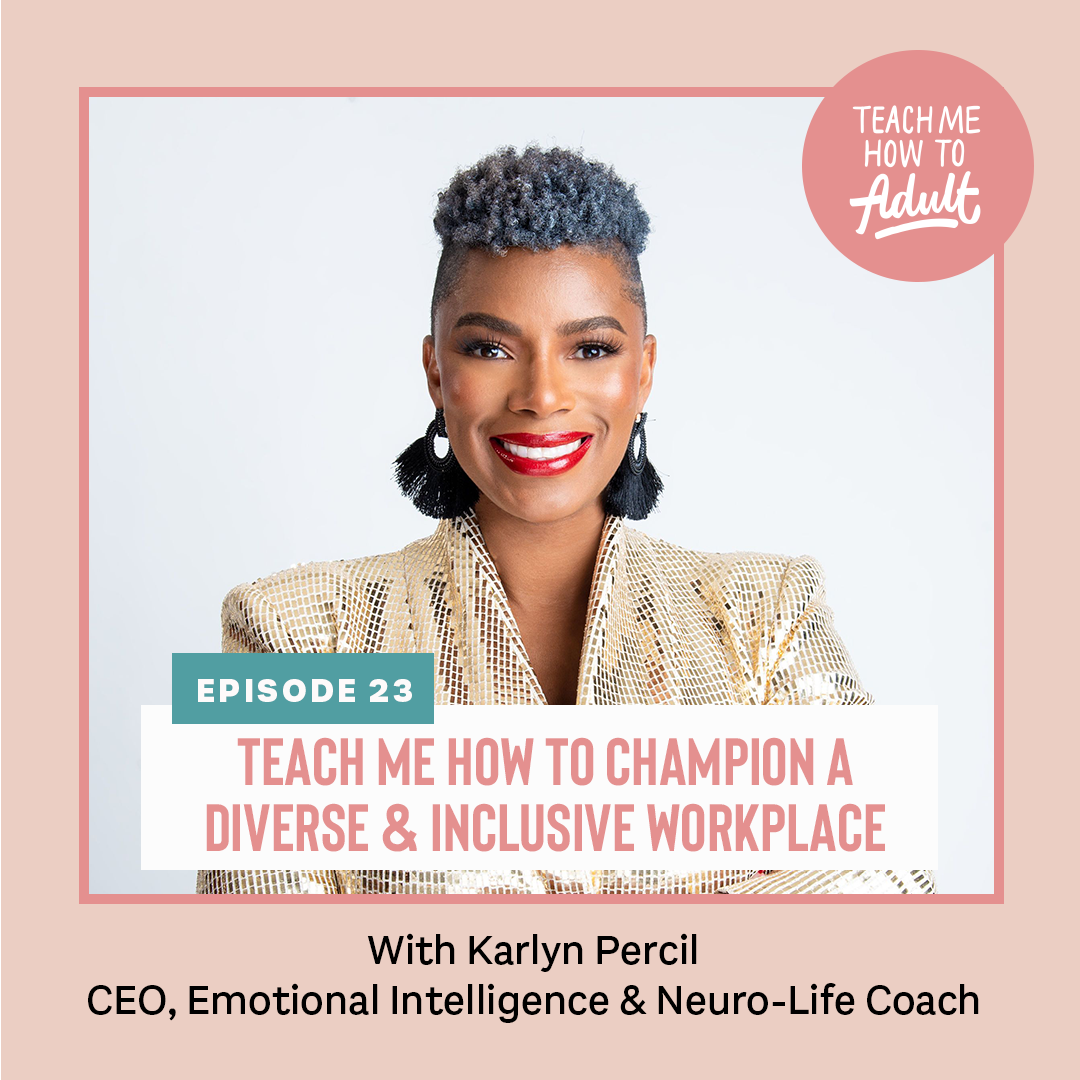
Diversity shouldn’t be a trend, it should be a standard.
We had the privilege of talking with Karlyn Percil about the racial pandemic we’re still facing, and the state of diversity and equality in the workplace, and what we can do to make businesses more inclusive.
Because equitable work is a key to breaking the cycle of oppression, and the right to earn a living in a safe, inclusive workplace is a basic human right.
In this episode, we learned how to use emotional intelligence and positive psychology to help create equal opportunities for BIPOC employees, to shift hiring practices and dated work cultures, and to eliminate harmful microaggressions that prevent employees from feeling safe enough to bring their whole selves to work.
While it is 100% *our* job as white women to educate ourselves on systemic racism and how to be an anti-racist ally, we’re so grateful that Certified Emotional Intelligence and Neuro-Life Coach Karlyn Percil spent time chatting with us about how to leverage bravery, leadership, empathy and vulnerability to create more equitable and safe workplaces for BIPOC communities.
Karlyn has dedicated her career to increasing emotional intelligence in the workforce and helping corporations plan and execute Diversity, Equity and Inclusion strategies. She’s the CEO of KDPM Consulting, the Founder of SisterTalk Group, and she spreads her infectiously positive and empowering mindset tools on talk shows like CityLine, on CBC and in the pages of Forbes and Refinery29.
Listen to our chat with Karlyn to learn more about:
The current state of racial diversity in the workplace: 2:05
Changes you can make right now to promote inclusivity and diversity at work: 3:00
Why corporate “Listening and Learning” sessions are missing the mark, and how to improve them: 15:35
The reality of changing “company culture”: 21:39
What microaggressions sound like and how to take accountability: 22:30
Why you will 100% screw up on your anti-racism journey, and why you should keep going out of your comfort zone: 24:28
Using emotional intelligence to examine defensiveness, shame and fear: 30:16
How to be a better ally through Karlyn’s LEAP strategy: 31:30
The hiring practices that ensure inclusivity and equity: 36:10
How to respond to racial injustice and getting “called in” on social media: 51:08
We hope this episode inspires you to take action in your workplace and further your journey to becoming an ally.
Follow Karlyn:
Get Karlyn’s 2021 Success Planner!
If you have a topic you’d like us to cover or a guest you want us to interview, comment or DM us on Instagram:
Related Episodes:

Episode 22: How to Be A Morning Person
Welcome to this week's Quickie, our super fast take on all the adulting things that matter to you. This week, we’re diving into *realistic* tips on how you can become a morning person with an AM routine that works for you.

Welcome to this week's Quickie, our super fast take on all the adulting things that matter to you. This week, we’re diving into *realistic* tips on how you can become a morning person with an AM routine that works for you.
We all know that research shows having a productive routine in the morning can set the stage for success. So we did our homework and researched the routines of successful, high-achieving women we love, and five science-backed ways to create a morning routine that works for YOU.
But let’s be real, mornings are not for everyone. So this won’t be a preachy episode where we tell you how perfect our morning routines are, because we’re not robots, and mornings are tough. But If you’re listening to this, it’s probably because you want to hack your AM routine and be a bit more of a morning person.
So listen to our chat to learn more about:
😴Debunking the shame around not being an early riser: 1:55
💃Celebrity morning routines we love, from Pryanka Chopra Jonas to Oprah: 3:30
👯♀️Our current morning routine tricks and hacks: 8:45
👩🔬5 science-backed tips for creating your perfect morning routine: 10:54
We hope that this episode helps you find a morning routine that works for you!
If you have a topic you’d like us to cover or a guest you want us to interview, comment or DM us on Instagram:
Related Episodes:

Episode 21: How to Cultivate Resilience and Master Your Mindset
It seems like pivot and resiliency are the hottest buzzwords of 2020. After all, change and adversity are the only constant in this life, and if this year has taught us anything, it’s that the more you focus on building a solid foundation within yourself, the more external chaos you can handle.
Shifting our mindsets, perception and reactions is far from easy, but that’s the key to healthily recovering from turmoil and trauma. So, we called in mindset and success coach Leisse Wilcox to teach us everything we need to know about how to cultivate mental resilience and turn whatever life throws at you into a beautiful story.

It seems like pivot and resiliency are the hottest buzzwords of 2020. After all, change and adversity are the only constant in this life, and if this year has taught us anything, it’s that the more you focus on building a solid foundation
within yourself, the more external chaos you can handle.
Shifting our mindsets, perception and reactions is far from easy, but that’s the key to healthily recovering from turmoil and trauma. So, we called in mindset and success coach Leisse Wilcox to teach us everything we need to know about how to cultivate mental resilience and turn whatever life throws at you into a beautiful story.
And Leisse is not just your average coach. She is a coveted mindset coach, podcast host, AND bestselling author, who is changing the global conversation on emotional health & wellness. She literally wrote the book on turning adversity into opportunities for growth, joy and beauty.
Listen to our chat with Leisse to learn more about:
👊 Our tools for bouncing back from adversity: 2:08
🙇🏽♀️ Why your mindset matters: 8:50
✨ The meaning of emotional alchemy (turning the dark and heavy pieces of your life into something beautiful and light): 10:37
🔟 Leisse’s 10 steps to cultivating emotional alchemy: 13:11
😬 How to avoid toxic positivity and *actually* deal with your sh*t: 25:46
🤗 Ways to process and feel your feelings: 28:33
💃 How to make a difficult life change with grit and grace: 30:31
💆🏾♀️The importance of staying in the present moment and “zooming out”: 34:27
🙏Why gratitude is the key to mindset: 38:52
We hope this episode helps you harness resilience and a positive perspective to deal with whatever life throws at you.
Follow Leisse:
Get her AMAZING book: To Call Myself Beloved


If you have a topic you’d like us to cover or a guest you want us to interview, comment or DM us on Instagram:
Related Episodes:

Episode 20: How to Navigate the News Right Now
With COVID-19 numbers surging around the world, the upcoming US election, and the onslaught of disasters that 2020 has served up, there is more news being consumed than ever before, and it can be seriously overwhelming trying to stay up to date with accurate info, without going crazy. So we did our homework on how you can stay informed without sacrificing your sanity.
Welcome to this week's Quickie, our super fast take on all the adulting things that matter to you. This week, we’re diving into something we all need help with right now... how to navigate the news responsibly, while protecting our mental health.
With COVID-19 numbers surging around the world, the upcoming US election, and the onslaught of disasters that 2020 has served up, there is more news being consumed than ever before, and it can be seriously overwhelming trying to stay up to date with accurate info, without going crazy. So we did our homework on how you can stay informed without sacrificing your sanity.
Listen to our chat to learn more about:
🧐 The importance of reading beyond the headlines & fact checking: 2:00
👥 How to avoid confirmation bias and learn all sides to a story: 2:45
⚖️ Identifying innate biases in the media: 4:12
👩🏫 Finding sources that *explain* the news, rather than just breaking it: 6:13
📱✉️ Different ways to consume the news that work for YOUR lifestyle: 8:42
🙅🏾♀️ Drawing boundaries on your media intake for your mental health: 11:27
🤗 Good news resources for when you need a smile: 14:46
🙀How to stay up to date with COVID without having anxiety: 16:02
We hope that these tips help you stay informed and navigate the hectic news we’re surrounded by these days responsibly and healthily.
Fact Checking Resource: https://www.snopes.com/
Media Outlet Bias Check: https://mediabiasfactcheck.com
The Media Bias Chart: https://www.adfontesmedia.com/
If you have a topic you’d like us to cover or a guest you want us to interview, comment or DM us on Instagram:
Related Episodes:


Episode 19: How To Bounce Back From A Layoff
Businesses of all sizes have taken a ROUGH hit in 2020, and unstable employment is a stressor for everyone right now. So today we’re talking about how to bounce back from a layoff and what to do if it happens to you, with the help of Latesha Byrd, a certified career coach, talent development consultant, Google Digital Coach, and CEO of Byrd Career Consulting.
Businesses of all sizes have taken a ROUGH hit in 2020, and unstable employment is a stressor for everyone right now. So today we’re talking about how to bounce back from a layoff and what to do if it happens to you, with the help of Latesha Byrd, a certified career coach, talent development consultant, Google Digital Coach, and CEO of Byrd Career Consulting.
Whether you’ve been laid off due to COVID, industry shifts, or company restructuring, remember that you are not to blame, and you’re so much more than what you do from 9-5. The best way to bounce back is with a solid strategy: You can start by identifying your purpose, getting intentional about job applications, and as Latesha says, “staying ready so you don’t have to get ready.”
Listen to our chat with Latesha to learn more about:
👯♀️ Our experience with how to handle a layoff: 2:40
👩🏾💻 Latesha’s journey to Byrd Career Consulting: 17:27
🔑 3 key things to do after you’ve been laid off: 19:00
🙌 How to mentally bounce back from job loss: 21:59
💃🏽 How to gain your confidence back: 24:18
💼 Why you need a “Career Readiness Toolkit”: 26:36
💻 How to grow your network: 28:44
😬 How to address your layoff in an interview: 32:01
✅ 3 important traits that all top talent have: 34:37
🤔 Important questions to ask in an interview: 37:18
🤝 How to ask companies about their diversity & inclusivity policies: 40:14
🗣 Using LinkedIn to build your personal brand: 41:11
We hope that this episode motivates you to bounce back and find your next dream career!
If you have a topic you’d like us to cover or a guest you want us to interview, comment or DM us on Instagram:
Follow Latesha:
Latesha’s Career Chasers Membership Club
Related Episodes:

Episode 18: How To Cope With Grief and Loss
This week’s topic is a tough one, but it’s something that we’ll all have to navigate at some point in our lives despite most of us feeling totally unequipped to cope with it. We’re talking about grief, with the help of mental health professionals Eleanor Haley and Litsa Williams, the founders of popular website and podcast What’s Your Grief.

This week’s topic is a tough one, but it’s something that we’ll all have to navigate at some point in our lives, even though most of us feel totally unequipped to cope with it. We’re talking about grief, with the help of mental health professionals Eleanor Haley and Litsa Williams, the founders of popular website and podcast What’s Your Grief.
Whether you’re grieving the loss of a loved one, the general uncertainty of the pandemic, job loss, a breakup, a difficult diagnosis, or the loss of connection with the people you love, you might be experiencing grief in ways you didn’t even realize.
How we’ve coped with grief and loss
For Gillian, the recent loss of her incredible Grandma left her feeling overwhelmed with grief and emptiness, leading up to and after her death. While she’s still processing her loss, she’s working to keep her memories alive, and she’s found some helpful ways to cope:
Creating new rituals with her family to remember and honour her Grandma on special occasions
Baking her Grandma’s famous recipes
Talking about her grief with friends and family
Learning how to stop shutting out her memories, and rewriting the painful ones with positive thoughts
For Cailyn, the loss of her Opa and the diagnosis of a close relative had her spiral into waves of grief. She’s found ways to cope by:
Carving out set times for her to feel her grief
Watching happy upbeat content—laughter is the best medicine!
Sleep, exercise, eating well and going on walks with her dog
Opening up to her husband and close friends when she needs to talk, cry or vent
How to identify your individual grief coping style
Tapping into your individual coping style can be really helpful as you figure out how to cope. The first step is to acknowledge that there is more than one way of grieving. Eleanor reminds us that grief is different for everyone: “We think of grief as mostly being an emotional experience, but the reality is that it’s more than that. It’s cognitive, physical, and spiritual. It’s all sorts of different types of experiences.”
You can start by thinking about who you are, what coping mechanisms have worked for you in the past, and have an open mind about things that you think might be helpful for you. For example, someone who processes things more cognitively may find it helpful to get involved in advocacy, planning a memorial, or reading books on grief. While someone who is more of a creative thinker may find comfort in creating art that expresses their emotions, journaling, or writing a letter to the person they have lost.
Finding coping mechanisms that can help you make meaning from your loss and provide you with a new purpose can be very, very healing. “We want people to recognize that there are so many different ways to cope and the best thing to do is think about yourself: What are my strengths? What are my preferences? What are my resources?” says Eleanor.
Coping with anticipatory vs. unexpected grief
“Anticipated losses often allow our brains to start creating a space to imagine what the world might look like without that person,” says Litsa. “You can start to imagine the feelings that might come and create a space to do what we call Anticipatory Grief, which is to start processing the loss before it happens.” However, the looming loss can still impact you more than you expected. And in some cases it can trigger more shock for someone who thought they prepared because the reality of the world without their loved versus the idea of a world without that person is so different.
With unexpected losses, our brains haven’t created that space where we’ve tried to imagine a world without that person: It comes with shock, disbelief and overwhelm as our brains try to catch up to those things that it didn’t get to prepare for in advance.
What not to say to someone who is grieving
When it comes to providing support for someone who is grieving, don’t try to find a silver lining. “Stay away from anything that begins with the words ‘at least’, because ‘at least’ is looking for some sort of silver lining or positive in the situation. And just because the comment may be true (or true someday), it doesn’t mean that someone is ready to hear it or that it is helpful in the moment,” reminds Eleanor.
It’s also important to understand the difference between providing comfort vs. support. Comfort is our attempt to take away pain. It’s our desire to find a silver lining because we’re trying to bypass pain and get to a place where your loved one will start to feel better. But someone who provides support is there to lean on. They walk with the griever without trying to change, suppress them or find their meaning for them.
Litsa points out that sometimes people worry about bringing up the person who died, an anniversary, or sharing a story, but that can often be the most helpful and comforting thing to do. “That’s the kind of gesture that shows people that you’re there for them for the long term, that you want to be there to remember their loved one, and that you’re not just there for the first couple of weeks or months after a loss when everyone tends to show up. Be the person who sticks around long term who is still checking in a year later, five years later, ten years later.”
Eleanor also suggests getting comfortable with silence and not having anything to say. Don’t feel the need to always fill that silence. You might attempt to comfort your loved one by trying to relate to their pain, but that doesn’t always land well with the person who is grieving.
Getting comfortable talking about loss, as a griever and a supporter
“Grief is figuring out how to have an ongoing relationship with a person who has died,” says Litsa. “That means that we’re figuring out how to still talk about them, remember them and live a life that’s still informed so much by their presence in our life. We need to remember that that’s a good thing.”
Even when we get to the best place with our grief it can still be hard, painful and bittersweet. But connection is often what we’re striving for, not disconnection, and the best way to convey that to the people who want to help is to tell them exactly what you need. Lista says when you’re direct about what you need from others—whether it’s a hug, a vent, or a cry—it allows them to show up the way that you need them to.
It helps to express that you don’t need someone to fix that pain or take away the bitter part of bittersweet...that’s just always going to be there.
How to deal with loss during a pandemic
A lot of people are unable to have the types of memorials, services, rituals and support groups that they normally would have if it weren’t for the pandemic. Eleanor also notes that our current isolated world can also bring up past losses or non-death losses for a lot of people, which is perfectly normal.
“We encourage people to have an open mind for things you may not have considered before”, says Eleanor. Things like online or virtual therapy, virtual support groups, journaling, or artistic expression through painting, writing or creating can help you cope while social distancing.
Eleanor and Litsa also recommend their free 10 Day Coping With Grief Challenge to help you discover new coping skills from the comfort of your own home.
After losing multiple loved ones during COVID, Litsa found that reaching out to people who were grieving the same loss as her was helpful for her process. If you are unable to have a funeral or service for your loved one, you may be yearning for connection and conversations with others who are remembering the same person. Litsa suggests reaching out to friends-of-friends to your loved one, even if you’re not that close, and saying: “Hey, I’m feeling really sad and missing [this person] today, and I need somebody to talk to about that.”
“Sometimes when we’re vulnerable, struggling and grieving, we limit things to our inner circle of people,” says Litsa. “But especially in moments like this when the world is more disconnected than ever and we don’t have those same grieving rituals, I think it can be really important to open your mind about who might be a support to you that you haven’t thought about.”
How to survive the holidays when you’re grieving
One of the most difficult things to process when dealing with a loss is coping with the picture that we had created in our minds of what our life was supposed to look like. What our holidays, weddings, family, and special occasions should look like. “But one of the things that happens after a loss is that all of that is disrupted. We’re grieving the future that we thought we were going to have,” says Litsa.
To cope with grief during these special events and holidays, Lista suggests trying to shift your mindset to acknowledged both the loss of our expectations, while also being able to say to yourself, “just because it’s not what I imagined, doesn’t mean that it can’t still be good, meaningful, and filled with love, while also still being filled with loss, sadness and a bittersweet want for what we thought it would be.”
Litsa reminds us that we can carry both of those things together: “If we can go into the holidays or special milestones knowing that that’s what we’re trying to do, it can at least help give you permission for the fact that there will be tears and difficult moments on days that we thought would be wholly joyful. And there will still be lots of joy and we should give ourselves permission and space to feel both things.”
Identifying and managing grief triggers
The first place to start when trying to manage your grief triggers is to acknowledge that they are going to happen. While there may be times when you’ll want to try to avoid them (AKA at work), in general Litsa and Eleanor don’t recommend trying to close yourself off from all of your grief triggers. “When you do that you end up closing yourself off from your loved one”, says Eleanor.
“We often see that the intensity of these experiences diminish over time. So something may cause a sting of sadness, but they also might have a little more warmth to them, comfort, or a continued bond,” says Eleanor. It’s important to create space for both of those emotions and to understand that it is perfectly normal to feel sadness and connection at once.
Litsa also talks about creating “grief space”—a set time and space dedicated to your own grief. Having a set time to manage your grief allows you to set those overwhelming and unmanageable feelings aside in a healthy way and come back to them later when you have the time to unpack them.
Doing this regularly allows you to practise feeling your emotions rather than shutting them out so you can gain more control when triggers do pop up. And it’s not that it gets easier or that the grief goes away—you just get stronger and develop the tools to manage it and integrate your loss into your daily life as you move forward.
Finding balance between grieving and living life again
It can be difficult to balance feeling your grief and jumping back to living your life again. That’s why Litsa is a big fan of the dual process model of grief. One of the underpinnings of this model is that grieving and getting back to your normal routine happen alongside each other. “Part of grief is taking a break from grief”, says Litsa. “It’s creating those spaces to set it aside for a while and engage in healthy avoidance.”
Eleanor reminds us that grief is forever, and our relationship with grief changes over time. “We often think we have to feel pain all the time or we’re forgetting or betraying our loved one, but that’s not the case. Take a break from grief. Have moments of laughter and joy. These are not betrayals.”
Why alcohol and grief aren’t always bffs
“For some people alcohol and other substances can be either numb or intensify their emotions, and it can affect you in different ways”, says Litsa. “One of the things that we know about alcohol and how it affects the brian is that it quiets down the anxiety center of our brain which keeps our emotions in check. When we quiet that down, suddenly our emotions come out more and can be more intensified.”
Litsa stresses that this is why it’s so important to carve out time to deal with any feelings you may be pushing down or repressing. The more we give space to those feelings, the less likely they will come out in an unhealthy way when drinking.
We hope that this episode helps you find ways to cope with whatever you’re experiencing. If you ever need support, know that you can reach out to us.
If you have a topic you’d like us to cover or a guest you want us to interview, comment or DM us on Instagram:
Follow What’s Your Grief:
Related Episodes:

Episode 17: How To Pursue A Career You Love
This week we’re mixing things up with a solo deep dive into some career #RealTalk! Some of you have asked us how we got our start in the Media and Entertainment industry, so we’re bringing you the good, the bad and the ugly of how we got to where we are today, and our biggest tactical career takeaways.

This week we’re diving into some serious career #RealTalk! Some of you have asked us how we got our start in the Media and Entertainment industry, so we’re bringing you the good, the bad and the ugly of how we got to where we are today, and our biggest career takeaways.
We know it’s a really tough time in the job market right now, and these days, just having a secure job is a blessing. But we hope this happy hour chat helps inspire you to always keep working towards what you’re passionate about, even if that just means networking more, listening to career advice podcasts, or starting to build up your side hustle.
Gillian’s biggest lessons:
Never play small and always be yourself. Being unapologetically yourself in a role will allow you to grow and make a huge impact at a company.
Always leave a company with grace and on a good note. You never know where you’ll end up or who you might need to call up for a job. The best thing you can do is leave with dignity, hard work, and solid relationships, because it will open up networking opportunities for the rest of your career.
Pursue your hobbies even if they aren’t directly related to your career. Passions create balance and help to make you a happier, more fulfilled person. Plus, all of those skills and qualities you learn from your hobbies will end up helping you in ways you never expected in your day job!
Learn when to say yes and when to say no. It’s okay to say yes to opportunities that aren’t your dream job if they will align you with the future that you want (Think: networking opportunities & new skills!). And on the flipside, saying no to the wrong opportunities (especially any soul-sucking bad fit offers) frees up space to say yes to the right ones when they come along.
Don’t take advice from people who haven’t been there. Everybody and their Aunt Sue will have opinions on your career, but if they’re not aligned with where you’re heading and what you’re trying to do, then they are in *no* position to weigh in. If you’re going to seek advice, pick credible, supportive sources who are in your industry and can help you along your path.
Work towards finding your purpose. The world and workforce is changing at an unprecedented rate, and that “dream job” you’re chasing may not exist by the time you get to it. Pursuing a purpose or a vocation instead of a “dream job” allows you to find the WHY that’s behind that “dream job”. Ask yourself what it is that you truly value about the position you are striving for. For example, if you want to be the Editor-in-Chief of a magazine, is it telling incredible stories that fuels you the most? If so, find ways to pursue storytelling opportunities in any industry you enter. This small yet impactful mindset shift will keep you resilient, nimble, adaptable, and always working towards your underlying WHY.
Cailyn’s biggest lessons:
You’ll never feel qualified for your next role or promotion but trust us, you are. It is totally normal to feel uncertain when starting a new role or taking on a new project, but remember that you were hired for a reason! So kiss that Impostor Syndrome goodbye and step into your new position with confidence!
Don’t let work become your life. No matter how much you think that promotion, title, or company will give you the validation you are looking for, it is likely going to be short lived and never worth your whole life. We’re both guilty of putting way too much importance on our career as the main source of our happiness and identity. But we now realize that true validation and happiness comes from yourself and all the stuff that happens outside of your job. Besides, what’s the point of working 24/7 when you can’t enjoy the life you’re working for?
People are everything. People are crucial to an organization and the more you empower your peers and team to thrive both at work and in their personal lives, the better results you are going to see for your business. It is also VERY important to treat everyone with respect, no matter what title they have, because you never know where people will end up and who you might need a favour one day.
Negotiate! Negotiate! Negotiate! You have to negotiate your salary and prove your worth when you are first coming into an organization, because it is so much harder to ask for more money once you’re in. We’ll be releasing an episode on negotiation in the future, but in the meantime, DO NOT LEAVE MONEY ON THE TABLE! And remember that you can negotiate more than just your salary: If they won’t budge on your pay, negotiate more vacation, additional benefits, or a signing bonus. Fight for what you deserve.
The best career advice Gillian ever received:
Therapy helped Gillian learn to prioritize herself and never allow her identity and worth to be completely tied to a job. She was so passionate about previous jobs, that she put them before her own life and health and had no balance. So when she was laid off, her identity crumbled because she hadn’t focused on who she was without her career. Finally putting herself first allowed her to find her purpose and have the conviction to leave positions when she was in an environment that wasn’t a good fit for her.
The best career advice Cailyn ever received:
Cailyn’s career coach, Trevor Timbeck, gave her this advice when she was hesitant to go from being a people manager to an individual contributor in a new role: You don’t have to be a VP or manage a team to be a leader. Every day is an opportunity for you to show up as a leader whether you are managing a project, a campaign, an area of the business, or just a task for your boss. Take it as your opportunity to show what you can bring to the table. It’s like that Rachel Hollis quote, “Don’t compare your beginning to someone else's middle”. Shine in your own lane.
We hope you liked this solo episode and that it inspires you to keep pushing yourself to find the purpose behind your career journey!
If you have a topic you’d like us to cover or a guest you want us to interview, comment or DM us on Instagram:
Related Episodes:

Episode 16: How To Have a Healthy Relationship Right Now - Part 2
The course of true love never did run smooth (preach, Shakespeare!), so today we’re diving into part two of our relationship interview with couples and family therapist Liz Earnshaw.

The course of true love never did run smooth (preach, Shakespeare!), so today we’re diving into part two of our relationship interview with couples and family therapist Liz Earnshaw. If you missed part one, be sure to check out episode 13 where we dive into how couples can deal with Covid whether they’re quarantining together or doing long distance.
Today we’re talking common relationship issues, power struggles that can crop up in conflict, improving your communication skills, and how to seek or offer support when one partner is struggling with mental health. Honestly, our conversation with Liz truly improved our communication styles with our own partners, family and friends, and we can’t wait to share it with you.
Liz is a licensed marriage and family therapist and founder of A Better Life Therapy in Philadelphia. She helps her clients and hundreds of thousands of social media followers develop healthier relationships everyday, navigating issues like betrayal, grief, loss, and trauma, while teaching the art of communication. You also might’ve seen her on Instagram where she shares incredibly valuable relationship advice and therapy strategies on her account @lizlistens.
Check out Part 2 of our relationship deep dive for Liz’s MAJOR truth bombs on boundaries, conflict and communication!
What are the most common issues couples seek therapy for?
According to Liz, most people come in with communication issues, which usually means a thousand different things from navigating betrayal, to learning how to actually listen to legit incompatibility.
The four power struggles in conflict
Liz says there are four main power struggles that couples face in conflict and communication: “A power struggle clearly looks like a pulling back and forth. There’s somebody who’s pursuing something and another person who is pulling away.”
Power struggles can happen when...
The conflict is so scary, the distancing person is worried that if they engage, it’s going to make the relationship worse. They fear they’ll lose the connection if they “go there.” The person pursuing the connection is scared of the same things, but they fear that if they don’t talk about their issues now, they won’t be able to fix them. So while one is trying to preserve connection by preventing the conversation, the other thinks they’ll lose everything if they don’t address the problem.
When one person feels like their autonomy is being threatened, they pull back, and their partner feels threatened so they pursue connection. But the other person is pulling back because they really do want space and need time to themself. Liz says the “never go to bed angry” quote is actually the worst advice, because oftentimes the person who wants to go to bed is telling you very clearly, “this isn’t going to go anywhere good. I need space, or I'm freaked out that I'm going to explode in this conversation.” That advice perpetuates the pursuer to believe they can’t go to bed without a resolution, so they keep going. The best thing you can do in that dynamic, is to learn to take on the dynamic of the other person. So if the other person pulls away, let them take their space and allow them to come back when they are ready.
Sometimes our conflict brings up shame, and people respond differently to shame. “A fight over an overdue water bill can be stemmed from shame if it’s late because your partner’s salary was reduced,” explains Liz. When shame is at the root of the issue, it’s really important to see what’s going on and be able to offer safety within that. “Instead of criticizing, which just creates more shame, be vulnerable [and ask what’s going on]. You can still have boundaries while being gentle around that shame.”
The last conflict relates to punishment: We get into power struggles if we believe someone deserves it. “They cheated on me, so they deserve it. They had it coming to them because they hurt me.” The pursuer (the person who was hurt in this case) may believe the betrayer has no right to take space, and if it sucks for their partner, too bad: “I’m punishing you because I’m still really angry.”
How do you avoid the punishment power struggle when you’ve been hurt?
“When there’s been a betrayal in the relationship—anything outside of what you thought your relationship contract was, so not just affairs, but when someone hurts you outside of what the commitment was—the person that did the betraying may receive a lot of punishment and anger,” Liz explains. She tells people dealing with betrayal: “It’s your job right now to make amends, to listen to the pain, to apologize. These are hard things to do, but you have to do it and you have to try a lot of trust-building behaviour.”
“I often compare it to a bank account,” says Liz. “When your bank account was healthy, it didn’t matter if you took $100 out, but the betrayal took all of the money out, plus $100, and now there’s an overdraft fee. It won’t be like this forever, but for a little bit, you do have to pay the $100 back and you have to pay a $30 overdraft.”
To the person who has been hurt, Liz says, “I know you’re angry and you have every right to maintain boundaries, be angry and to request certain things. But just like the bank isn’t allowed to give 10 overdraft fees a day, you can’t do that either. Because if you do it, just like with a bank, the person will never be able to pay themselves out of the hole. So if you tell your partner [how to make things better], and then you move the goalpost again, it’s never going to work.”
Liz says to be very clear about the things that you need to recover from the betrayal. If you are going to move the “goalpost” of your expectations from your partner, you have to be clear about why they are changing and communicate your feelings, boundaries and needs fairly. “Because if you combat one betrayal with another betrayal of disrespect and contempt, then the relationship falls apart even more. And that is where couples get really stuck,” warns Liz.
How to set healthy boundaries
Liz recommends sitting down together and checking in on how things are going regularly, so you don’t have to unilaterally come up with boundaries as issues arise. “Allow yourself to be very open...you can say: It’s been going okay, but you know what’s been really hard for me? When the TV is on really loud late at night and I’m trying to get to sleep. I really need a quiet space in the bedroom.”
Talk about how you can create a win-win situation, because if you’re really working together, all of your boundaries can actually be about things that will create win-wins for both of you. “You want to state things in what we call a positive need. A positive need is saying what you do want,” Liz explains. “So when you set boundaries, say what you do want. Telling someone what you don't want isn’t usually very effective.”
Liz suggests trying an approach like, “I really want to go to sleep by 10pm” rather than “I don’t want you to leave the TV on all night.” That helps everyone understand the end goal, and it avoids starting a debate about the things that you don’t want.
We hope that you enjoyed part 2 of our convo with Liz, and that your relationships are thriving!
If you have a topic you’d like us to cover or a guest you want us to interview, comment or DM us on Instagram:
Connect with Liz here:
Related Episodes:
Episode 14: How To Get Organized AF
Spring has finally sprung, and since we’ve all been stuck in our homes for ages, this is the prime time to spring clean your life! In this week’s Quickie episode, we dive into simple ways that you can organize your home, your work life, and your time.
Spring has finally sprung, and since we’ve all been stuck in our homes for ages, this is the prime time to spring clean your life! In this week’s Quickie episode, we dive into simple ways that you can organize your home, your work life, and your time.
The first step to cleaning your shit up is understanding some of the psychology behind organization, which can help change our behaviours.
A number of studies have looked at what clutter does to people’s minds. Many point to how people who are stressed out, exhausted or burnt out can feel calmer and more at ease when they are immersed in hyper-tidy environments. Research in Psychology Today found that women with cluttered homes had higher levels of cortisol, the stress hormone. And Princeton University found that clutter makes it more difficult to focus on a particular task efficiently.
Organization takes time, and it can feel super daunting, so the key is to break it up and take it one step at a time. Try devoting 30 minutes a day to organizing an aspect of your life or space. There’s an awesome website you can use called UnfuckYourHabitat.com that breaks organizing down into small fun challenges and checklists.
There are generally four key areas of your life that could benefit from more organization.
Tidying up your home
If you’re a little Type A and you want to learn from the best, check out Marie Kondo’s best-selling book, The Life-Changing Magic of Tidying Up, or watch her show on Netflix, Tidying up With Mari Kondo.
She’s the organization queen and her organizational style, the Konmari Method of Essentials, has been used by millions. The Konmari Method follows these 6 principles:
Commit yourself to tidying up: if you want to go all in, instead of cleaning one room a day, devote an entire day to doing your whole house or apartment.
Imagine your ideal lifestyle: Visualization is key. How do you want to feel in your space? Thinking of your life in concrete terms like, “I want to live in a calm space that sparks creativity” is much more impactful and inspiring than, “I want a clean home.”
Finish discarding first: You need to purge before you start! And in true Marie Kondo style, before getting rid of any items, make sure you sincerely thank each item for serving its purpose.
Tidy by category, not location: Instead of starting with your closet, start with your clothes. That might include your front hall closet, storage bins, your shoe rack, and your closet.
Follow the right order of categories: Marie has developed a tried and true order of tidying up that she swears by:
Clothes
Books
Papers
Komono (AKA miscellaneous items)
Sentimental items
Ask yourself if it sparks joy: Having things in your home that inspire you and make you happy is important. If you love it, that feeling will radiate into other areas of your life.
If you’re not quite ready to go full Marie Kondo, here are some quick fixes that make a difference.
Have a strategy: Organization is less about “tidying” and more about thoughtfully strategizing where things should live for easy access and making the most of your space.
Group items by task: In the kitchen, keep everything you need for making your coffee on one tray, and keep all your baking supplies in one section. Tackle that out of control tupperware drawer and make sure every set has a matching lid. And only keep things on your counters that you use on a daily basis—the rest can be stored away.
Make the most out of all storage opportunities: Taking advantage of vertical space for storage is a great hack. These Amazon shelves are perfect for decluttering counters and displaying your favourite products! And never pass up on good under bed storage. Ikea has some awesome pullout underbed drawers where you can keep off-season garments, extra blankets or shoes, or sentimental memorabilia that you don’t use often.
Use decorative objects for storage: Corralling miscellaneous items in pretty baskets will keep your counters clear (shoutout to our fave home decor guru Alexandra Gater for inspiring us to do that!) On her YouTube channel, Alexandra recommends storing dry goods and bathroom products in labelled jars for a package-free, unified look. We’re also using decorative boxes as a filing system to organize documents, mail and paper bills.
Organizing your computer and work files
When it comes to getting organized at work, the best place to start is with your to-do list. Listen back to our productivity episode, episode 6, where we explore three productivity methods to organize and crush your to-do lists!
Now let’s talk Desktops. It’s a divisive subject, where some people exclusively have a few tabs open at a time and a perfect document filing system, while others have 1,000 tabs, a crowded desktop full of screenshots, and a computer that freezes daily. Experts recommend Bookmarking tabs you aren’t immediately using and maintaining a solid bookmarking system, or saving them to apps like Pocket to visit later. You can even use browser extensions to manage your tabs and schedule them to reopen in the future! But if you need to keep a lot open at once, make sure you group related tabs into separate windows, and if you're an Apple user, you can create different desktops for different purposes like Work and Personal.
Another place to focus on is your Inbox. We recommend setting up a folder system, setting up auto-filing rules, and using Outlooks clean-up tool! It deletes any redundant emails in a thread and keeps the latest one, one where someone was added or one with an attachment. Check out this link to learn how to use it. It helps to consistently carve out the first and last 30 minutes of every work day to organize emails and prioritize your day.
Organize your finances
There’s no better feeling than having your financial shit together, and all the hard work is done for you if you use software or apps that track your spending and your investments for you. We’ve said this before back in our Budgeting episode, but apps like TD MySpend and Quicken will break down your spending from all cards and accounts into categories so you can really see where your money is going.
Another time-saving suggestion: If you’re still getting bills by mail, it’s time to join the 21st century and sign up for online billing so you can easily track, save and search your bills and expenses digitally. That will really help come tax time. If you stay on top of organizing your receipts throughout the year, tax season won’t be such a daunting time! Try to organize your receipts by year, and then by month, and note on the receipt what the purpose of that expense was. And if you need help getting your taxes organized, check out our Canadian tax prep checklist to help you track everything you need before you submit!
Organize your time
Between work, hobbies, appointments, working out, cooking, time for friends, and side hustles, it can be hard to keep track of it all, so really using a calendar for everything can help you make sense of all the shit you have going on in a week. It sounds obvious but guys it ACTUALLY helps. And if you live with your partner or have a business partner, getting a shared calendar is a game changer! It helps you prioritize your time and balance all the craziness that life throws at you. It’s also a great way to reflect at the end of the month and see where you spent your time and what changes you might want to make for the month ahead. Cailyn plans her entire day (and life) on her Google Calendar.
Whatever part of your life you’re looking to organize, we hope that these tips help you get a head start! xx
If you have a topic you’d like us to cover or a guest you want us to interview, comment or DM us on Instagram:
Shop This Episode:


Hello, World!